



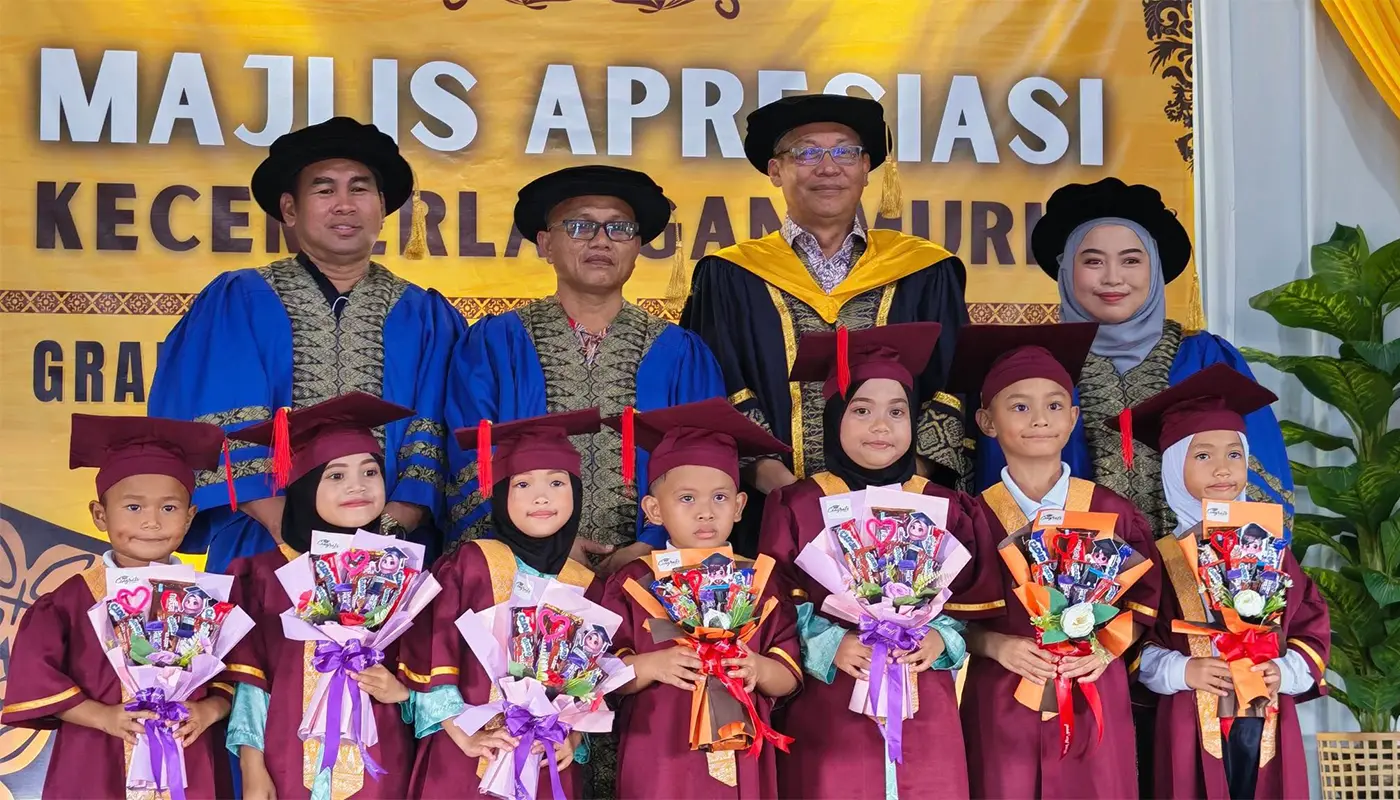
DARO – The welfare of rural schoolchildren must be prioritised to ensure they are given equal opportunities to become productive citizens, said Deputy Minister in the Sarawak Premier’s Office (Corporate Affairs, Information and UKAS), Datuk Abdullah Saidol.

Speaking at the Preschool and Primary Six Graduation Appreciation Ceremony at SK Sebako on Thursday, Abdullah stressed that while education falls under the Federal Government’s responsibility, rural schools continue to face challenges due to poor maintenance of facilities.
He noted that many schools in rural areas rely heavily on assistance from elected representatives and the Parents and Teachers Association (PIBG) to carry out constructive programmes for students.
“More sadly, the dilapidated schools also have defects that must be repaired immediately until the school staff have no choice but to ask for the help of PIBG to seek funds from the elected representatives,” he said.
Abdullah explained that while Members of Parliament may be able to assist a few schools, the reality is that many rural MPs are already allocating funds to repair more than 15 dilapidated schools in their constituencies. This, he said, highlights the scale of the issue and the urgent need for systemic solutions.
He expressed gratitude to PIBG chairpersons and committee members in his constituency for their dedication in supporting school staff and ensuring student activities succeed despite limited resources.
Their initiatives, he added, reflect the community’s commitment to education at the grassroots level.
Abdullah further suggested that the Federal Government should consider channelling education and development funds directly to the Sarawak Government.
He argued that the state administration has proven to be more efficient and effective in addressing development challenges, including those affecting schools.
The call for greater attention to rural schools underscores the importance of equitable access to education across Sarawak.
With many rural schools still struggling with infrastructure issues, stakeholders continue to urge stronger collaboration between federal and state authorities to ensure that every child, regardless of location, receives quality education in a conducive environment.
