



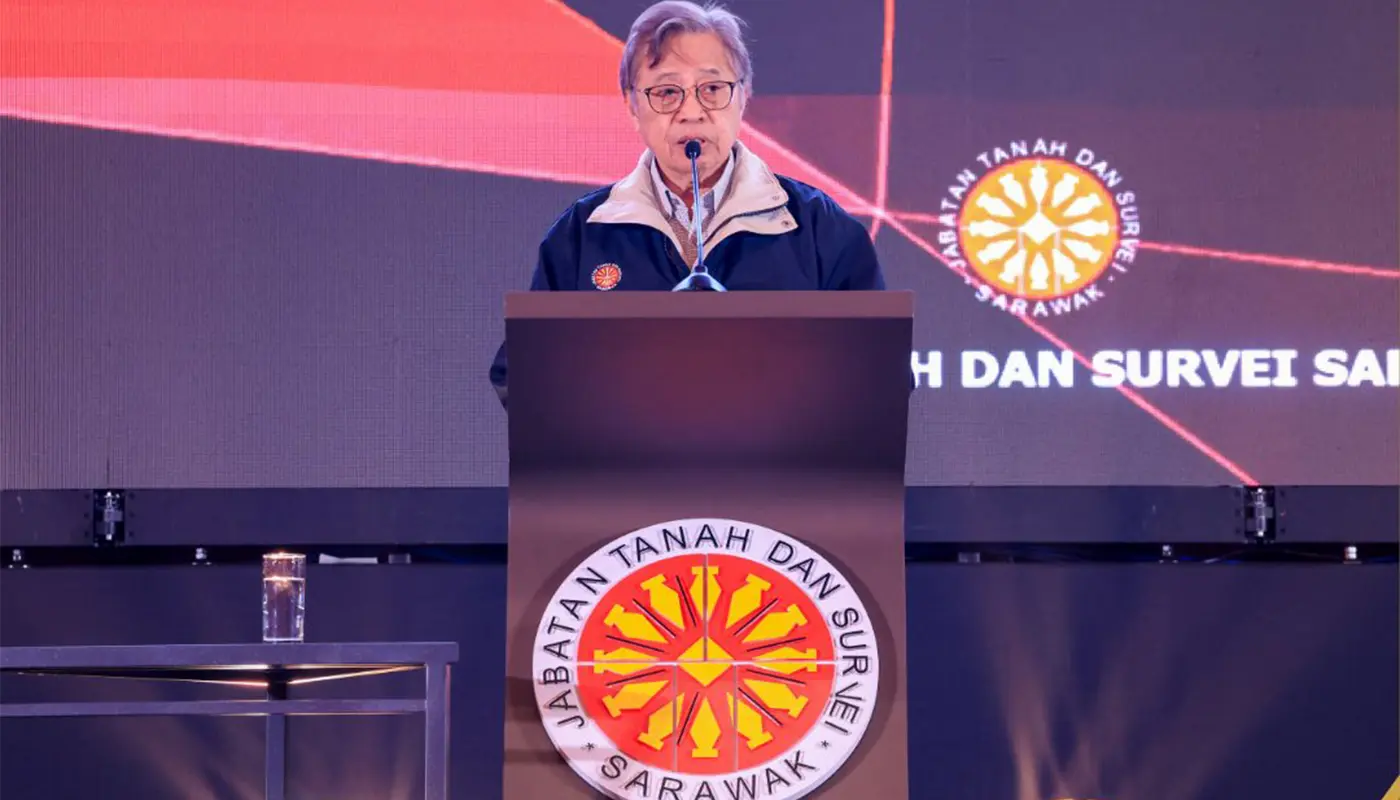
BINTULU – Sarawak Premier Datuk Patinggi Tan Sri (Dr) Abang Haji Abdul Rahman Zohari bin Tun Datuk Abang Haji Openg officiated the Land and Survey (LANDAS) Summit 2026 at Imperial Hotel on Feb 9.

The three-day programme, which started yesterday, is organised by the Sarawak Land and Survey Department (Jabatan Tanah dan Survei, JTS) and will run until 11 February with the objective of enhancing the land administration framework in the state.
The state-level summit, held under the theme “Committed, Perseverance, Focus, Extraordinary”, was attended by over 150 officers from 12 divisions throughout Sarawak. It acts as a tactical foundation for improving leadership, performance and service delivery in the department.
The Chief Minister also launched the Sarawak Land and Survey Department Strategic Plan 2026–2030 at the opening of MASSaR, which sets out a vision for efficient and transparent land use in the future.
He also launched the Sarawak Premier’s Virtual Hall, realised through a collaboration with Universiti Teknologi Malaysia (UTM), Johor Bahru. This programme reflects the department’s commitment to digital transformation and modernisation of land administration.
The event also happened to fall on the 108th year of the Sarawak Land and Survey Department, as evidenced by a symbolic cake-cutting ceremony. It was broadcast live to all JTS divisions across the state using Zoom, reflecting the unity and camaraderie of staff.
In his keynote address, the Chief Minister emphasised that land is vital, as it forms the basis of development in Sarawak. “Land, in David’s view, is not just a physical asset that can be measured by area or market value,” he said. In Sarawak, land is an inherited inheritance, a source of life, a signifier of community identity and the cornerstone on which Sarawak’s future will be built.
He stressed that many industries, such as agriculture, forestry, industry, tourism and urban development, as well as renewable energy, depend on the good management of lands. He called the control of land a “strategic trust” that creates a long-term trajectory for the state.
In addressing the NCR Land issue, the Premier reassured that the government would not compromise on native rights. “This is still about more than legal terms,” he said, and refers to culture, history, identity, and community health. He then emphasised that development and social justice must go hand-in-hand.
The Premier also outlined potential impacts of urbanisation and climate change in calling for sustainable and resilient land use planning. He warned against rash urban expansion by neglecting public welfare, safety and environmental protection. Land planning and design is key to mitigating disaster risks, he said.
In concluding his remarks, the Premier challenged JTS officers to maintain and promote integrity, governance, and professionalism.
“Every single decision on land will actually define the economic and social landscape of Sarawak moving forward,” he said, advocating the LANDAS Summit 2026 as a transformative tool for efficient, transparent and sustainable land administration.
Another key outcome of the summit is to be a renewed expression by Sarawak of a commitment to modernising land governance so that policies are subject to adaptive management in response to both development imperatives and community rights.
