



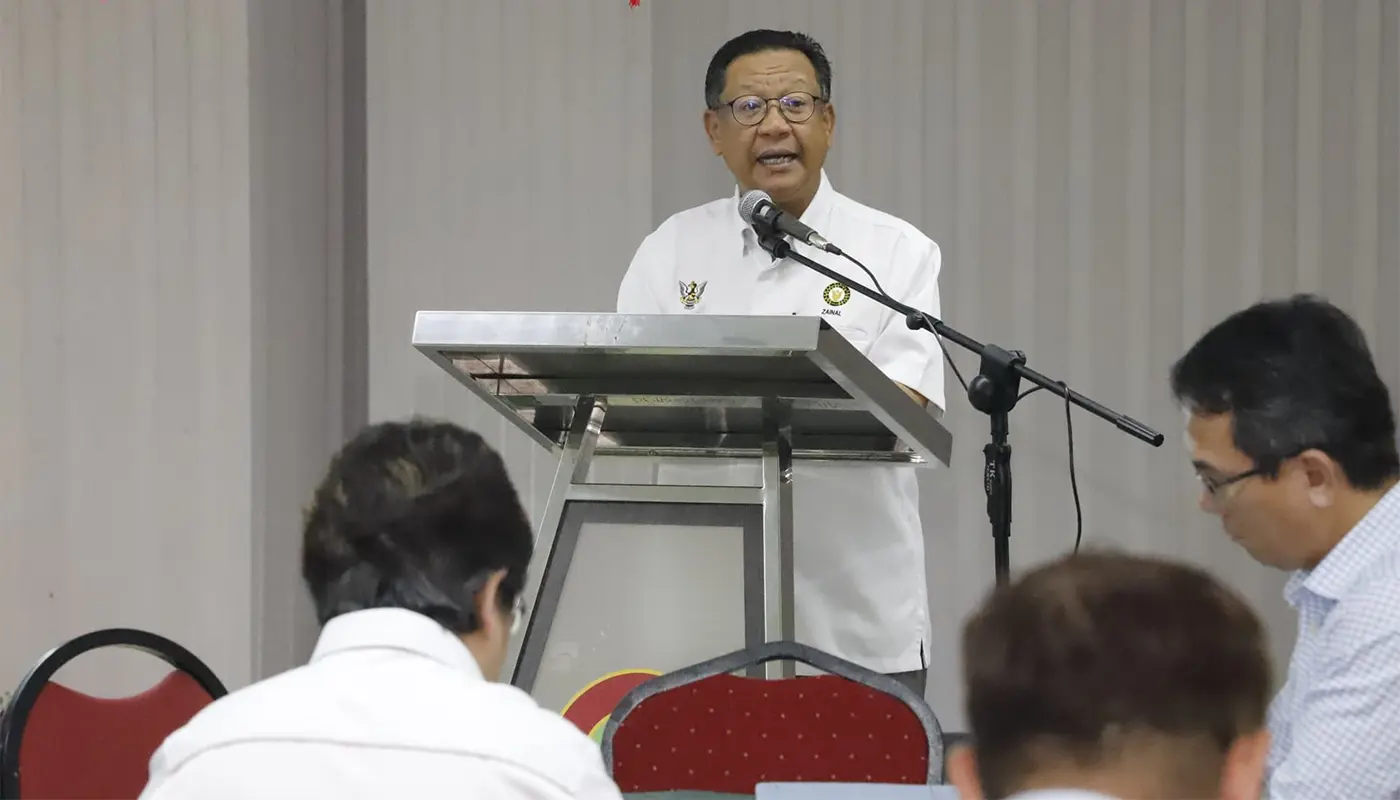
KUCHING – The Sarawak Timber Industry Development Corporation (PUSAKA) has taken another step in its integrity agenda with the launch of the Anti-Corruption Strategy for HERITAGE 2026–2030 (OACS). The workshop, held on 23 February 2026 at Wisma Sumber Alam in Petra Jaya, brought together 40 participants, including PUSAKA officers and representatives from subsidiary companies.

The event was officiated by Datu Haji Zainal Abidin bin Haji Abdullah, General Manager of PUSAKA, who underscored the importance of good governance and accountability. He highlighted that the workshop serves as a crucial platform to refine strategies that will guide the organisation’s anti-corruption efforts over the next five years.
A detailed briefing was delivered by Tuan Hj Nadzam Al-Rush bin Datu Haji Putit, Assistant General Manager of Risk Management and Integrity. He outlined the objectives of the OACS, which builds upon the earlier Organisational Anti-Corruption Plan (OACP) 2021–2025, launched in March 2021 and concluded in December 2025.
The new strategy aligns with the National Anti-Corruption Strategy (NACS) 2024–2028, which sets out five key pillars: Education, Public Accountability, People’s Voice, Enforcement, and Incentives. These frameworks are designed to strengthen institutional integrity while ensuring that anti-corruption measures are embedded across all levels of governance.
In his speech, Datu Haji Zainal Abidin stressed that combating corruption requires continuous commitment from every staff member. He noted that integrity is not only a matter of compliance but also a responsibility that reflects the organisation’s credibility and trustworthiness.
The workshop also provided participants with the opportunity to discuss practical approaches to implementing the OACS. Topics included enhancing transparency in procurement, improving monitoring mechanisms, and fostering a culture of integrity within subsidiaries.
By adopting the OACS, PUSAKA aims to reinforce its role as a responsible organisation that prioritises ethical practices. The strategy is expected to serve as a comprehensive guide for staff and stakeholders, ensuring that anti-corruption measures remain effective and relevant in the years ahead.
The initiative reflects Sarawak’s broader commitment to integrity and governance, echoing national efforts to strengthen accountability across public and private sectors. With corruption often cited as a barrier to sustainable development, the OACS is seen as a vital tool in safeguarding resources and ensuring fair opportunities for all.
As the workshop concluded, participants expressed optimism that the strategy would provide a clear roadmap for PUSAKA’s integrity agenda. The five-year plan is expected to enhance resilience against corruption risks while promoting a culture of transparency and accountability within the organisation.
