



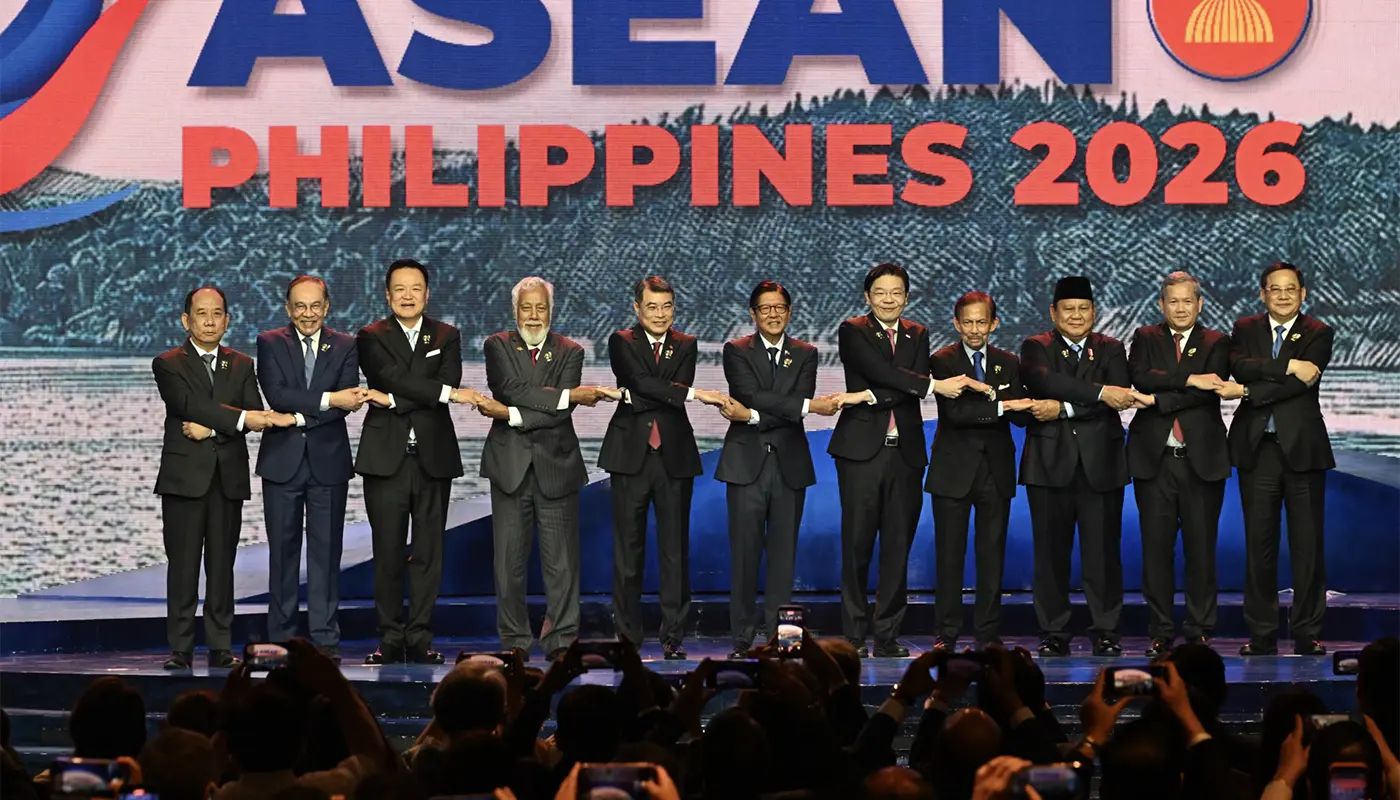
CEBU – The 48th ASEAN Summit opened in Cebu, Philippines, on Friday, 8 May 2026, with leaders placing energy security, food security, and the protection of ASEAN nationals abroad at the centre of discussions.

The summit comes at a time of heightened global uncertainty, driven by the ongoing conflict in the Middle East and its impact on oil supplies and regional stability.
Philippine President Ferdinand Romualdez Marcos Jr, serving as ASEAN Chair for 2026, acknowledged the challenges posed by rising energy costs and supply chain disruptions.
He noted that the volatile situation in the Middle East has created a domino effect across ASEAN economies, threatening livelihoods and exposing vulnerabilities.
“The recent crisis is a stark reminder of how vulnerable our economies remain to sudden shifts in the international order,” he said, stressing the need for foresight and collective action.
The summit also addressed the nearly 70-day blockade of the Strait of Hormuz, a critical passage for global oil and gas supplies.
Leaders emphasised the urgency of developing a harmonised strategy to mitigate the effects of energy shocks, including diversifying suppliers, securing alternative routes, and establishing crisis communication protocols.
Indonesian President Prabowo Subianto warned that energy supply pressures would remain high for the foreseeable future, urging ASEAN to prepare for long-term disruptions.
He highlighted the importance of safeguarding trade routes in Southeast Asia, particularly the South China Sea and the Malacca Strait, which are vital for international commerce.
ASEAN economic ministers identified practical measures to strengthen resilience, though details remain limited.
Among the proposals was a voluntary, commercial-based oil-sharing framework, championed by the Philippines, to ensure member states can access emergency fuel supplies.
Leaders are expected to push for ratification of the pact to enable its earliest possible implementation. Beyond energy and food security, the summit also discussed broader regional issues.
These included Timor-Leste’s full integration into ASEAN following its admission in 2025 and the ongoing crisis in Myanmar.
Foreign ministers agreed to hold a virtual meeting with Myanmar’s representatives as part of efforts to normalise ties, though divisions remain within the bloc over engagement with its leadership.
The summit underscored ASEAN’s role as a platform for regional stability and cooperation amid global geopolitical competition.
Leaders reaffirmed their commitment to inclusiveness and resilience, recognising that collective unity is essential to withstand future crises.
