



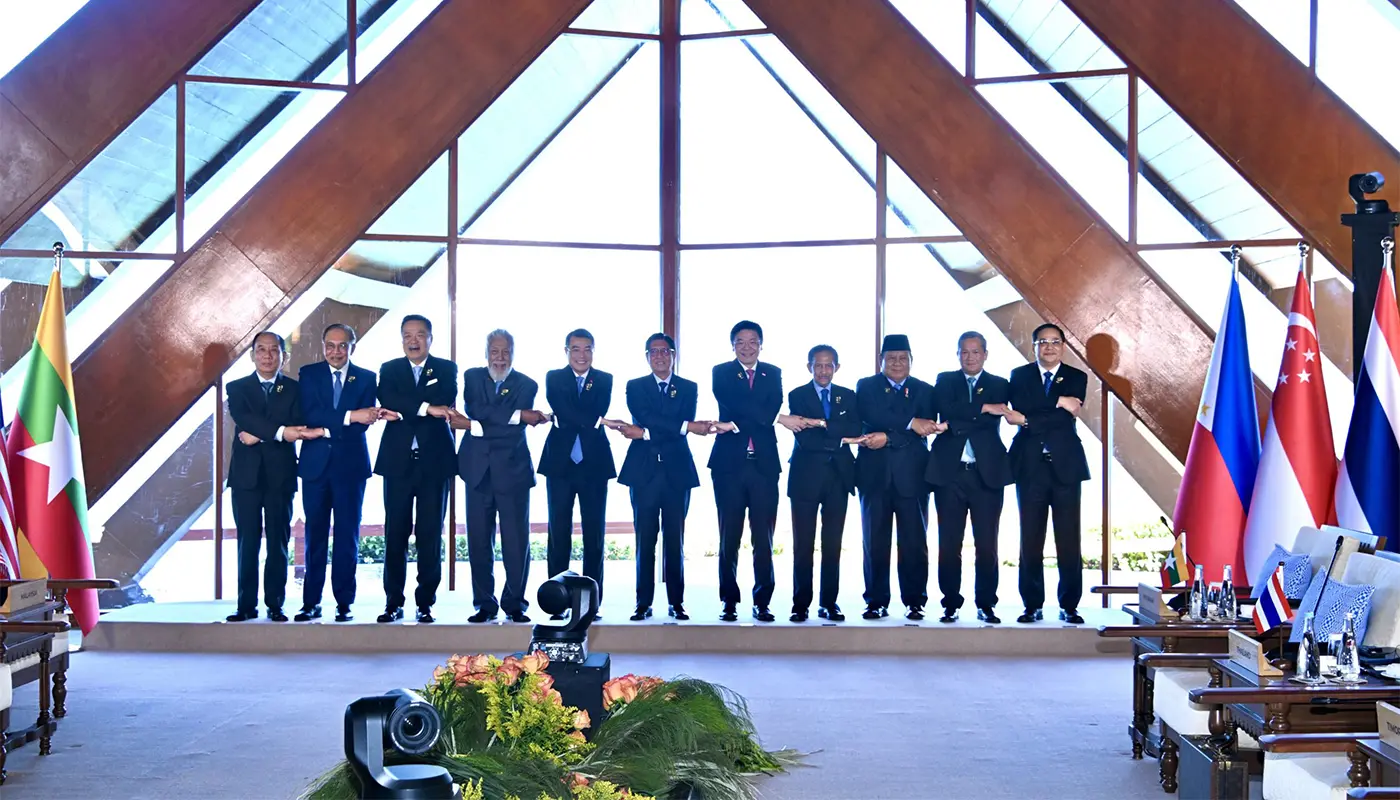
CEBU – The 48th ASEAN Summit concluded in Cebu, Philippines, with leaders underscoring the need for unity and resilience as the region confronts mounting global challenges.

The gathering brought together heads of state and senior officials who emphasised collective responsibility in safeguarding peace, stability, and prosperity across Southeast Asia.
Malaysian Prime Minister Anwar Ibrahim highlighted the importance of strengthening regional connectivity through initiatives such as the ASEAN Power Grid.
He also called for deeper intra-ASEAN trade, faster progress in digital economy cooperation, and stronger partnerships with trusted allies.
According to him, ASEAN must remain a consistent voice for dialogue, respect for international law, and peaceful dispute resolution.
ASEAN Secretary-General Dr Kao Kim Hourn joined the retreat session, where leaders exchanged views on pressing regional and international developments.
Discussions centred on how ASEAN can reinforce resilience in the face of shifting geopolitical dynamics, with participants agreeing that the bloc must play a proactive role rather than remain a passive observer.
Philippine President Ferdinand “Bongbong” Marcos Jr., who hosted the summit, opened the retreat by acknowledging the uncertainty of the current global climate. He stressed that conflicts and crises far beyond Southeast Asia continue to affect the region directly.
“We gather at a time of uncertainty, a time when events far beyond our region remind us once again of how deeply interconnected we are. Neither distance nor partnerships alone insulate any nation from the ripple effects of conflicts halfway around the world,” he said.
Indonesian President Prabowo Subianto also participated in the summit, attending both the retreat and plenary sessions.
Prabowo emphasised that competition and conflict undermine development and harm communities. He warned that Southeast Asian nations must safeguard their independence and avoid being drawn into global rivalries that could fracture the region.
“We must not allow competition. We must not allow our past to dictate our present and future. Indonesia is determined to build good neighbourly policies,” he said. He added, “Once again, we must not be swayed and must not be influenced by the currents of geopolitical competition and ego at present.”
The summit’s closing consensus reaffirmed ASEAN’s commitment to unity, agility, and foresight in addressing challenges ranging from energy and food security to supply chain stability.
Leaders agreed that the organisation must continue to foster equitable growth and ensure a sustainable future for its people.
