



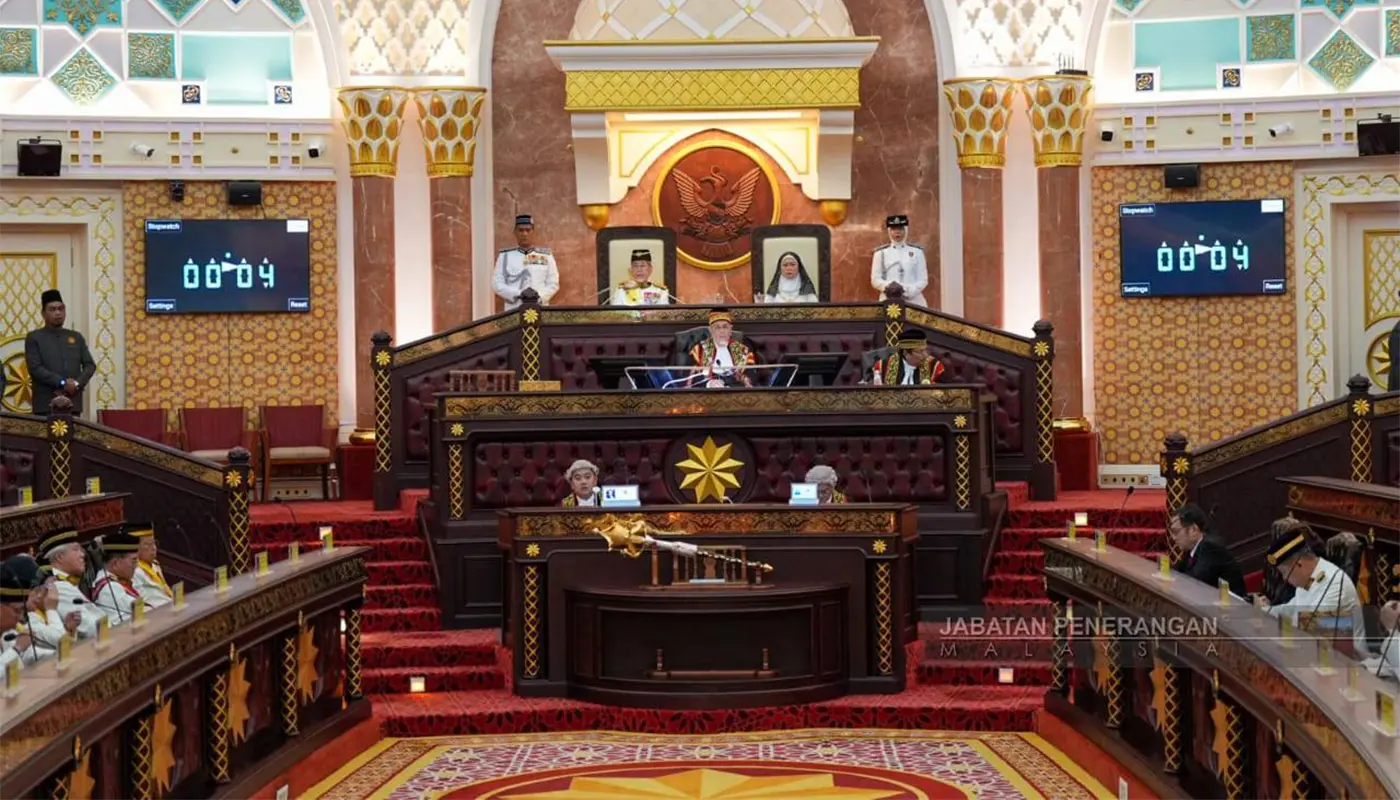
KUCHING – Sarawak’s commitment to sustainable growth and global competitiveness was reaffirmed during the opening of the Fifth Term of the 19th Sarawak State Legislative Assembly on 11 May.

His Excellency Tun Pehin Sri Dr Wan Junaidi Tuanku Jaafar, Yang di-Pertua Negeri Sarawak, delivered a wide-ranging speech that emphasised stability, resilience, and innovation as the pillars of the state’s future.
Addressing Members of the Assembly, Tun Pehin Sri highlighted that Sarawak continues to face complex global challenges, including geopolitical tensions, economic uncertainties, and supply chain disruptions.
These factors, he noted, have contributed to rising living costs. Despite this, Sarawak has managed to maintain economic stability through prudent financial management, clear development policies, and efficient administration.
He expressed appreciation to Premier of Sarawak, Datuk Patinggi Tan Sri Abang Abdul Rahman Zohari Tun Datuk Abang Openg, for implementing proactive measures to ease the burden on citizens.
Welfare initiatives and economic resilience strategies were cited as examples of the government’s commitment to safeguarding the people’s well-being.
The Governor reiterated that the Post COVID-19 Development Strategy 2030 (PCDS 2030) remains the guiding framework for Sarawak’s progress, particularly as the state prepares for the 13th Malaysia Plan.
He stressed the importance of focusing on high-value industries, digital transformation, clean energy, and human capital development to attract both local and international investors.
Sarawak’s growing reputation as a leader in renewable energy was also underscored. Expansion in hydro, solar, and bioenergy projects not only supports environmental sustainability but also creates new economic opportunities.
The Governor noted that ventures into aerospace, high technology, and the digital economy will open new chapters in Sarawak’s development, generating highly skilled jobs for locals.
He called for stronger collaboration between government, higher education institutions, Technical and Vocational Education and Training (TVET), and industry players to ensure talent development aligns with future needs.
On rural development, Tun Pehin Sri emphasised the importance of strategic infrastructure projects such as the Coastal Road, the Sabah-Sarawak Link Road, and rural road networks.
These initiatives, he said, will enhance connectivity and unlock economic opportunities for communities in the interior.
Urban transport and connectivity projects were also highlighted, including the Autonomous Rapid Transit (ART) system and the establishment of AirBorneo.
Both initiatives are expected to strengthen domestic and regional links while supporting economic and tourism growth.
The Governor concluded by reminding Assembly Members to uphold the dignity of the House, engage in mature debates, and prioritise the interests of the people.
He stressed that political stability, racial harmony, and unity among Sarawak’s multi-ethnic community remain the state’s greatest strengths in attracting investor confidence and ensuring sustainable progress.
