



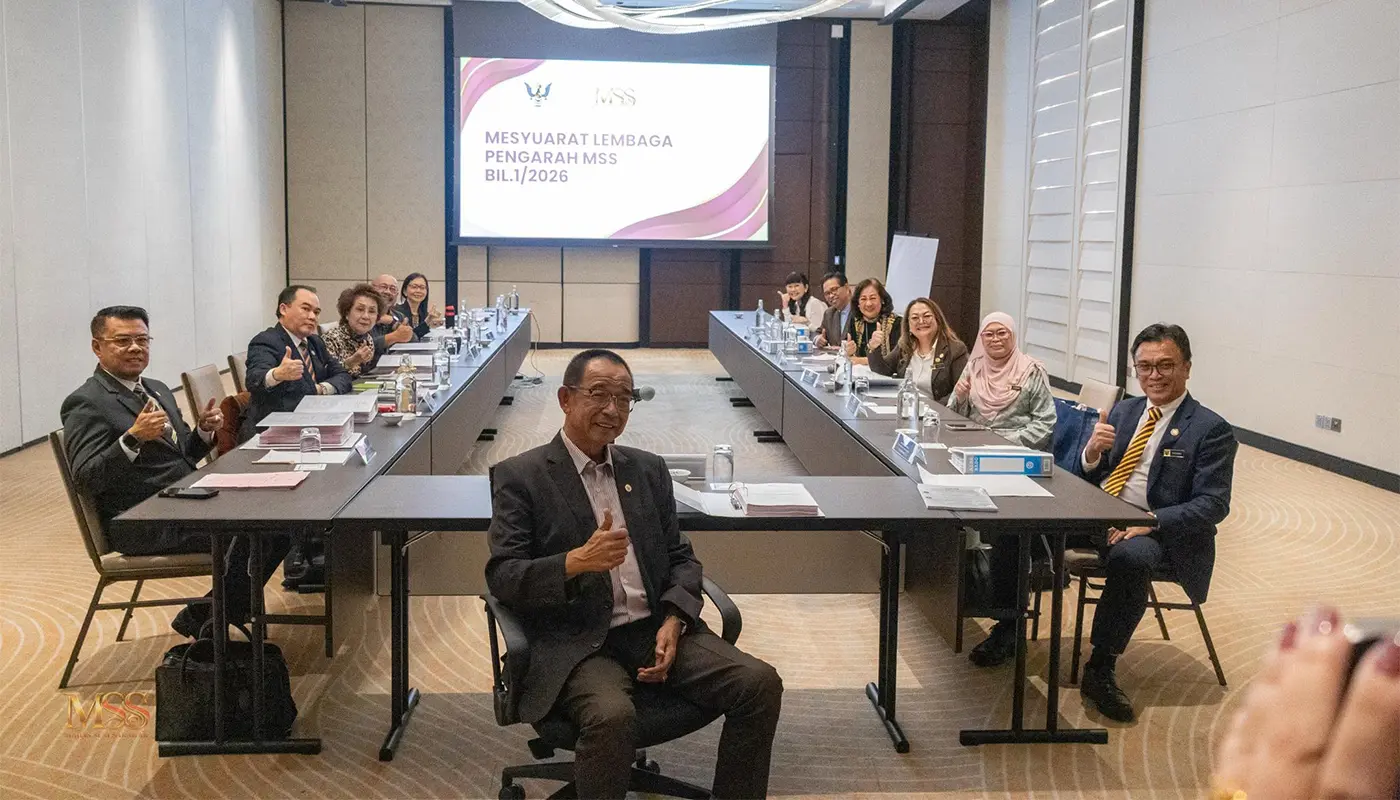
KUCHING – The Sarawak Arts Council convened its first Board of Directors meeting for 2026 on 23 June, chaired by YB Dato Sri Abdul Karim Rahman Hamzah, Minister of Tourism, Creative Industries and Performing Arts Sarawak. The meeting underscored the state’s commitment to strengthening the arts, culture, and creative industries.
Dato Sri Abdul Karim, who also serves as Chairman of the Board of Directors of the Sarawak Arts Council, led discussions alongside the Chief Executive Officer of the Sarawak Arts Council (MSS), Dr Suffian bin Haji Jalet, and Deputy Chief Executive Officer En. Awang Ikman bin Awang Sepian.
Members of the Board of Directors were also present to deliberate on several proposal papers aimed at shaping the future of Sarawak’s creative landscape.
The meeting highlighted the importance of strategic planning in empowering local artists and cultural practitioners.
By focusing on long-term development, the council aims to realise Sarawak’s vision of becoming a hub for creative industries in the region.
Officials emphasised that the proposals presented were designed to provide clear direction for arts and cultural initiatives, ensuring that programmes are aligned with both community needs and state development goals.
The council’s role as a policymaking body is seen as crucial in guiding the growth of Sarawak’s creative sector, particularly in areas such as performing arts, cultural heritage, and creative entrepreneurship.
The session also reinforced the council’s mission to integrate arts and culture into broader state development strategies.
By doing so, Sarawak seeks to enhance its cultural identity while creating opportunities for economic growth through creative industries.
The meeting’s theme, “Planning. Empowering. Realising.”, reflects the council’s determination to translate ideas into actionable programmes that benefit both practitioners and the wider community.
With strong leadership and collaborative input from stakeholders, the Sarawak Arts Council is expected to play a pivotal role in shaping the state’s cultural future.
