



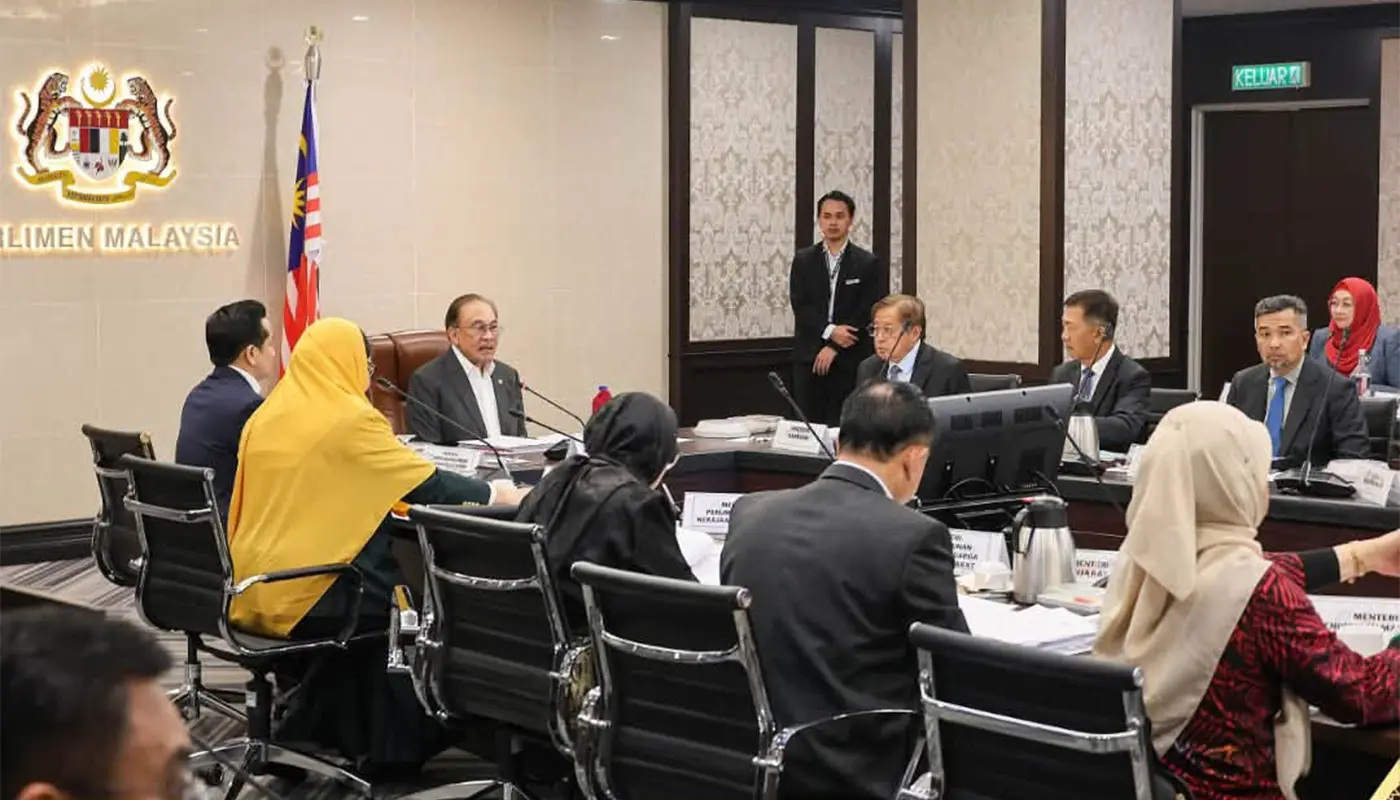
KUALA LUMPUR – Premier of Sarawak, Datuk Patinggi Tan Sri (Dr) Abang Haji Abdul Rahman Zohari bin Tun Datuk Abang Haji Openg, participated in the Seventh Meeting of the National Climate Change Action Council (MTPIN) No. 1/2026, held at the Parliament Building on 8 July.

The session was chaired by Prime Minister Dato’ Seri Anwar bin Ibrahim and served as a key platform to strengthen collaboration between the Federal Government, state administrations, and relevant agencies in advancing Malaysia’s climate change agenda.
Discussions centred on the impact of global warming on Malaysia, strategies to mitigate its effects on the national economy, and measures to enhance resilience against climate-related challenges.
The council also explored opportunities to boost economic competitiveness through sustainable, low-carbon development.
Prime Minister Anwar highlighted Malaysia’s commitment to international climate frameworks, stating: “In the Meeting of the National Climate Change Action Council (MTPIN) No. 1/2026 which I chaired today, we examined the progress of the implementation of various initiatives to strengthen Malaysia’s commitment to the climate change agenda in line with the Paris Agreement and the United Nations Framework Convention on Climate Change (UNFCCC).”
He further emphasised the importance of inclusive policymaking, noting that engagement with state governments must be comprehensive to ensure strategies respect constitutional roles and state jurisdictions.
“The MADANI government remains focused on ensuring that the national development agenda moves in tandem with efforts to preserve the environment for a more sustainable future for future generations,” he added.
The meeting was attended by Federal Ministers, Chief Ministers, State Government Secretaries, and representatives from ministries and agencies. Their presence reflected a unified national approach to tackling climate change.
Premier Abang Johari’s participation underscored Sarawak’s role in national climate discussions, particularly given the state’s ongoing initiatives in renewable energy, forest conservation, and sustainable economic planning.
Sarawak has been actively positioning itself as a leader in green growth, with policies aimed at balancing development and environmental stewardship. Malaysia’s climate strategy continues to evolve in response to global challenges.
The council’s deliberations reaffirmed the country’s determination to align economic progress with sustainability, ensuring resilience for future generations while maintaining competitiveness in the global economy.
