



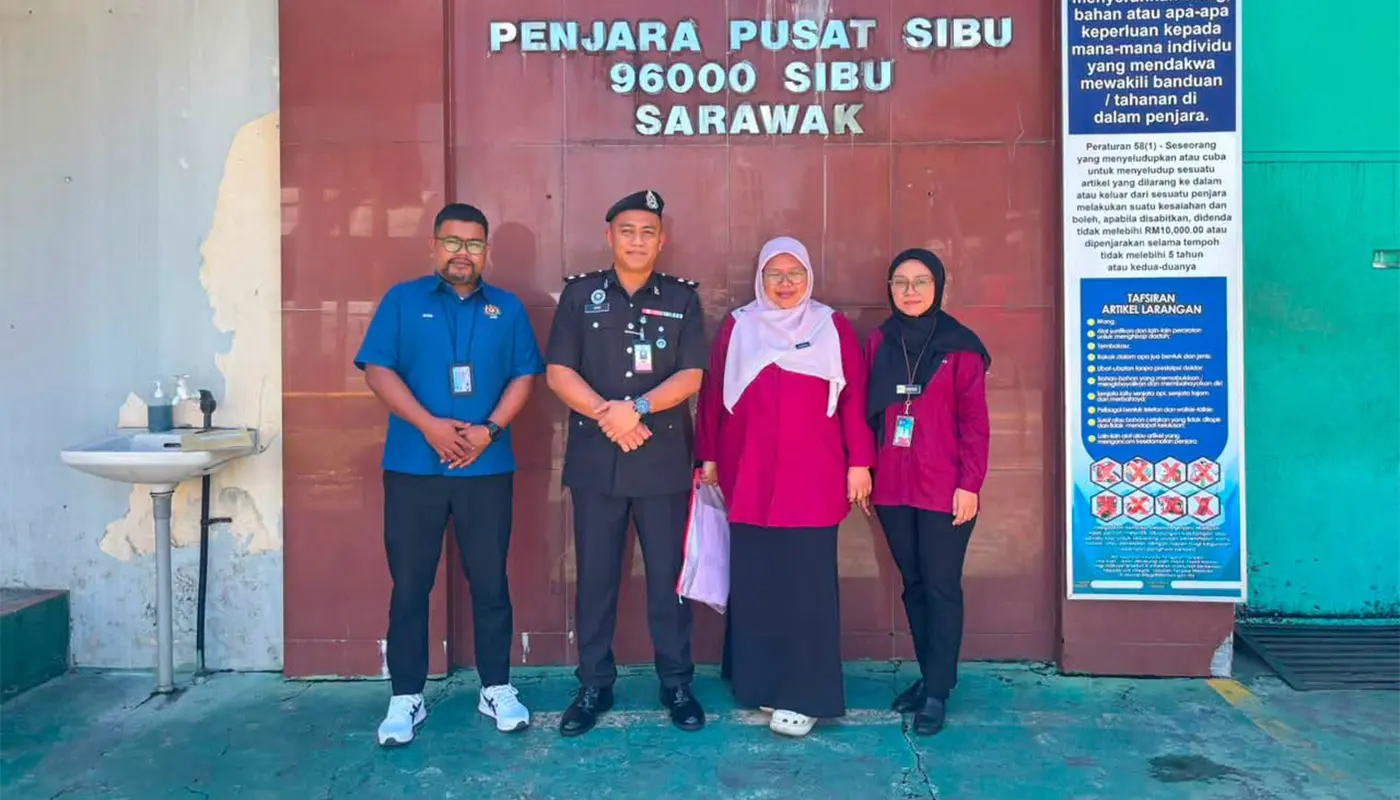
SIBU – The Sibu District National Anti-Drug Agency (AADK) has reinforced its commitment to community-centred rehabilitation through the Borderless Rehabilitation Treatment Mobilisation (MRT AADK) programme, held at the Human Development Programme Hall in Sibu Central Prison on Tuesday, 11 July 2026.

The initiative involved 30 individuals currently undergoing rehabilitation or personality development programmes, referred to as prospects. Among them were 27 men and 3 women, each receiving tailored guidance to help rebuild their identity and strengthen resilience against drug abuse.
The MRT AADK programme represents a new direction in treatment services, focusing on expanding access and providing specialised consultation for prospects. By adopting a mobile and inclusive approach, the agency ensures that rehabilitation services are closer to the community and more responsive to individual needs.
Central to the programme is the implementation of mobile psychosocial interventions, designed to address behavioural and emotional challenges faced by prospects. These interventions are supported by a structured recovery model, aimed at ensuring long-term effectiveness and reducing the risk of relapse.
Officials explained that the integrated efforts carried out under MRT AADK indirectly support the national agenda of lowering relapse rates among individuals in recovery. By combining treatment expertise with community-based strategies, the programme seeks to create a supportive environment that promotes sustainable recovery.
AADK District Head, Azimah Marsid, was present at the event, underscoring the agency’s dedication to delivering rehabilitation services that are inclusive and impactful. She noted that the MRT approach ensures services remain accessible and relevant, particularly for communities that require closer engagement.
The programme also highlighted the importance of identity rebuilding, encouraging prospects to develop self-confidence and adopt healthier lifestyles. By focusing on personal growth alongside treatment, MRT AADK aims to empower individuals to reintegrate into society as responsible and productive citizens.
Community leaders welcomed the initiative, noting that drug rehabilitation efforts must be rooted in inclusivity and accessibility. They emphasised that programmes like MRT AADK are essential in ensuring that treatment services reach those most in need, while also fostering community awareness about the importance of supporting recovery.
Observers pointed out that the MRT programme reflects a broader shift in rehabilitation strategies, moving away from centralised treatment facilities towards mobile, community-based models. This approach not only reduces barriers to access but also strengthens the connection between prospects and their local communities.
As Sarawak continues to address the challenges of drug abuse, initiatives like MRT AADK demonstrate how innovative approaches can make rehabilitation more effective. By combining psychosocial support, structured recovery models, and community engagement, the programme ensures that treatment services remain impactful and sustainable.
