



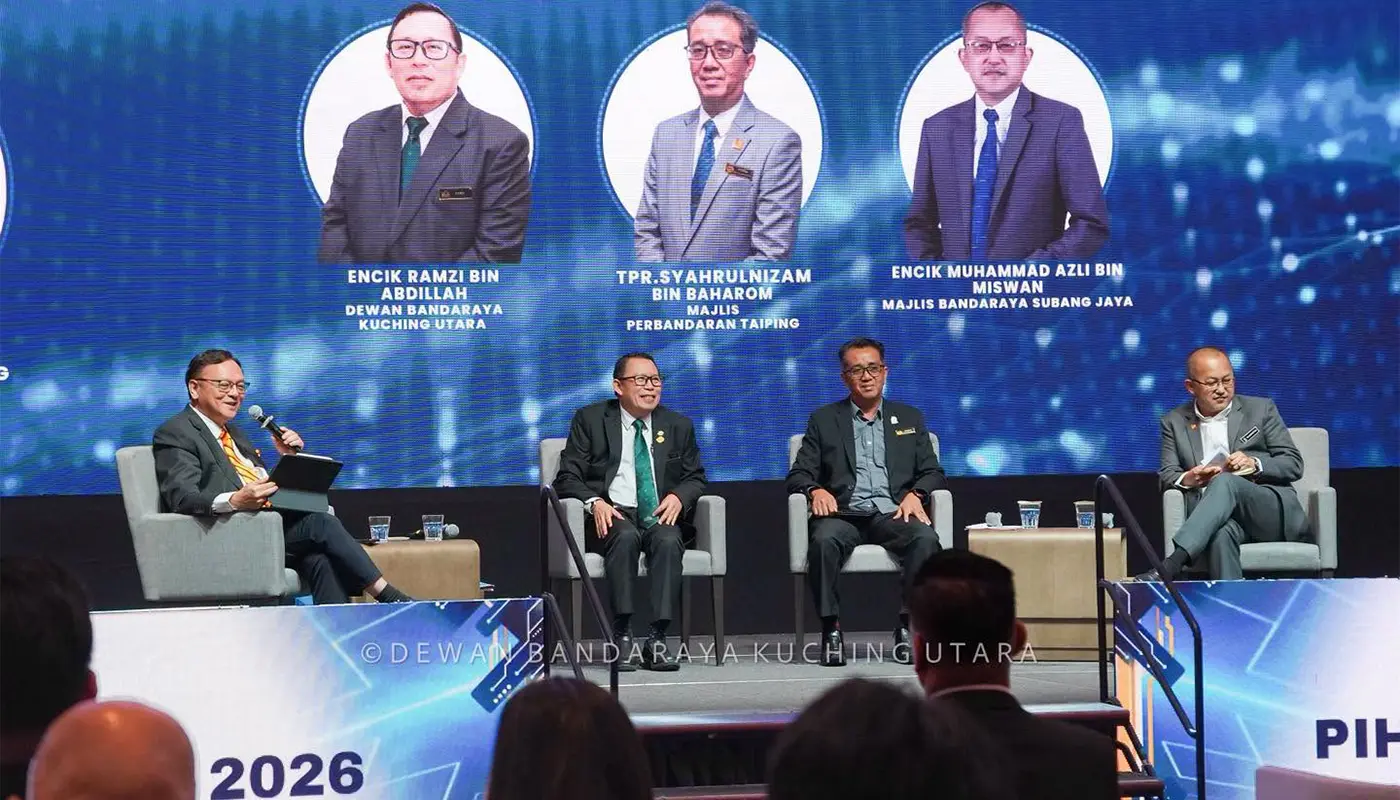
KUCHING – Kuching North City Hall (DBKU) has participated as a panel member at the Sarawak Local Authority Conference (PBT) 2026, held at the Voco by IHG Hotel in Kuching.

The engagement provided DBKU with an opportunity to share its experience and best practices in governance and service delivery.
Representing DBKU, Director Yang Berusaha Encik Ramzi bin Abdillah delivered a presentation titled Transformation of Feedback Management Towards Excellent Governance.
His address highlighted DBKU’s initiatives in strengthening feedback management systems to ensure services are more efficient, responsive, and systematic.
The presentation focused on DBKU’s Integrated Feedback Management Control System, which has been designed to streamline the handling of public input.
This system incorporates several components, including a support system framework, data analysis for feedback management, a 24-Hour Service Centre, and the Friendly Neighbourhood initiative.
Together, these elements enable DBKU to receive, monitor, coordinate, and act upon feedback in a structured manner.
Encik Ramzi explained that the holistic approach adopted by DBKU ensures that every piece of feedback is treated as an opportunity to improve governance and service delivery.
By integrating technology and community-based initiatives, DBKU has been able to enhance transparency and accountability while building stronger trust with residents.
The Sarawak Local Authority Conference 2026 served as a platform for local councils across the state to exchange knowledge, share experiences, and explore new strategies for urban management.
DBKU’s contribution underscored the importance of feedback management as a cornerstone of excellent governance, particularly in rapidly growing urban centres such as Kuching.
Feedback management has become increasingly vital in modern governance, where citizens expect timely responses and effective solutions to their concerns.
DBKU’s system demonstrates how local authorities can leverage digitalisation and community engagement to meet these expectations.
The 24-Hour Service Centre, for instance, ensures that residents can lodge complaints or provide suggestions at any time, while the Friendly Neighbourhood initiative fosters closer ties between the council and communities.
The conference also highlighted the broader role of local authorities in supporting Sarawak’s development agenda.
By adopting innovative practices such as DBKU’s feedback management system, councils can improve service delivery, strengthen governance, and contribute to sustainable urban growth.
DBKU expressed gratitude to the organisers for the invitation, noting that the opportunity to share its practices with other local authorities across Sarawak was invaluable.
The department reaffirmed its commitment to continuous improvement and to playing an active role in shaping governance standards that benefit city residents.
As Sarawak continues to modernise its urban management frameworks, initiatives like DBKU’s Integrated Feedback Management Control System are expected to play a crucial role in ensuring that local authorities remain responsive, accountable, and effective in meeting the needs of their communities.
