



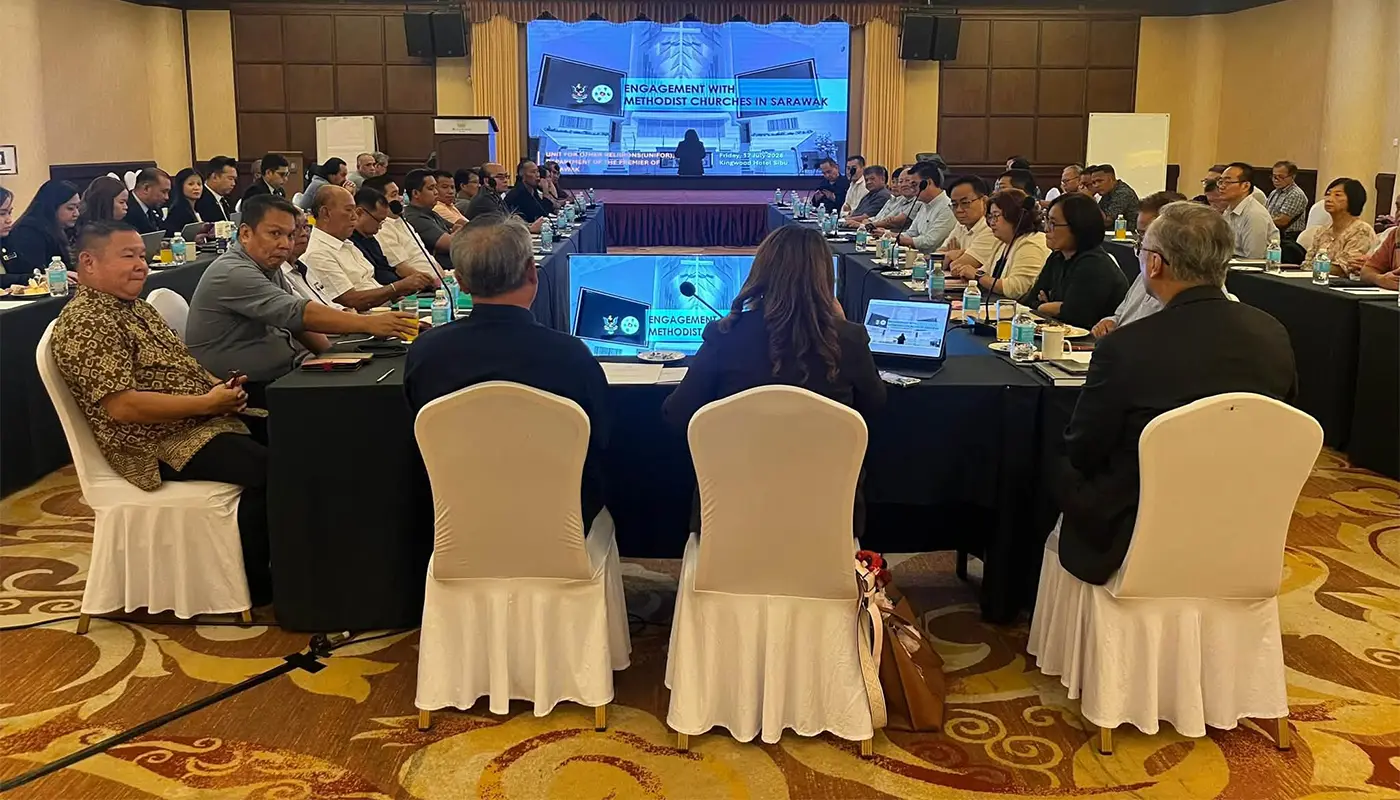
SIBU – A significant interfaith dialogue took place in the central region of Sarawak this past week, as the Unit for Other Religions (UNIFOR) convened an engagement session with representatives of the Methodist Church.
Held on the afternoon of 17 July 2026 at the Kingwood Hotel, the gathering served as a strategic platform to reinforce collaborative ties between the state administration and religious communities.
The event was chaired by Dato Georgina Apphia Ngau, the Director of UNIFOR, who emphasised the importance of sustained communication in fostering a cohesive society.
Her leadership in this initiative highlights the department’s ongoing commitment to ensuring that all religious groups have direct access to governmental support and administrative guidance.
Sarawak’s social fabric is widely recognised for its harmonious multiculturalism, and this session was designed to nurture that specific strength.
By bringing the dialogue to Sibu, a historic heartland for the Methodist community in the state, the organisers ensured that the engagement was both accessible and deeply relevant to the local congregations.
Prominent figures from the church leadership were in attendance, underscoring the mutual respect between the institutions.
Mr Ronnie Hii Ru Wei, Secretary of the Trustees of the Methodist Church in Sarawak, joined Reverend Dr Lau Hui Ming, President of the Sarawak Chinese Annual Conference, and Reverend Bonnie Sedau, President of the Sarawak Iban Annual Conference.
Their collective presence demonstrated a unified commitment to working alongside the state government on shared community development goals.
A central theme of the afternoon was the practical application of digital tools in managing religious infrastructure projects.
UNIFOR has been actively promoting the Other Religions Services Management Systems, a dedicated online portal designed to streamline applications for financial assistance and project oversight.
This digital transition aims to enhance transparency, accelerate approval processes, and improve the overall delivery of public funds to houses of worship.
To acknowledge the proactive adoption of this system, the session featured a formal recognition ceremony.
Certificates of Appreciation were awarded to fourteen Methodist congregations that successfully submitted comprehensive assistance applications through the digital platform.
The honoured institutions included Chin Fu, Zhu En, Sing Eng, Wan Fu Tak Teck, En Tao, Sing Ang Tong, Mukah, Permyjaya, Agape Grace, Tien Sik, Ka Ong, and Emmanuel Methodist Churches, alongside Gereja Iban Methodist Tada and Gereja Iban Methodist Tanjung Bekakap.
Among the recipients, Chin Fu Methodist Church in Kuching received a distinct commendation. As one of the oldest Methodist congregations in the city, the church was specifically recognised for its outstanding dedication to project implementation.
The award highlighted the institution’s meticulous approach to submitting well-organised progress reports, setting a benchmark for administrative excellence in community infrastructure projects.
The discussions also extended beyond administrative procedures to encompass broader societal objectives.
Participants exchanged valuable insights on how religious institutions can further contribute to local welfare, education, and social resilience.
This collaborative approach ensures that community development initiatives are not only well-funded but also strategically aligned with the genuine needs of the populace.
UNIFOR’s continued investment in such engagement programmes reflects a broader governmental strategy to decentralise support and empower local communities.
By maintaining open channels of communication, the state can better anticipate challenges and tailor its developmental policies to be more inclusive and effective.
The successful conclusion of this Sibu gathering reinforces the shared vision of a compassionate and united Sarawak.
As both the government and religious organisations continue to refine their partnership, the focus remains firmly on building resilient communities that uphold the enduring values of mutual respect and collective progress.
Moving forward, regular dialogues of this nature will be essential in sustaining the momentum of collaborative state-building and ensuring that no community is left behind in Sarawak’s ongoing development.
