



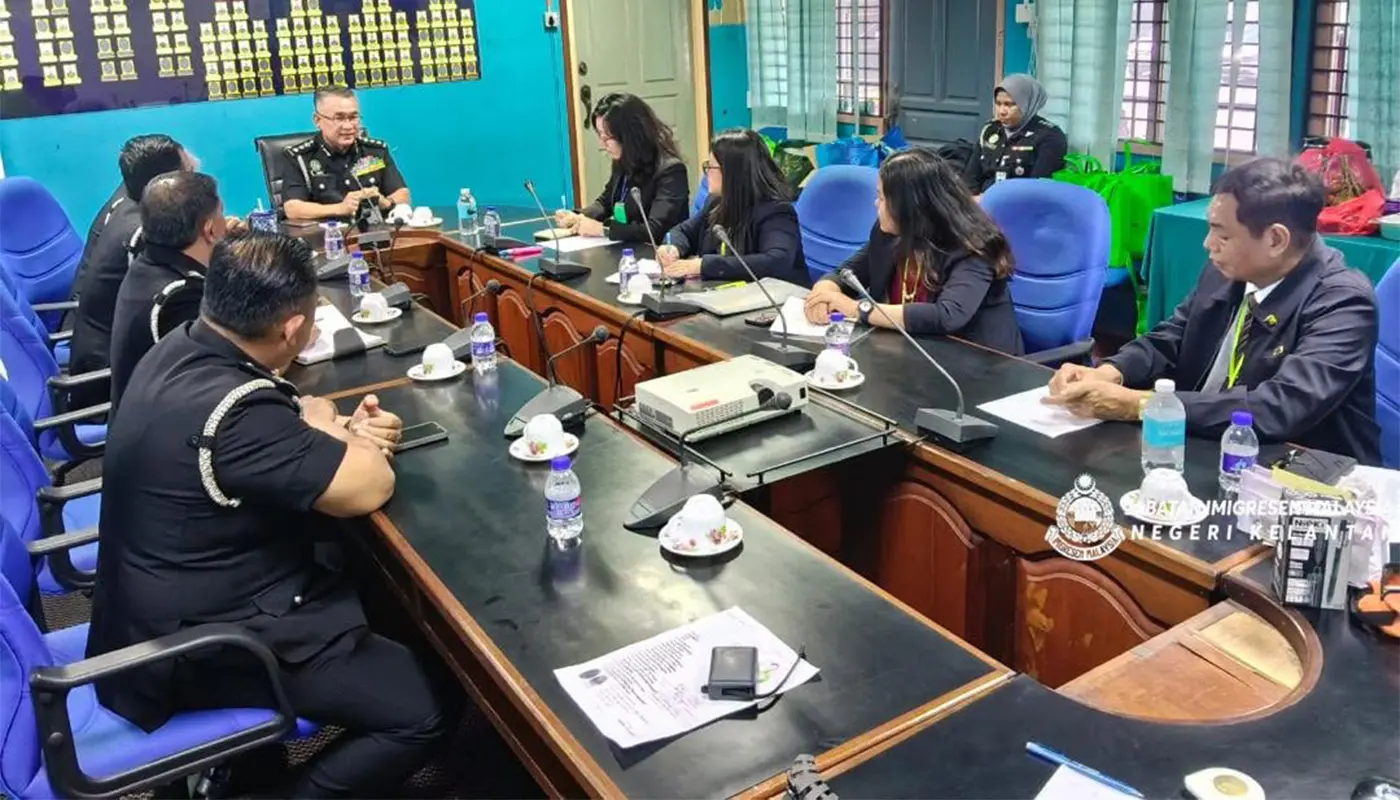
TANAH MERAH – Officials from the Malaysian Immigration Department (JIM) in Kelantan engaged in high-level strategic discussions with a delegation from the Embassy of Myanmar on Saturday, 19 July 2026.

The meeting, held at the Tanah Merah Immigration Depot, served as a crucial platform to enhance bilateral cooperation regarding immigration management, with a specific focus on matters concerning Myanmar nationals residing in or transiting through Malaysia.
The session was chaired by YBrs Tuan Garry Belayong anak John Siki, the Director of Immigration for the State of Kelantan.
He was joined by key senior officials from the department, including YBrs Puan Ruzaana Mohamed, the Deputy Director of State Immigration (Control); Tuan Muhammad Hafiz Abd Rahim, the Commandant of the Tanah Merah Immigration Depot; and Tuan Mohd Rozi Ghazali, the Deputy Head of the Enforcement Division.
Their presence underscored the department’s comprehensive approach to handling immigration issues, covering aspects of control, enforcement, and depot management.
Representing the diplomatic mission was Miss Aye Chan Oo, Counsellor at the Embassy of Myanmar, accompanied by several other embassy officials.
The dialogue provided an opportunity for both parties to address current challenges, streamline administrative processes, and foster better communication channels between the local immigration authorities and the Myanmar diplomatic corps.
Such engagements are vital for ensuring that immigration procedures are conducted efficiently while respecting international protocols and humanitarian considerations.
The primary objective of the discussion was to strengthen the existing network of cooperation between the two entities.
By maintaining open lines of communication, both sides aim to resolve issues related to documentation, legal status, and the welfare of Myanmar citizens in Kelantan more effectively.
This collaborative effort is seen as essential for maintaining order and ensuring that immigration laws are upheld fairly and consistently.
In a statement following the meeting, the Kelantan State Immigration Department reaffirmed its commitment to working with foreign delegations through a professional, transparent, and constructive approach.
The department emphasised that these efforts are not merely administrative but are integral to its broader mandate.
Strengthening ties with embassies helps improve the quality of service delivery to foreign nationals, enhances overall immigration governance, and supports the national security agenda.
The choice of Tanah Merah as the venue for this strategic dialogue highlights the significance of the depot in managing immigration flows in the region.
As a key facility, it plays a pivotal role in the processing and detention of individuals awaiting deportation or resolution of their immigration status.
Ensuring that operations at such facilities are aligned with diplomatic expectations and legal standards is a priority for the state authorities.
This meeting reflects a growing trend among Malaysian state immigration departments to engage directly with foreign missions.
Rather than relying solely on federal-level interactions, state directors are taking proactive steps to address localised issues that require immediate attention and nuanced understanding.
This decentralised approach allows for quicker resolution of cases and better management of community relations involving foreign nationals.
For the Myanmar Embassy, the discussion offered a chance to advocate for the interests of its citizens and ensure that their rights are protected under Malaysian law.
It also provided an avenue to clarify any misunderstandings regarding immigration policies and to seek assistance in cases where citizens may face difficulties.
As global migration patterns continue to evolve, such bilateral engagements become increasingly important.
They serve as a reminder that immigration management is not just about enforcement but also about diplomacy, cooperation, and mutual respect.
The Kelantan Immigration Department’s initiative sets a positive example for other states, demonstrating how proactive dialogue can lead to more effective and humane immigration practices.
The outcomes of this strategic discussion are expected to yield practical improvements in how Myanmar-related cases are handled in Kelantan.
Both parties expressed optimism about the future of their collaboration, noting that continued engagement will be necessary to adapt to changing circumstances and emerging challenges.
Ultimately, the success of these efforts contributes to the stability and security of the state, while also upholding Malaysia’s reputation as a nation that manages its borders with professionalism and integrity.
The commitment to transparency and constructive engagement remains at the heart of the department’s strategy, ensuring that immigration governance serves both national interests and international obligations.
