



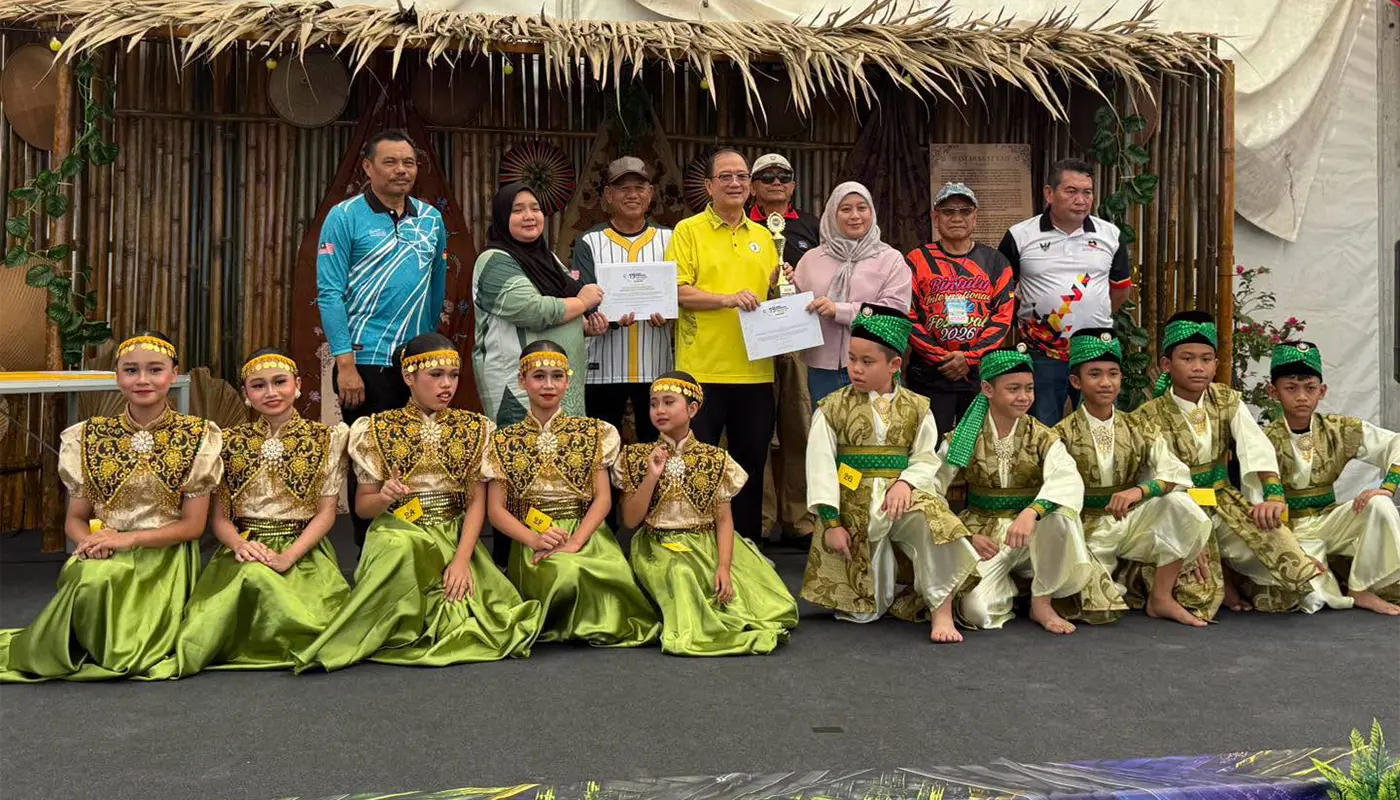
BINTULU – The Tanjong Batu assemblyman has commended the exceptional talent and discipline displayed by students during the Primary and Secondary School Dance Competition. The event was organised by Qubhow Vaie in collaboration with the Bintulu Anaq Vaie Association, serving as a key cultural component of the broader Borneo International Kite Festival 2026 (BIKF).

Johnny Pang, who represents the N68 constituency, attended the competition to witness the performances firsthand. He expressed his appreciation for the high standard of artistry presented by the participating schools, noting the significant effort invested by students, coaches, and educators alike.
The competition provided a structured platform for young dancers to showcase their skills in a competitive yet supportive environment. Teams from various primary and secondary schools across the district participated, demonstrating choreography that blended traditional elements with contemporary movement. This fusion reflects the evolving nature of cultural expression in Sarawak, where heritage is preserved through modern interpretation.
Qubhow Vaie, an organisation dedicated to promoting the culture of the Vaie community, partnered with the Bintulu Anaq Vaie Association to ensure the event’s success. The Vaie people are an indigenous group native to the Bintulu region, possessing a distinct linguistic and cultural identity that has been maintained despite centuries of external influence . By focusing on youth engagement, these organisations aim to ensure the continuity of their traditions.
The assemblyman highlighted the importance of such programmes in unearthing latent talent within the community. He noted that events like this not only provide visibility for young artists but also instil values of discipline and teamwork. These soft skills are crucial for personal development and contribute positively to the wider social fabric.
“I had the opportunity to witness a great performance from the champion team which was truly amazing,” the assemblyman stated, acknowledging the peak of artistic achievement reached during the finals. His presence at the ceremony underscored the governmental support for grassroots cultural initiatives.
The involvement of parents and teachers was also recognised as vital to the competition’s success. Their commitment in preparing students for the stage demonstrates a collective investment in cultural preservation. This collaborative approach ensures that traditional arts remain relevant to younger generations who might otherwise be drawn away by globalised entertainment forms.
Bintulu has a rich history of cultural exchange, having served as a trading port for centuries. The Vaie community, in particular, has a legacy of resilience, having successfully defended their territory against pirate attacks in the nineteenth century. Today, this spirit is channelled into cultural pride and artistic excellence, as seen in events like the school dance competition.
The Borneo International Kite Festival has expanded its scope in recent years to include diverse cultural activities. Previous editions have featured musical performances and craft exhibitions, creating a holistic experience for visitors. The inclusion of a school dance competition adds an educational dimension, encouraging local schools to integrate cultural studies into their extracurricular activities.
Judges evaluated participants based on technique, creativity, and adherence to thematic requirements. The rigorous assessment process ensured that winners were selected based on merit, reinforcing the value of hard work and dedication. For many students, this was their first experience of formal competitive performance, providing valuable exposure to the arts sector.
The collaboration between Qubhow Vaie and the Anaq Vaie Association exemplifies effective community-led organisation. By pooling resources and expertise, they created an event that was both professionally managed and culturally authentic. This model could serve as a blueprint for other districts looking to promote local heritage through youth engagement.
As the competition concluded, attention turned to the future sustainability of such initiatives. The assemblyman expressed hope that similar programmes would continue to receive support, ensuring that platforms for artistic expression remain available. Consistent funding and organisational backing are essential for maintaining momentum and expanding reach to rural areas.
The success of the event also highlights the role of digital media in promoting local culture. Photos and videos shared online have extended the reach of the competition beyond Bintulu, allowing a wider audience to appreciate the talent of Sarawakian youth. This digital visibility can attract further interest and potential sponsorship for future editions.
Participants received certificates and awards in recognition of their efforts. Beyond the trophies, the experience gained in performing before a live audience is invaluable. It builds confidence and public speaking skills, which are transferable to other areas of academic and professional life.
The event concluded with a sense of accomplishment among all stakeholders. From the youngest dancers to the senior organisers, everyone contributed to a celebration of Bintulu’s cultural vitality. As the town continues to develop economically, maintaining this cultural richness remains a priority for community leaders and residents alike.
