



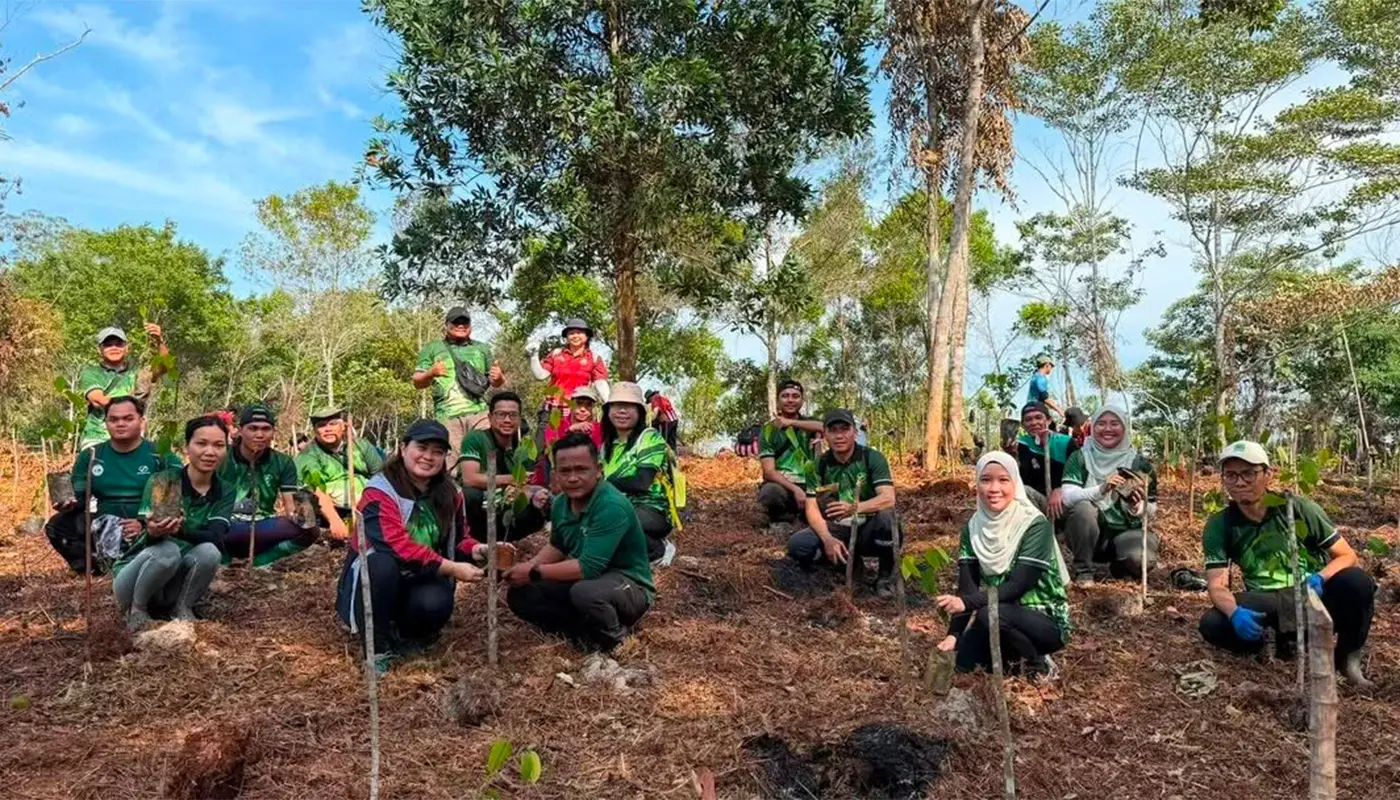
SIMUNJAN – The Sabal Forest Reserve witnessed a surge of green activity on the morning of 25 July 2026, as the Internal Audit Staff Welfare Club from the Sarawak Premier’s Department organised a dedicated tree planting programme. The initiative aimed to contribute to state conservation efforts while fostering environmental awareness among public servants and the local community.

A total of 550 saplings of high-value native species were planted during the event. The selection included economically and ecologically significant trees such as meranti pitis, meranti putih, meranti tembaga, and rasak abang-zoharii. These species are prized for their timber quality and their role in maintaining forest biodiversity, making them ideal choices for reforestation projects in protected reserves.
The programme saw the active participation of 80 individuals, creating a diverse group of volunteers. Attendees included employees from the Internal Audit Unit of the Sarawak Premier’s Department, officers from the Sarawak Forest Department, and members of the local community. This mix of participants highlighted the collaborative nature of the event, bridging the gap between government administration, technical forestry experts, and residents.
The involvement of the Sarawak Forest Department was crucial to the success of the operation. Their expertise ensured that the saplings were planted according to proper silvicultural standards, maximising their chances of survival and growth. Technical guidance on spacing, soil preparation, and post-planting care was provided to all volunteers, turning the activity into an educational experience as well as a conservation effort.
For the Internal Audit Staff Welfare Club, the event represented a meaningful departure from routine office duties. It allowed staff to engage in hands-on corporate social responsibility activities that have a tangible impact on the environment. Such initiatives help to build team spirit and instil a sense of pride in contributing to the broader goals of sustainable development in Sarawak.
The choice of the Sabal Forest Reserve as the venue underscores the importance of protecting existing forest ecosystems. While the reserve is already established, enrichment planting helps to restore areas that may have been degraded or to increase the density of valuable species. This proactive approach supports the long-term health of the forest and its ability to provide ecosystem services such as carbon storage and water regulation.
Local community involvement was a key component of the programme. By inviting residents to participate, the organisers fostered a sense of ownership and stewardship over the forest reserve. When communities are directly involved in conservation efforts, they are more likely to protect these resources from illegal activities such as logging or encroachment. This grassroots engagement is essential for the sustainability of any environmental project.
The specific species chosen, particularly the various types of meranti and rasak, are native to Sarawak’s rainforests and play a vital role in the local ecology. Meranti trees, for instance, are known for their fast growth and ability to support a wide range of wildlife. Rasak species are valued for their durability and resistance to decay. Planting these trees helps to maintain the genetic diversity of the forest, which is crucial for its resilience against climate change and pests.
The event also served as a platform for dialogue between different stakeholders. Forest officers shared insights on the challenges of forest management, while audit staff gained a deeper appreciation for the complexities of environmental conservation. Local residents contributed their traditional knowledge of the area, enriching the collective understanding of the landscape.
Such collaborative efforts align with the Sarawak Government’s broader agenda of promoting green growth and sustainability. By encouraging public sector agencies to take part in environmental initiatives, the state is cultivating a culture of responsibility and care for natural resources. The Internal Audit Unit’s participation sets a positive example for other departments to follow.
Following the planting, plans are in place for regular monitoring of the saplings. The survival rate of young trees is often influenced by factors such as weather conditions, animal grazing, and competition from weeds. Continued care and protection will be necessary to ensure that the 550 trees mature into healthy adults that can contribute to the forest canopy for decades to come.
The success of the day’s activities was evident in the enthusiasm displayed by all participants. Despite the physical labour involved, the atmosphere remained lively and cooperative. Many attendees expressed satisfaction at being able to make a direct contribution to environmental preservation, noting that it was a refreshing and rewarding experience.
Looking forward, the Internal Audit Staff Welfare Club has indicated interest in organising similar events in the future. Building on the momentum generated in Sabal, they hope to expand their outreach to other reserves or community areas. Consistent action is key to making a lasting impact, and repeated engagements help to reinforce the message of environmental stewardship.
The partnership between the Premier’s Department, the Forest Department, and the local community demonstrates a effective model for conservation. By leveraging the resources and influence of the public sector while engaging the energy of the community, significant progress can be made in protecting Sarawak’s natural heritage. The trees planted in Simunjan stand as a living testament to this collective commitment.
