



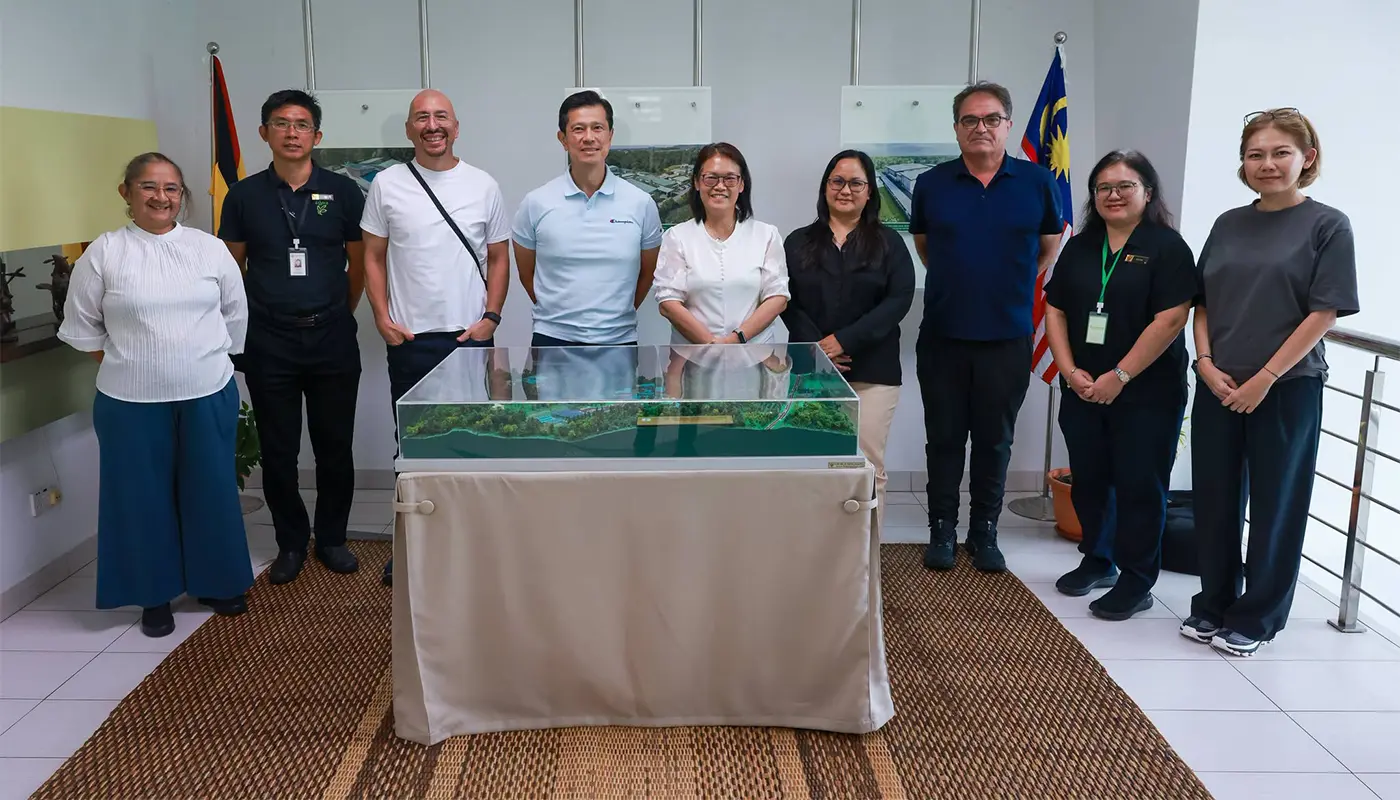
KUCHING – The Sarawak Biodiversity Centre (SBC) welcomed a high-profile delegation from the Mandai Wildlife Group on 24 July 2026, marking a significant step towards enhancing regional cooperation in conservation and biodiversity management. The visit underscored the growing interest of international wildlife organisations in Sarawak’s rich ecological heritage and traditional knowledge systems.

The delegation was led by Mr. Bennett Neo, Group Chief Executive Officer of Mandai Wildlife Group. He was accompanied by key senior executives, including Mr. Brian Stampe, Group Chief Operating Officer; Mr. Marc Cremades, Vice President of Developments; and Ms. Michelle Choo, Vice President of Indoor Attractions. Their presence highlighted the strategic importance Mandai places on expanding its understanding of Southeast Asian biodiversity and potential collaborative opportunities.
Mandai Wildlife Group is a renowned Singapore-based conservation organisation responsible for managing the Mandai Wildlife Reserve. The reserve is home to world-class attractions such as the Singapore Zoo, Night Safari, River Wonders, Rainforest Wild, and Bird Paradise. Beyond tourism, the group is a strong advocate for biodiversity conservation across the region, making their engagement with Sarawak’s scientific institutions particularly relevant.
Discussions held at the SBC focused on initiatives aimed at promoting biodiversity preservation and the integration of indigenous knowledge into modern conservation practices. Both parties exchanged views on how traditional ecological wisdom can complement scientific research to create more effective and culturally sensitive conservation strategies. This dialogue aligns with global trends that recognise the value of local communities in protecting natural resources.
A unique aspect of the visit was the opportunity for the delegation to experience Sarawak’s local produce firsthand. The guests were introduced to Sekiu oil, a highly prized edible oil extracted from the seed kernels of the Madhuca motleyana tree. This traditional product is cultivated and processed by the Melanau community, who have preserved the knowledge of its extraction for generations.
Sekiu oil is renowned for its rich nutrient profile and distinct flavour, representing a valuable example of Sarawak’s bio-resources. By sampling this product, the Mandai executives gained insight into the potential of non-timber forest products to support both conservation efforts and rural livelihoods. It demonstrated how sustainable harvesting practices can contribute to economic resilience while preserving forest ecosystems.
The interaction between the SBC and Mandai Wildlife Group opens doors for future collaborations. Potential areas of partnership could include joint research projects, educational exchanges, and the development of eco-tourism models that benefit local communities. Such partnerships can help raise the profile of Sarawak’s biodiversity on the international stage.
Mr. Bennett Neo expressed appreciation for the warm reception and the insightful discussions held during the visit. He noted that Sarawak’s commitment to preserving its natural heritage is impressive and offers valuable lessons for other regions facing similar environmental challenges. The exchange of ideas is expected to foster long-term professional relationships between the two organisations.
For the Sarawak Biodiversity Centre, hosting such a distinguished group reinforces its role as a hub for scientific inquiry and cultural preservation. The centre continues to bridge the gap between modern science and traditional knowledge, ensuring that indigenous practices are documented, respected, and utilised for broader societal benefit.
The focus on indigenous knowledge is particularly significant in the context of global conservation efforts. Traditional practices often hold keys to sustainable resource management that have been tested over centuries. Integrating these insights into contemporary frameworks can lead to more holistic and effective environmental policies.
The visit also highlighted the economic potential of Sarawak’s unique biological resources. Products like Sekiu oil not only serve local needs but also have the potential for wider commercialisation if managed sustainably. This aligns with the state’s goal of leveraging its biodiversity for green economic growth without compromising ecological integrity.
As the delegation concluded their tour, there was a mutual sense of optimism regarding future engagements. Both sides acknowledged the importance of continued dialogue to address shared challenges in biodiversity loss and climate change. The visit served as a foundation for building a network of experts dedicated to protecting Southeast Asia’s natural wealth.
The SBC remains committed to fostering such international partnerships. By connecting with leading organisations like Mandai Wildlife Group, Sarawak can access global best practices and share its own successes. This two-way flow of knowledge enhances the capacity of local institutions to manage and protect their unique environments.
Ultimately, the visit signifies a broader recognition of Sarawak’s role in regional conservation. As a biodiversity hotspot, the state holds critical importance for global ecological balance. Collaborations with entities like Mandai ensure that this responsibility is shared and supported by international expertise and resources.
Looking ahead, the outcomes of this meeting may lead to concrete projects that benefit both conservation goals and local communities. Whether through research, tourism, or product development, the partnership has the potential to create lasting positive impacts. The engagement stands as a testament to the power of collaboration in addressing complex environmental issues.
