



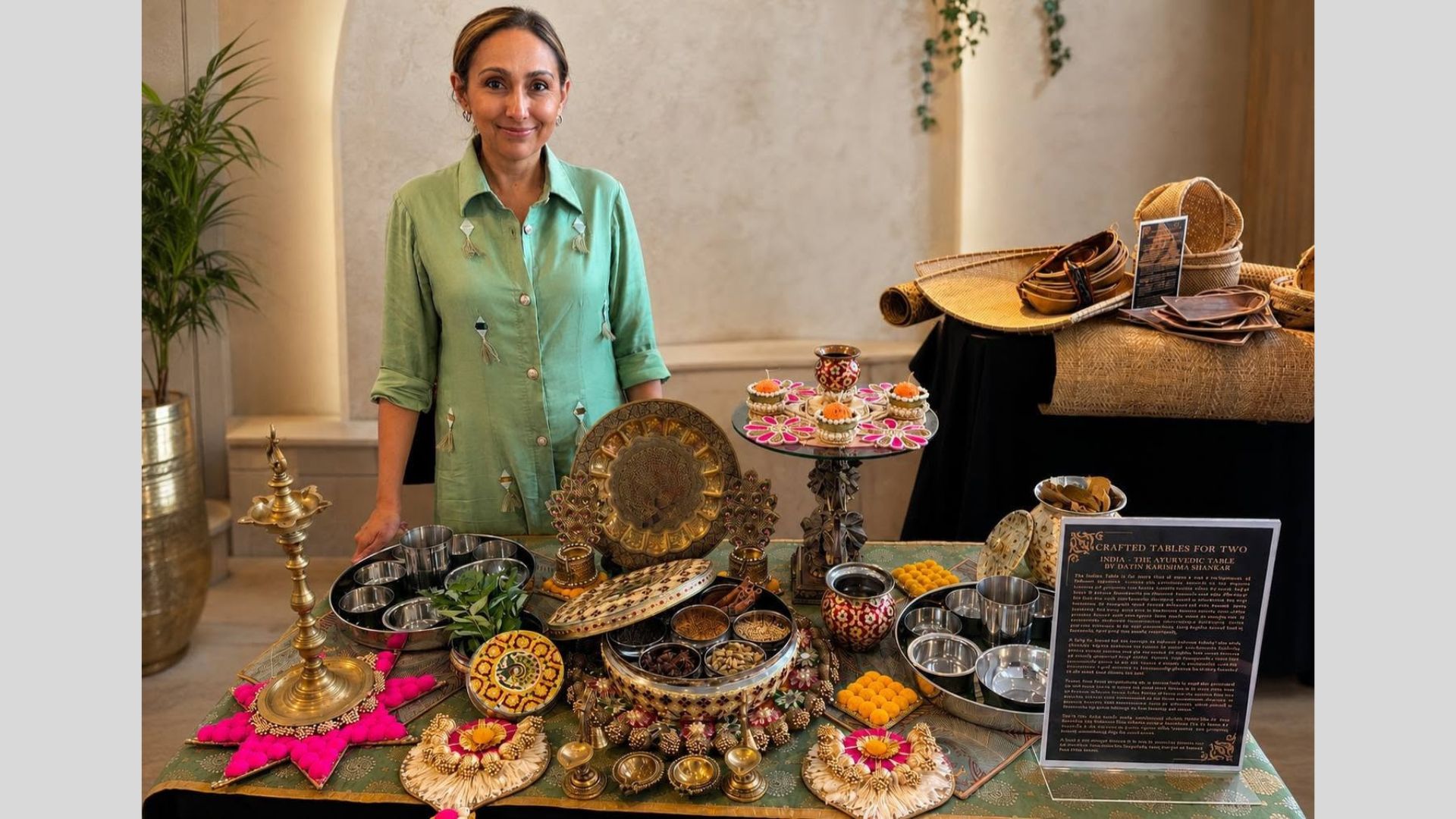
KUCHING, July 31 – India’s rich culinary heritage and the ancient philosophy of Ayurveda took centre stage at the Crafted Tables for Two exhibition, where visitors experienced how food can tell a story of culture, wellness and tradition through a beautifully curated Ayurvedic Thali table.

The exhibition featured a special tablescape created by Datin Karishma Shankar Asnani, who was invited as one of the guest curators for the event. Her presentation, titled “India – The Ayurvedic Thali”, highlighted the timeless Indian belief that food is more than nourishment, describing it as the first medicine for the body, mind and spirit.
Held as part of Kuching’s continuing efforts to celebrate its status as a UNESCO Creative City of Gastronomy, the exhibition brought together culture, craftsmanship and food traditions from different backgrounds. Each table at the exhibition reflected a unique story, allowing visitors to appreciate the connection between heritage, creativity and gastronomy.
Datin Karishma said her Ayurveda-inspired table was designed to reflect the harmony between nature, mindful living and healthy eating. Every element was carefully selected to represent the principles of Ayurveda, a system of traditional Indian knowledge that has guided healthy living for more than 5,000 years.
According to Ayurvedic philosophy, a complete meal should stimulate all five senses while providing the six essential tastes of sweet, sour, salty, pungent, bitter and astringent. Each taste plays an important role in supporting digestion, metabolism and overall well-being. When combined in the right balance, they create a meal that nourishes both the body and mind.
The Indian Thali displayed during the exhibition was presented on a traditional banana leaf, a practice that has been followed across many parts of India for centuries. In Indian culture and Ayurveda, banana leaves are valued not only for their natural and eco-friendly qualities but also for their traditional role in enhancing the dining experience. It is widely believed that warm food placed on the leaf releases natural plant compounds that complement the flavours of the meal while adding a subtle earthy aroma.
The colourful arrangement of dishes, fragrant spices and carefully balanced flavours transformed the Thali into more than just a meal. It represented India’s cultural diversity, where every dish has its own identity while contributing to a complete and harmonious dining experience.
Visitors attending the programme were also seen enjoying the Ayurvedic Thali, giving them an opportunity to experience authentic Indian flavours and gain a deeper appreciation of the country’s culinary traditions. The showcase attracted interest from guests who admired both the artistic presentation and the meaningful message behind the tablescape.
Datin Karishma also expressed her appreciation to the Sarawak Craft Council and Society Atelier Sarawak, particularly Mr Edric Ong, for making the exhibition possible. She described the event as a meaningful platform that celebrates the stories behind food, culture and craftsmanship while encouraging greater cultural understanding through gastronomy.
The exhibition further highlighted Kuching’s growing reputation as a city that values culinary heritage and cultural diversity. As a UNESCO Creative City of Gastronomy, Kuching continues to promote food not only as a source of nourishment but also as a bridge that connects people, traditions and communities from around the world.
The Crafted Tables for Two exhibition demonstrated that a dining table can be much more than a place to enjoy a meal. It can also become a space where history, culture and traditions are shared, allowing visitors to experience the deeper meaning behind the food they eat and the stories it carries across generations.
