



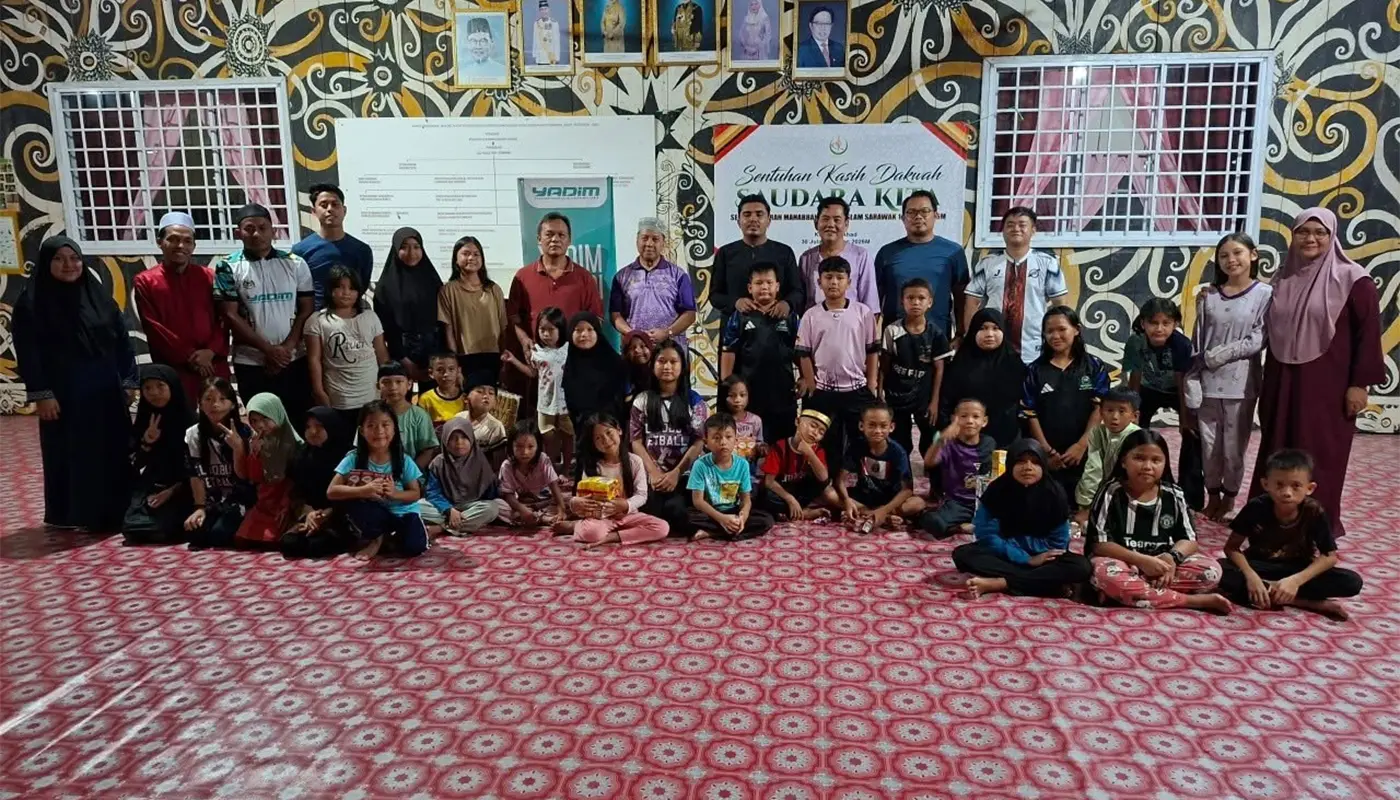
KAPIT – A comprehensive spiritual and social outreach initiative concluded successfully in the remote interior settlement of Long Busang, marking a significant effort to foster communal harmony and provide religious guidance to residents.

The Sentuhan Kasih Dakwah Saudara Kita Programme, which spanned three days from 30 July to 1 August 2026, was designed to strengthen understanding and welfare among the local population through direct engagement and supportive activities.
The programme was orchestrated through a strategic partnership involving multiple key stakeholders committed to community development in the region.
The primary organisation fell under the Our Brothers Development Division, working in close coordination with the Kapit Division Islamic Religious Office and the Kapit Division Secretariat (USK).
This collaborative framework ensured that logistical challenges associated with accessing interior areas were managed effectively whilst maintaining the integrity of the outreach objectives.
Support for the initiative extended well beyond local administrative bodies, demonstrating a unified approach to spiritual care across different levels of governance.
Several prominent Islamic agencies participated actively, including HIKMAH, YADIM, and Baitul Ilmi, each contributing specialised resources and expertise.
Notably, personnel from the Kuching-based Secretariat (USK) also travelled to the site, underscoring the importance placed on ensuring consistent support for communities regardless of their geographical isolation from the state capital.
Throughout the three-day period, organisers implemented a diverse schedule of activities tailored to the specific needs and circumstances of the Long Busang community.
These engagements went beyond formal instruction to include interpersonal interactions aimed at building trust and mutual understanding.
The varied nature of the programming allowed participants to engage at their own comfort level, creating an environment conducive to open dialogue and genuine connection rather than one-sided dissemination of information.
Feedback from residents indicated that the initiative was received with considerable enthusiasm and appreciation.
Community members expressed gratitude for the tangible demonstration of care and the opportunity to engage with religious representatives in a supportive setting.
Such positive reception suggests that the approach taken by organisers resonated deeply with local sensibilities and addressed real needs within the population.
Officials from the Sarawak Islamic Religious Department have highlighted this successful execution as evidence of their ongoing commitment to holistic community welfare.
The department views such field programmes as essential components of a broader strategy to ensure spiritual guidance remains accessible to all citizens, particularly those in less accessible regions.
This perspective reflects an understanding that religious administration must be proactive and adaptive to serve diverse populations effectively.
The involvement of multiple agencies also serves to reinforce institutional capacity for future initiatives. By working together in challenging environments, these organisations develop practical experience and strengthen inter-agency relationships that will benefit subsequent outreach efforts.
This institutional learning is arguably as valuable as the immediate outcomes of any single programme, as it builds sustainable systems for long-term community engagement.
Furthermore, the focus on “Saudara Kita” or “Our Brothers” terminology signals an intentional emphasis on inclusivity and familial bonds within the faith community.
This framing helps to reduce potential barriers and creates a welcoming atmosphere for individuals at various stages of their spiritual journey. It aligns with broader state policies promoting unity and mutual respect amongst Sarawak’s diverse population.
Looking ahead, stakeholders are expected to evaluate the outcomes of this particular programme to inform planning for future interventions in similar settings.
Lessons learned regarding logistics, community preferences, and effective communication methods will likely shape how subsequent outreach activities are structured.
Continuous refinement based on ground-level feedback ensures that resources are deployed where they can have the greatest positive impact.
Ultimately, initiatives like Sentuhan Kasih represent more than just religious education; they embody a commitment to social cohesion and equitable access to support services.
In bridging geographical and social distances, such programmes contribute to the overall stability and well-being of Sarawak’s interior communities.
They demonstrate that even in remote locations, no group is forgotten and that collective responsibility for community welfare remains a guiding principle for both religious and civic institutions.
