



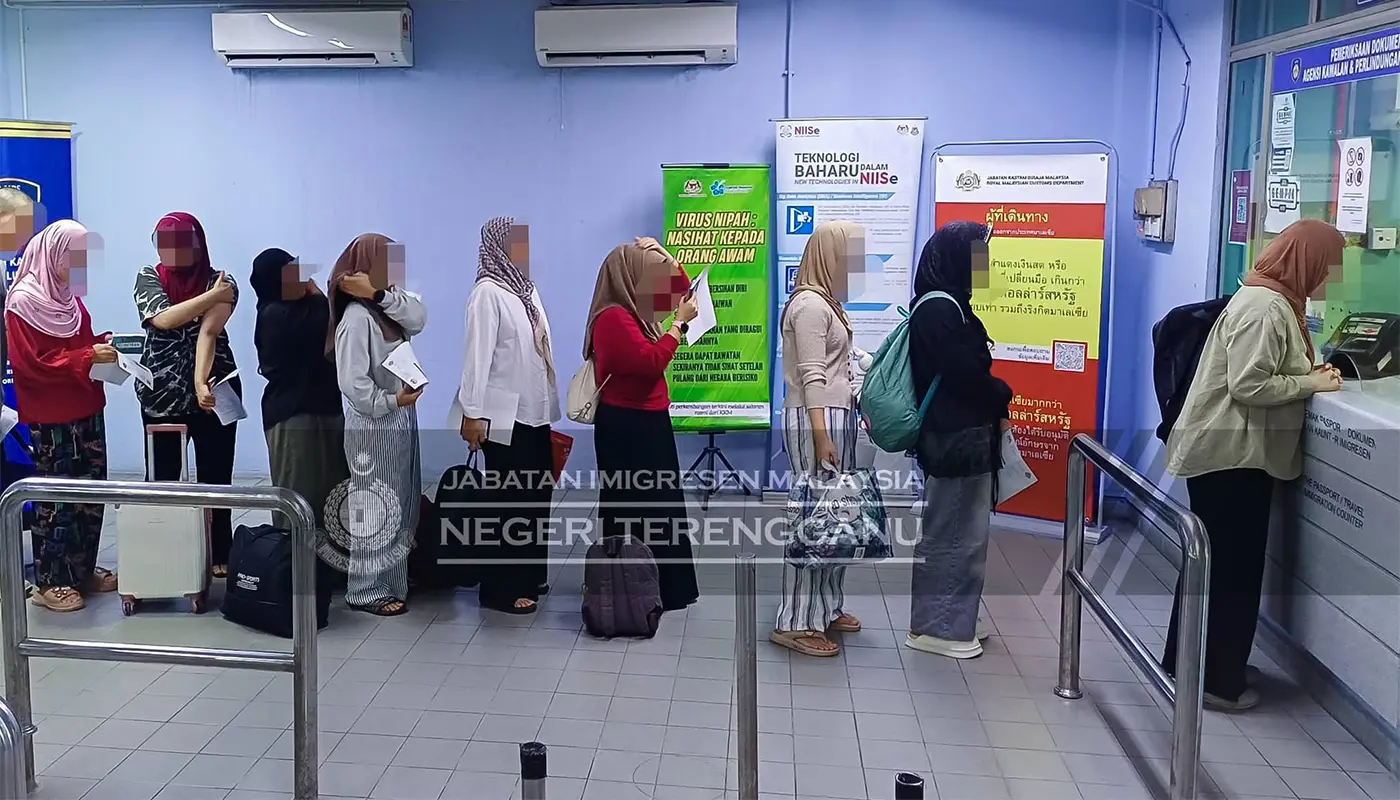
RANTAU PANJANG – Eleven Thai citizens have been returned to their home country following the completion of legal proceedings and custodial sentences in Malaysia. The repatriation took place on 3 August 2026 at the Immigration, Customs, Quarantine and Security Complex in Rantau Panjang, Kelantan. This border crossing point served as the designated exit location for this specific transfer operation involving detainees from Terengganu.

Personnel from the Transfer Unit managed the logistics with direct support from the Ajil Immigration Depot Control Team. Their coordinated efforts ensured that all individuals were processed through border formalities efficiently and securely. The operation adhered strictly to established protocols governing the removal of foreign nationals who have fulfilled their legal obligations within the Malaysian justice system.
The group comprised two men, six women, and three girls aged between fifteen and forty-nine years old. All had served court-mandated sentences for various immigration offences before being cleared for departure. Prior to crossing the border, each individual was formally blacklisted under relevant provisions of immigration law, prohibiting future entry into Malaysia for specified periods or permanently depending on offence severity.
Legal prerequisites were fully satisfied before any removal arrangements commenced. Authorities confirmed that all judicial processes concluded satisfactorily and that no outstanding appeals or pending cases remained. This verification step ensures compliance with domestic legislation and international standards regarding fair treatment during deportation procedures, particularly when minors are involved.
The use of a land border facility rather than an airport reflects strategic logistical planning based on detainee nationality and destination proximity. Rantau Panjang ICQS provides direct access to southern Thailand, making it the most practical exit point for Thai nationals. Such geographical considerations optimise resource allocation whilst maintaining security throughout the transfer process.
Blacklisting serves as a critical deterrent mechanism within Malaysia’s immigration framework. By recording deportees in national databases, authorities prevent recidivism and protect border integrity over the long term. This administrative sanction complements criminal penalties already served, creating layered consequences for immigration violations regardless of age or gender.
Terengganu State Immigration officials emphasise that orderly transfers remain a core responsibility alongside detection and prosecution functions. Safeguarding national sovereignty requires not only identifying breaches but also resolving them conclusively through lawful removal when necessary. Each successful repatriation reinforces the credibility of enforcement systems at both air and land borders.
Safety and prudence guide every aspect of detainee transportation from holding facilities to departure points. Officers receive specialised training in handling vulnerable persons, including female detainees and minors, ensuring their welfare throughout transit. These protocols minimise risks whilst upholding human dignity and complying with child protection standards where applicable.
The presence of three girls in this batch highlights the importance of sensitive handling procedures during juvenile repatriations. Special safeguards exist to ensure appropriate supervision and care until handover to receiving authorities across the border. Coordination with Thai counterparts facilitates smooth reception and reintegration processes for younger returnees.
Future transfer operations will continue following similar rigorous standards as demonstrated in this latest deployment. Consistency in execution builds institutional expertise and maintains public confidence in immigration administration. Stakeholders view timely deportations as essential for clearing detention capacity and signalling zero tolerance towards persistent offenders.
Cross-border cooperation remains vital for effective repatriation programmes at land checkpoints. Regular communication between Malaysian and Thai immigration services ensures alignment on documentation requirements and handover protocols. Such bilateral engagement strengthens regional migration governance and prevents gaps that could be exploited by irregular actors.
Ultimately, this exercise demonstrates the full cycle of immigration enforcement from apprehension through to removal via multiple exit routes. Completing this loop validates earlier investigative and prosecutorial efforts whilst restoring regulatory equilibrium. Authorities remain steadfast in executing these duties as part of broader national security mandates.
Public understanding of diverse repatriation pathways helps contextualise enforcement outcomes beyond high-profile airport deportations. Transparent communication about land border procedures fosters trust in systemic fairness and operational flexibility. Such clarity reinforces that Malaysia addresses immigration violations comprehensively across all entry and exit points.
