



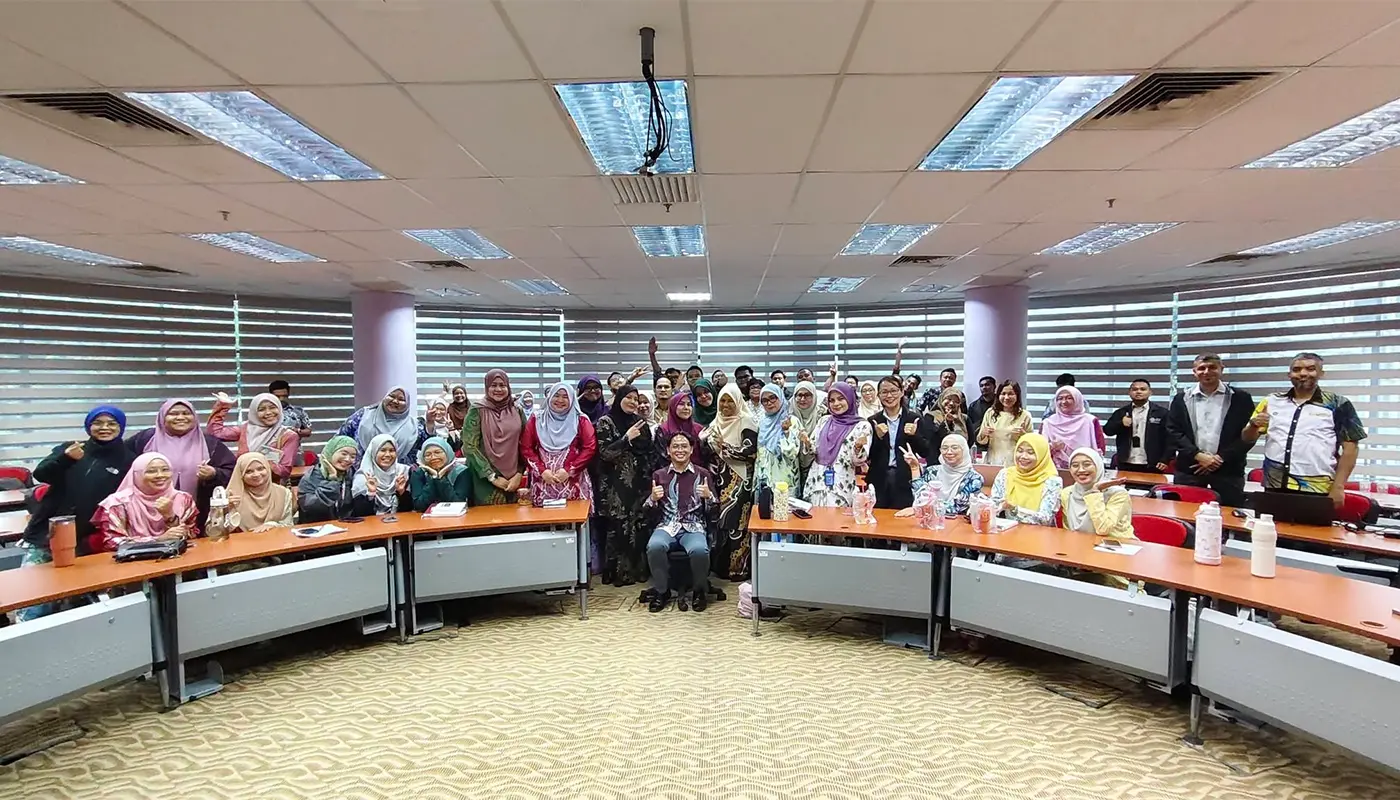
TANJONG MALIM – A significant step towards safeguarding Malaysia’s linguistic diversity has been announced by Universiti Pendidikan Sultan Idris (UPSI), which is set to deliver three dedicated ethnic language courses throughout 2026.

Focusing on Kadazandusun, Semai, and Iban, the programme aims to equip participants with foundational communication abilities whilst cultivating a profound respect for the cultural traditions of these communities.
This initiative underscores the institution’s commitment to ensuring that indigenous tongues remain vibrant components of the national identity rather than fading relics of the past.
The Training Unit under the Human Resources Division has spearheaded this development as part of a broader human capital strategy.
Vice-Chancellor Professor Datuk Dr Md Amin Md Taff highlighted that the curriculum serves a dual purpose: enhancing professional competencies and fostering national unity through cultural appreciation.
By integrating language acquisition with heritage education, the university seeks to produce graduates and staff who are not only linguistically capable but also culturally sensitive to the nuances of Malaysia’s multicultural fabric.
Professor Md Amin emphasised the intrinsic value of native tongues in maintaining social cohesion. “Language is a national treasure that reflects the history, values and identity of a community. As an educational institution, UPSI has a responsibility to ensure that this heritage continues to be preserved through education, research and training that nurture a more inclusive generation capable of appreciating the nation’s cultural diversity,” he stated.
This perspective positions language learning as an act of cultural stewardship essential for sustaining harmony in a pluralistic society.
Pedagogically, the courses have been structured to move beyond rote memorisation and textbook grammar. Organisators have adopted interactive methodologies, including conversational simulations, language games, and situational role-playing, to accelerate practical fluency.
Participants will master fundamental sentence structures and vocabulary relevant to daily interactions, such as exchanging greetings, enquiring about well-being, and introducing oneself within community settings. This functional approach ensures learners can immediately apply their skills in authentic contexts.
Cultural immersion forms an inseparable component of the syllabus. Students will explore traditional customs, heritage cuisine, arts, music, dance, and festivals associated with each ethnic group.
Understanding these cultural markers provides necessary context for language use, preventing communication from becoming merely transactional. Such holistic exposure helps dismantle stereotypes and builds genuine empathy between different ethnic groups, reinforcing the spirit of unity that underpins Malaysian society.
The urgency of this initiative cannot be overstated given contemporary pressures on minority languages. Urbanisation, modernisation, and the dominance of major global languages have placed many indigenous tongues at risk of attrition.
Academic institutions bear a critical responsibility in reversing this trend by creating formal spaces where these languages are valued, studied, and transmitted to new generations. Without deliberate intervention, irreplaceable linguistic knowledge may be lost permanently.
Faculty members, researchers, and administrative staff stand to benefit significantly from these offerings. Those working in education, linguistics, anthropology, sociology, and community engagement will find enhanced capacity to connect with diverse populations.
For academics conducting fieldwork or developing culturally responsive curricula, proficiency in local languages opens doors to deeper understanding and more ethical research practices. The programme thus strengthens both individual careers and institutional expertise.
“The ethnic language courses introduced by the university not only enable members of the university community to acquire basic communication skills but also provide opportunities to understand the customs, traditions and way of life of various ethnic groups, thereby strengthening the spirit of unity among Malaysians,” Professor Md Amin added.
His remarks reflect a vision where education transcends technical training to encompass character formation and civic responsibility.
The inclusion of Iban alongside Kadazandusun and Semai is particularly noteworthy for Sarawakians and those engaged with Bornean cultures. As one of the major indigenous languages of East Malaysia, Iban carries centuries of oral tradition, customary law, and ecological knowledge.
Its presence in this academic programme signals recognition of East Malaysian heritage within national educational frameworks, promoting greater integration and mutual respect across the federation.
Looking ahead, such initiatives could serve as models for other universities and government agencies seeking to operationalise cultural preservation policies.
When public institutions lead by example, they normalise multilingualism and validate the identities of minority communities. The long-term impact extends beyond individual learners to shape societal attitudes towards diversity, ultimately contributing to a more resilient and cohesive nation.
