



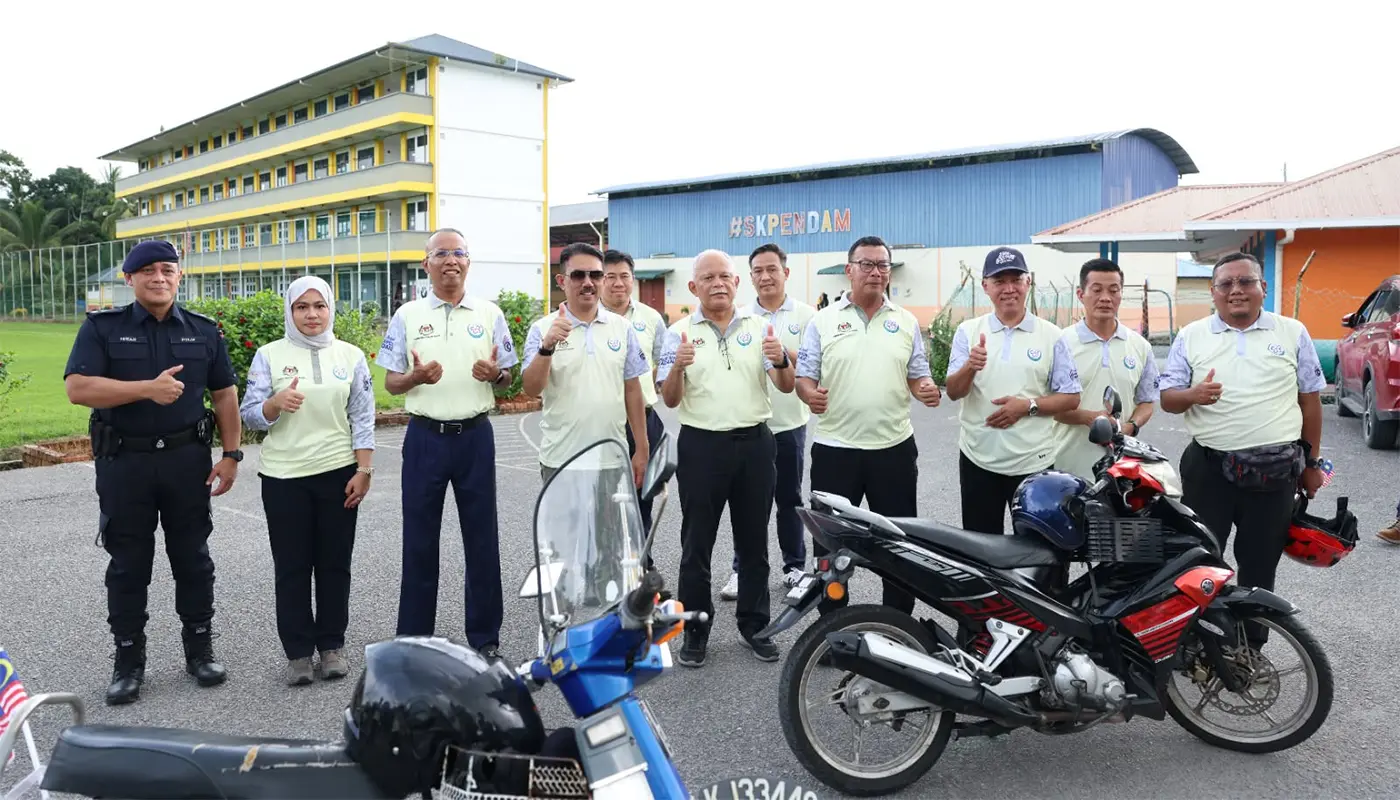
SADONG JAYA – A significant step towards enhancing rural infrastructure and educational resources was marked in Kampung Pendam as federal and state representatives gathered to launch a targeted community development initiative.

The ceremony, held on 1 August 2026, officially inaugurated the MADANI Adoption Village (KAM) and MADANI Adoption School (SAM) programmes for the year, aiming to translate national aspirations into tangible local improvements through direct agency intervention.
YBhg. Dato Ahmad Nadzri bin Mohd Hassan, Secretary of the Federation of Sarawak (SUPS), officiated the event, underscoring the importance of inter-agency collaboration in addressing grassroots needs.
His presence highlighted the alignment between federal development frameworks and state-level implementation strategies.
The occasion brought together a diverse group of stakeholders, including YBhg. Dato’ Mohd Zulfikar bin Ahmad, Director General of the Malaysian Societies Registration Department (JPPM), alongside representatives from various government bodies, school administrators, local leaders, and residents of Kampung Pendam.
The KAM and SAM initiatives represent a practical application of the MADANI Malaysia philosophy, focusing on community well-being and inclusive progress rather than abstract policy goals.
JPPM has designed these programmes to be responsive to specific local requirements, ensuring that interventions are relevant and impactful.
By adopting particular villages and schools, the department commits to sustained engagement rather than one-off assistance, fostering longer-term relationships and more durable outcomes.
Under the MADANI Adoption Village component, several key infrastructure upgrades were delivered to benefit the wider community.
Refurbishment works at the Kampung Pendam KEMAS Kindergarten have improved early childhood learning environments, providing younger children with safer and more stimulating spaces.
Additionally, communal areas received attention through organised gotong-royong sessions at the local cemetery, reinforcing social cohesion whilst maintaining public facilities.
The installation of solar lighting further enhances safety and accessibility after dark, demonstrating a commitment to sustainable and practical solutions.
Educational enhancements formed the other pillar of the initiative through the MADANI Adoption School programme targeting Kampung Pendam National School.
Recognising that modern learning requires adequate technological and physical infrastructure, JPPM facilitated the provision of essential equipment, including a new public address system, internet connectivity, CCTV security cameras, tablets for digital learning, and upgraded sports facilities.
These additions aim to bridge the digital divide and create a more conducive environment for both academic and extracurricular development.
The integration of technology such as tablets and internet access is particularly significant for rural schools, where exposure to digital tools can sometimes lag behind urban counterparts.
Providing these resources helps ensure that students in Sadong Jaya have comparable opportunities to develop digital literacy skills essential for future education and employment.
Similarly, improved sports facilities support holistic development, acknowledging that physical activity and teamwork are integral components of a balanced education.
Community involvement remains central to the success of such adoption programmes. The participation of local leadership and residents in planning and execution ensures that projects reflect genuine priorities rather than externally imposed assumptions.
Gotong-royong activities, in particular, embody this collaborative spirit, transforming beneficiaries into active partners in their own development.
This approach not only improves physical infrastructure but also strengthens social capital and collective ownership of community assets.
Federal and state agency representatives attending the ceremony signalled continued support for similar initiatives across Sarawak.
Their presence indicates that Kampung Pendam serves as a model for how targeted adoption programmes can effectively channel resources to underserved areas.
Lessons learned from this implementation will likely inform future allocations and programme designs, helping to refine approaches based on ground-level feedback and observed outcomes.
The focus on creating safer and more inclusive environments extends beyond physical improvements to encompass social dimensions as well.
Enhanced security through CCTV, better-lit communal spaces, and upgraded kindergarten facilities all contribute to a sense of safety and belonging for vulnerable groups, including children and elderly residents.
Such considerations reflect a holistic understanding of well-being that integrates material and psychosocial factors.
Looking forward, stakeholders expect these interventions to yield measurable benefits in educational attainment, community satisfaction, and overall quality of life.
Monitoring and evaluation mechanisms will be important to assess long-term impact and identify areas for further support.
Sustained attention beyond the initial launch phase will determine whether these improvements translate into lasting change or remain isolated enhancements.
Ultimately, the MADANI Adoption Village and School programmes demonstrate how national development visions can be operationalised at the hyper-local level.
By connecting high-level policy with concrete action in specific communities, such initiatives help ensure that progress is felt directly by those it is intended to serve.
For Kampung Pendam, this latest chapter represents both immediate relief and a foundation for continued growth aligned with broader national objectives.
