



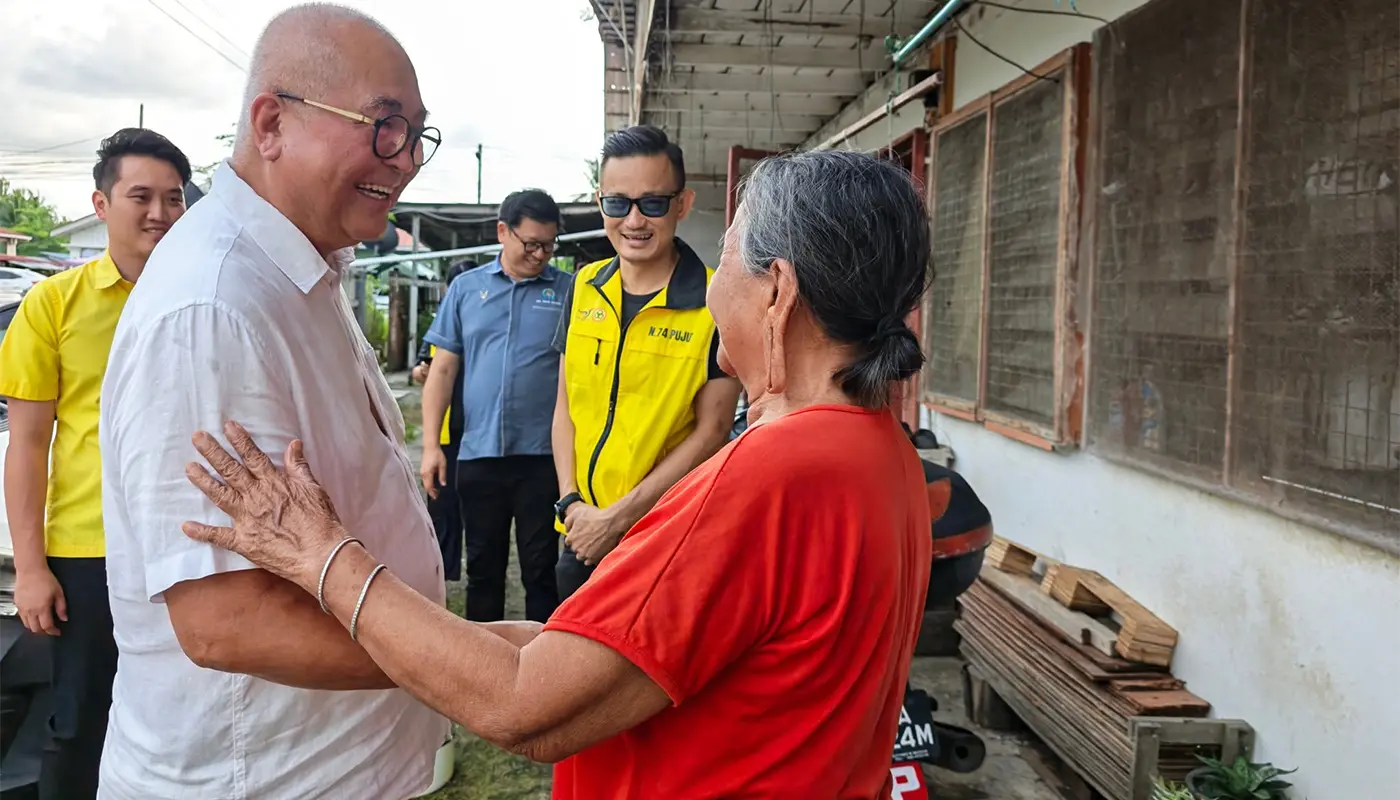
MIRI – A significant engagement session took place recently in the Tanjung Batu area as local authorities sought to strengthen ties with the community. The visit was spearheaded by Miri City Council Mayor YB Adam Yii, who prioritised direct dialogue with inhabitants to understand their daily realities and aspirations for the neighbourhood.

The primary objective of this field visit centred on active listening rather than formal presentations. By stepping out of the office and into the residential zones, the Mayor aimed to gather unfiltered feedback regarding municipal services and infrastructure conditions that affect quality of life in this specific locality.
Community members were given ample opportunity to voice their concerns during these interactions. Discussions covered a wide spectrum of topics ranging from sanitation and drainage to public safety and recreational facilities, ensuring that diverse perspectives within the population were adequately represented in the consultation process.
YB Adam Yii emphasised that effective governance requires continuous two-way communication between administrators and citizens. He noted that understanding ground-level challenges is essential for crafting policies and allocating resources in ways that genuinely address resident needs rather than relying solely on statistical data or second-hand reports.
The collaborative spirit of the visit highlighted a shift towards participatory urban management. Instead of imposing top-down solutions, the council leadership expressed commitment to co-creating improvements alongside those who actually live and work in Tanjung Batu, fostering a sense of shared ownership over community development outcomes.
Local stakeholders appreciated the chance to engage directly with decision-makers without bureaucratic intermediaries. Such accessibility helps build trust in public institutions and demonstrates that elected officials remain accountable to the people they serve beyond election cycles or official ceremonies.
Infrastructure maintenance emerged as a recurring theme throughout the conversations. Residents pointed out specific areas requiring attention, providing valuable on-site intelligence that complements routine inspections conducted by technical departments within the city council.
Social cohesion also featured prominently in discussions about neighbourhood betterment. Participants stressed that physical upgrades must be accompanied by efforts to strengthen community bonds, suggesting programmes that encourage neighbourly interaction and collective problem-solving amongst diverse demographic groups.
Youth engagement received particular attention during the exchange. Younger residents articulated their vision for safer play spaces and educational support systems, reminding officials that long-term community vitality depends on meeting the evolving needs of future generations as well as current ones.
Elderly citizens contributed historical context about how the area has changed over decades. Their institutional memory provides crucial baseline information for assessing whether recent developments have improved or diminished living standards compared to previous eras.
Small business owners operating within Tanjung Batu shared insights about commercial viability and customer access. Their feedback links municipal planning directly to local economic health, illustrating how infrastructure decisions impact livelihoods and entrepreneurial opportunities at the grassroots level.
Environmental sustainability concerns were raised by environmentally conscious participants. Issues such as waste management efficiency and green space preservation reflect growing awareness that community wellbeing encompasses ecological dimensions alongside traditional service delivery metrics.
The Mayor acknowledged that not all requests could be fulfilled immediately due to budgetary and logistical constraints. However, he assured attendees that every piece of feedback would be documented and evaluated systematically to inform future planning cycles and priority setting exercises.
Transparency about limitations proved as important as promises of action. Honest communication regarding what is feasible within current resource envelopes helps manage expectations realistically while maintaining credibility through accountability rather than overpromising.
Follow-up mechanisms were discussed to ensure continuity beyond this single visit. Establishing regular channels for ongoing dialogue prevents engagement from becoming merely symbolic and embeds responsiveness into standard operational procedures of the local authority.
Neighbourhood representatives expressed willingness to serve as liaison points between residents and council staff. This decentralised approach leverages existing social networks to streamline information flow and accelerate issue resolution at hyperlocal scales.
Cultural sensitivity underpinned all interactions throughout the day. Recognising Tanjung Batu’s multicultural composition ensured that outreach efforts respected diverse traditions and communication preferences, avoiding one-size-fits-all approaches that might inadvertently exclude minority voices.
Safety perceptions received detailed examination during walkabout segments. Observational assessments combined with resident testimonies helped identify environmental design factors contributing to security concerns, informing potential crime prevention through environmental design interventions.
Accessibility for persons with disabilities featured in infrastructure critiques. Universal design principles were advocated to ensure public spaces accommodate mobility-impaired individuals equitably, aligning local practice with national inclusivity standards and human rights commitments.
Recreational facility adequacy sparked lively debate amongst families. Balancing competing demands for sports fields, playgrounds, and quiet relaxation zones requires nuanced spatial planning that reflects actual usage patterns rather than assumed preferences based on outdated demographics.
Transportation connectivity emerged as another key concern linking Tanjung Batu to wider urban systems. Pedestrian pathways, public transit access, and traffic calming measures all influence how easily residents can reach employment, education, and healthcare services elsewhere in Miri.
Digital inclusion gaps were identified by some participants lacking reliable internet access. As municipal services increasingly migrate online, ensuring equitable digital literacy and connectivity becomes fundamental to preventing new forms of exclusion within supposedly smart city frameworks.
Heritage preservation interests surfaced alongside modernisation desires. Long-standing residents value cultural landmarks and traditional architecture, urging planners to integrate conservation considerations sensitively within redevelopment proposals affecting historic streetscapes.
Emergency preparedness capabilities were questioned given climate change impacts. Flood resilience and disaster response coordination featured in discussions about safeguarding vulnerable households against extreme weather events becoming more frequent regionally.
Inter-agency coordination needs became apparent when issues crossed jurisdictional boundaries. Clarifying responsibilities between city council, state departments, and federal bodies helps prevent service gaps where residents fall through administrative cracks due to unclear mandates.
Volunteerism potential was explored as supplement to formal service provision. Harnessing community energy for beautification projects or mutual aid initiatives can amplify limited public resources whilst strengthening civic pride and social capital simultaneously.
Long-term visioning exercises complemented immediate troubleshooting discussions. Imagining Tanjung Batu’s trajectory over coming decades encourages proactive rather than reactive planning, aligning incremental improvements with aspirational goals for sustainable urban living.
Ultimately, this engagement reaffirmed that community development is fundamentally relational work. Technical solutions matter less than trusting relationships enabling honest dialogue about shared futures, making visits like this indispensable foundations for genuine progress in Miri’s evolving urban landscape.
