



KUCHING – A strategic research collaboration between Peninsular Malaysia and Sarawak has commenced with a working visit aimed at enhancing marine fisheries management through improved data systems. The Kampung Acheh Fisheries Research Institute (FRIKA) initiated this engagement to strengthen scientific understanding of regional fishery resources.

Tuan Haji Sallehudin Bin Jamon, Director of FRIKA, led a three-person delegation that arrived in the state on 5 August 2026. Accompanied by two researchers, the team undertook field assessments at designated study sites to evaluate ongoing survey methodologies and monitor implementation progress firsthand.
The initial phase focused on observational verification of research activities already underway. By witnessing data collection processes directly, visiting scientists could assess protocol adherence and identify potential refinements needed to ensure methodological rigour across different geographical contexts.
Field observations served dual purposes beyond mere oversight. They provided opportunities for knowledge exchange between visiting researchers and local counterparts, fostering mutual learning about region-specific challenges and adaptive solutions developed through practical experience in Sarawak’s unique marine environment.
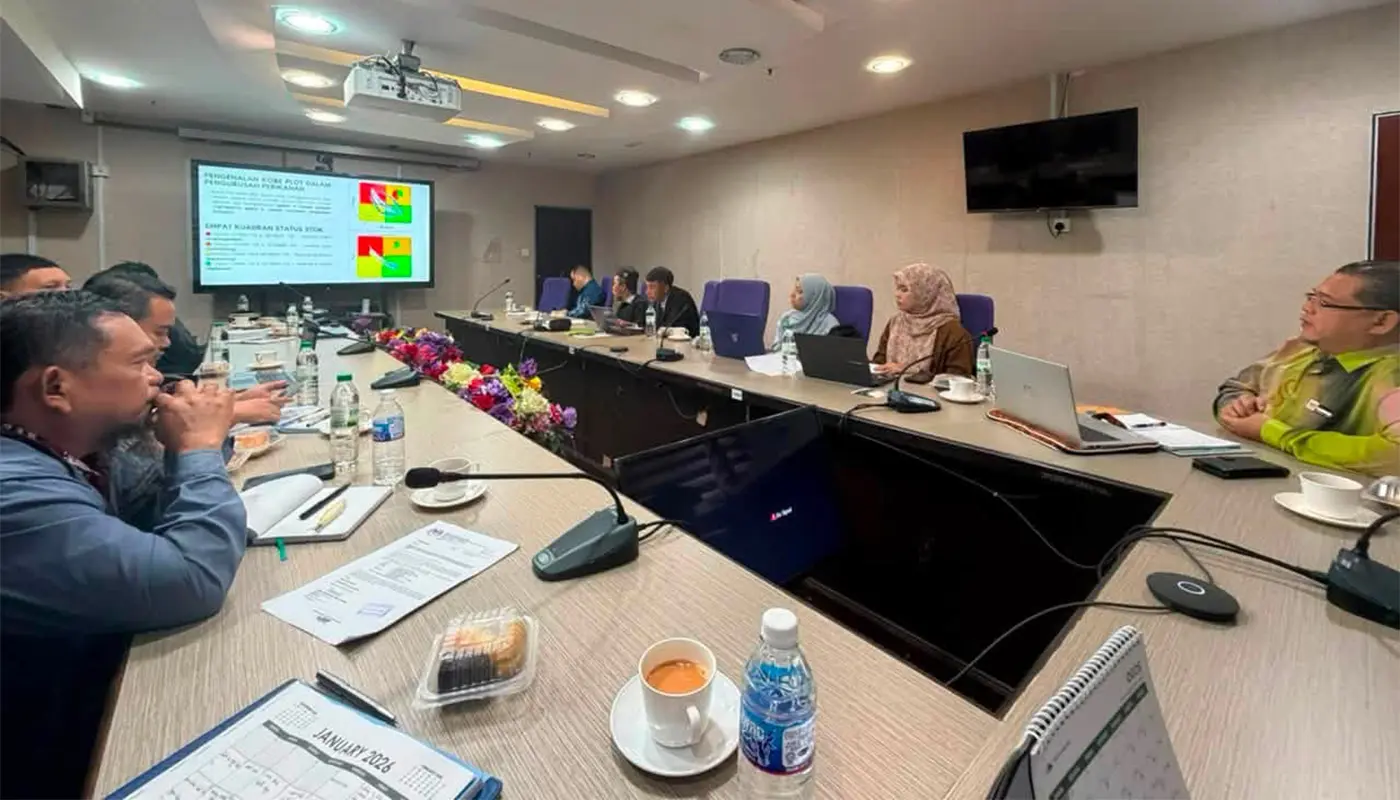
On the following day, attention shifted from fieldwork to strategic dialogue. A formal discussion session convened between FRIKA representatives and the Sarawak Marine Fisheries Department (JPLS) to address critical aspects of fisheries information infrastructure and resource governance frameworks.
Marine fisheries landing data emerged as the central topic during these technical exchanges. Both institutions recognised that accurate, timely catch records form the empirical foundation upon which sustainable management decisions must rest, making data quality improvement a shared priority.
Information sharing protocols received detailed scrutiny during deliberations. Establishing standardised formats and regular transmission schedules between agencies prevents data silos that historically hindered comprehensive stock assessments and cross-jurisdictional coordination efforts.
Enhancing management effectiveness requires moving beyond raw data collection towards actionable intelligence generation. Discussions explored analytical tools and interpretation frameworks capable of transforming landing statistics into meaningful indicators guiding policy formulation and enforcement prioritisation.
Scientific credibility depends fundamentally on methodological transparency and reproducibility. Joint review of survey techniques ensures findings withstand peer scrutiny whilst building institutional confidence in evidence bases supporting potentially contentious regulatory measures affecting fishing communities.
Capacity building featured implicitly throughout collaborative activities. Exposure to different research approaches expands technical repertoires of participating scientists, creating human capital dividends extending far beyond immediate project deliverables or single-study outcomes.
Regional ecosystem connectivity necessitates coordinated monitoring across administrative boundaries. Fish stocks migrate irrespective of jurisdictional lines, making inter-agency data harmonisation essential for accurate population assessments and effective conservation strategy development.
Historical data gaps complicate trend analysis and future projections. Collaborative surveys help fill temporal and spatial voids in existing records, establishing more robust baselines against which climate change impacts and fishing pressure effects can be reliably measured over time.
Stakeholder trust in management decisions correlates strongly with perceived scientific legitimacy. Transparent, collaborative research processes demonstrate commitment to evidence-based governance rather than arbitrary regulation, facilitating greater compliance amongst resource users who see their realities reflected in official assessments.
Technological integration opportunities arose during methodology discussions. Digital data capture systems, satellite monitoring, and automated reporting platforms offer efficiency gains that could streamline future surveys whilst reducing burdens on field staff and participating fishers alike.
Quality assurance mechanisms received particular emphasis during technical exchanges. Standardised validation procedures prevent erroneous entries from corrupting datasets, ensuring subsequent analyses rest upon reliable foundations rather than compromised inputs requiring costly retrospective corrections.
Long-term monitoring sustainability depends on institutionalising collaborative practices beyond individual projects. Embedding joint protocols into routine operations creates enduring structures supporting continuous improvement rather than episodic cooperation tied to specific funding cycles or personnel tenures.
Comparative analysis benefits from diverse methodological perspectives. FRIKA’s Peninsular expertise combined with JPLS’s local knowledge generates richer insights than either institution could produce independently, demonstrating value added through genuine partnership rather than parallel activity.
Resource allocation efficiency improves when management targets precise problem areas identified through rigorous science. Better data enables smarter spending on enforcement, habitat restoration, or community support programmes by directing limited funds where they yield maximum ecological and socioeconomic returns.
Climate adaptation planning requires forward-looking biological indicators derived from sound historical baselines. Collaborative research establishes reference points essential for distinguishing natural variability from anthropogenic pressures, informing resilient management strategies suited to changing ocean conditions.
International reporting obligations increasingly demand robust domestic data systems. Strengthened national capabilities through inter-state collaboration positions Malaysia favourably in global fisheries governance forums where credible evidence determines access to markets and development assistance.
Youth engagement in marine science represents an unspoken benefit of visible inter-institutional cooperation. Early-career researchers witnessing senior scientists collaborate across jurisdictions may feel inspired to pursue fisheries careers, addressing succession challenges facing aging specialist workforces nationwide.
Indigenous and local knowledge integration remains an evolving frontier in scientific fisheries research. Future collaborations might explore hybrid methodologies combining quantitative surveys with qualitative community insights, producing more holistic understandings of human-ocean relationships shaping resource dynamics.
Ultimately, this working visit exemplifies how technical cooperation serves broader nation-building objectives. Aligning state and federal research capacities around shared sustainability goals demonstrates federalism functioning constructively, translating constitutional divisions of power into synergistic public goods delivery for coastal communities dependent on healthy marine ecosystems.
