



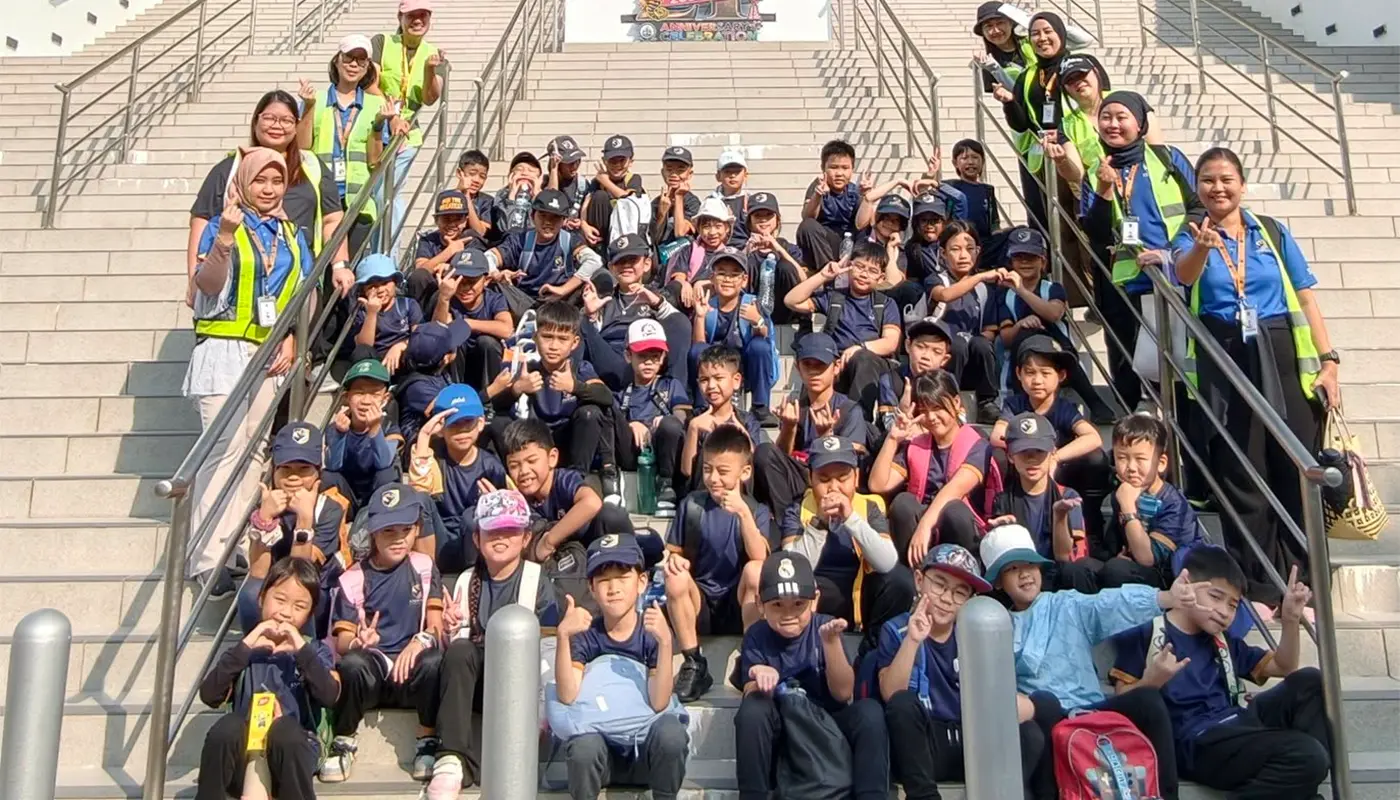
MIRI – Miri City Council (MCC) welcomed Group 2 of Knewton Global Schools Miri for an educational visit on 11 August 2026, giving eight-year-old students an opportunity to learn more about local government and environmental responsibility.
The programme was held from 8.00 a.m. to 12.00 noon at Miri City Hall and was designed to provide the students with a practical and engaging introduction to the work carried out by the local authority.
During the visit, the students were introduced to the role, functions and services of Miri City Council and how these contribute to the daily life and development of the community.
The programme also used hands-on activities to help the young learners understand sustainability and environmental care in a way suited to their age.
Three learning stations were arranged for the students, with activities centred on creativity, waste reduction, plant care and responsible environmental practices.
The first station focused on low-carbon green planting using recycled plastic bottles.
Through the activity, the students were introduced to the idea of reusing plastic materials for planting instead of simply discarding them.
The activity also demonstrated how everyday household items can be given another purpose while supporting simple greening efforts.
The second learning station, titled From Kitchen to Garden, featured a Bokashi composting demonstration.
The session introduced the students to a method of processing kitchen waste and highlighted the relationship between household waste and gardening.
The third station involved 3D pens under the theme Bringing Ideas to Life with 3D Pens.
This activity provided the students with an opportunity to explore creativity and turn their ideas into simple three-dimensional creations.
Together, the three stations combined creative activities with practical lessons about sustainability.
The students were encouraged to learn through participation while discovering simple ways to reuse materials, reduce waste and care for plants.
The programme also aimed to help the children understand that environmental responsibility can begin with small actions carried out in everyday life.
By introducing these concepts at an early age, the activities provided an opportunity for the students to develop a greater appreciation of their surroundings and the importance of responsible resource use.
The educational visit was further supported by the participation of Cr Jamil Bin Bujang, Chairman of the Sustainable and Development Goals Standing Committee of Miri City Council.
Cr Jamil delivered the welcoming remarks and interacted with the students during the programme.
His participation also provided an opportunity for the students to hear directly from a representative of the local authority about the importance of sustainability and community development.
The visit combined civic education with environmental learning, giving the students a broader understanding of the work undertaken by a city council.
For young learners, visiting Miri City Hall can provide a different perspective on how public institutions operate and how local authorities contribute to the communities they serve.
MCC said it welcomed educational visits that give children opportunities to explore, learn and develop through practical experiences.
The council also highlighted the importance of nurturing an early understanding of sustainability and environmental responsibility among younger generations.
Activities such as recycling, planting and reducing household waste can help children recognise how their individual actions can contribute to broader environmental objectives.
The programme also introduced students to ideas associated with sustainable development in a manner that focused on participation and practical learning.
Such activities can complement classroom education by allowing children to see and experience concepts through direct involvement.
For Miri, efforts to engage young people in environmental and civic education form part of the wider objective of encouraging a cleaner, greener, smarter and more liveable city.
The educational visit also provided an opportunity for the students and the local authority to interact in an informal learning environment.
By combining public service awareness with sustainability activities, the programme encouraged the students to consider how they can contribute to their community as they grow.
The visit highlighted the potential for local government, schools and communities to work together in introducing younger generations to environmental responsibility.
MCC expressed hope that experiences of this nature would encourage young people to become more aware of their role in protecting the environment and contributing positively to the community.
The programme ultimately gave the eight-year-old students an opportunity to explore new ideas, learn practical lessons and develop their understanding of sustainability.
