



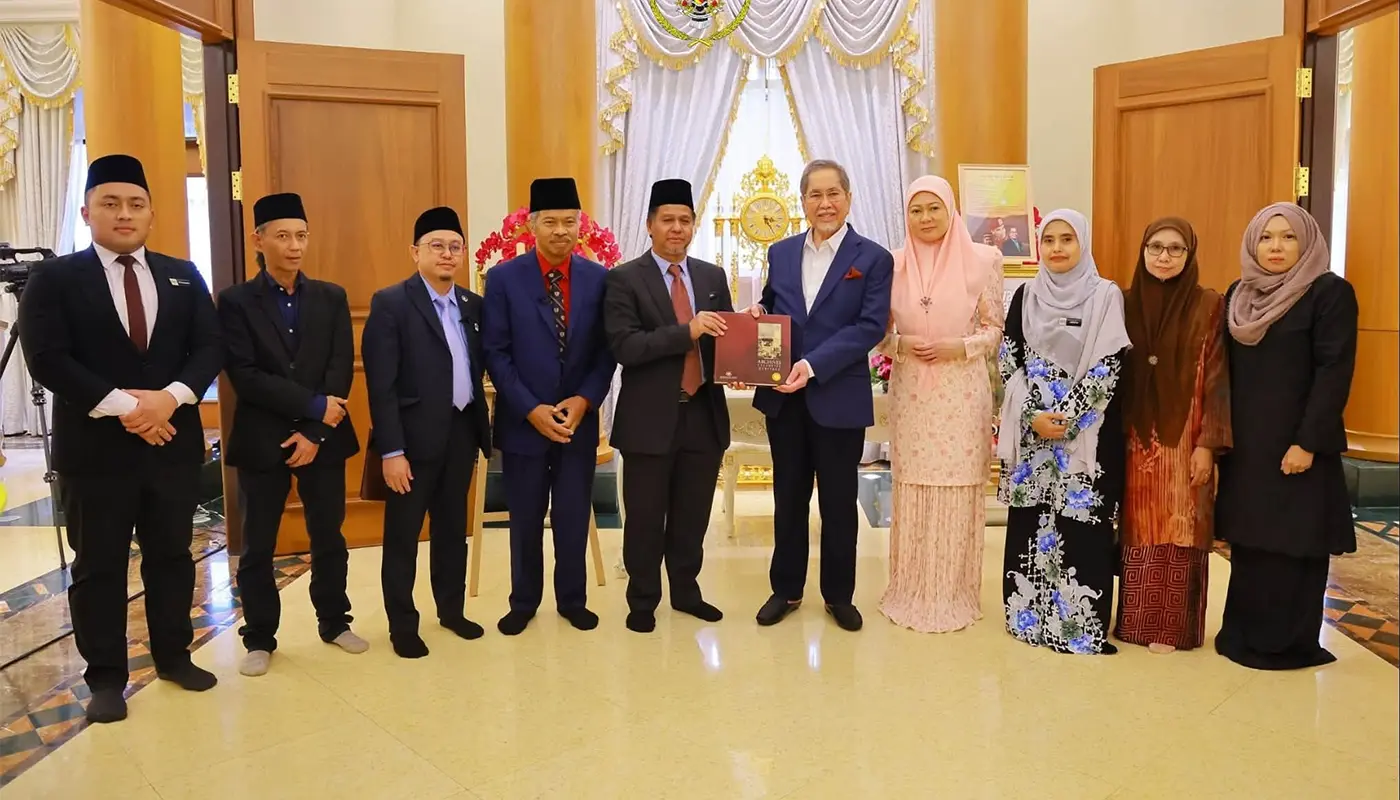
KUCHING – Sarawak Governor Tun Pehin Sri Dr Haji Wan Junaidi Tuanku Jaafar and his wife, Most Happy Toh Puan Datuk Patinggi Hajjah Fauziah Mohd Sanusi, took part in an Oral History Interview session organised by the National Archives of Malaysia in Kuching on 12 August 2026.
The session was held at Kasuma Resort and involved a delegation from the National Archives of Malaysia, together with academics and officers involved in the documentation of historical records.
The delegation was led by National Archives of Malaysia Deputy Director General for the Research and Development Sector, Tuan Haji Ahmad Sukri Abd Kadir.
Also attending were the Director of the National Archives of Malaysia in Sarawak, Alfham Jauhari, and Datu Dr Mohd Fadzil Abdul Rahman from Universiti Malaysia Sarawak (UNIMAS), who served as the interviewer.
Representatives from Universiti Pendidikan Sultan Idris (UPSI), including Dr Shahril Ismail and Dr Norsaliza Mohd Shuhaini, were also present alongside officers and staff from the National Archives of Malaysia and the National Archives of Sarawak.
The interview forms part of the National Archives of Malaysia’s efforts to collect and preserve first-hand accounts from figures who have played significant roles in the country’s development.
Its Oral History Programme is intended to complement existing historical records by documenting personal experiences, perspectives and memories directly from individuals who have been involved in important events and periods.
During the session, Tun Wan Junaidi spoke about his life journey and experiences in public service and politics.
His account also covered the various responsibilities he undertook during his career at both state and federal levels.
The discussion included his experiences relating to the administration and development of Sarawak and Malaysia, as well as issues connected with leadership and public administration.
Several significant events and issues associated with his years of public service were also discussed during the interview.
Among the subjects covered were the Malaysia Agreement 1963 (MA63), the cross-border haze crisis, the implementation of Undi18 and parliamentary reform.
The issue of bauxite mining in Pahang was also among the matters discussed during the oral history session.
The interview provides an opportunity for Tun Wan Junaidi’s experiences and perspectives on these matters to be recorded as part of a formal historical collection.
The National Archives’ oral history initiative is intended to preserve information that may not always be available through conventional written records.
Personal accounts can provide additional context to historical events by documenting the experiences and perspectives of people who were directly involved.
Tun Wan Junaidi also highlighted the importance of systematically recording oral history as part of efforts to preserve the experiences and views of individuals involved in the development of Sarawak and Malaysia.
Such documentation can serve as a historical resource for future generations.
The recordings from the session are expected to become part of the National Archives’ collection of historical documentation.
The material can subsequently support research, education and reference purposes, while providing future generations with access to first-hand accounts of important periods in the state’s and country’s development.
The initiative also creates an opportunity for researchers and members of the public to gain a deeper understanding of leadership, administration and historical developments through the experiences of those directly involved.
For Sarawak, the documentation of oral histories can provide additional perspectives on the state’s political and administrative development.
The interview also records Tun Wan Junaidi’s experiences across different stages of his public service, including his involvement in matters concerning both Sarawak and Malaysia.
The inclusion of issues such as MA63 and parliamentary reform reflects the range of subjects covered during the session.
The discussion of the cross-border haze crisis and bauxite mining in Pahang also places personal experiences within the context of wider national issues encountered during his public career.
The oral history process allows these experiences to be captured in a structured format for preservation.
The National Archives of Malaysia has continued to use oral history as one method of expanding the country’s historical records through direct testimony.
The participation of academics and archival officers in the Kuching session also brought together expertise in interviewing, historical research and preservation.
UNIMAS and UPSI representatives were among those involved in the session, alongside personnel from the national and Sarawak archives.
Tun Wan Junaidi and Toh Puan Fauziah expressed their appreciation to the National Archives of Malaysia and the other parties involved in conducting and documenting the interview.
They also expressed hope that initiatives aimed at preserving the experiences of national and state figures would continue to be strengthened.
The preservation of such accounts is intended to ensure that historical experiences and perspectives remain available beyond the generation in which the events took place.
The recorded material from the session will form part of a wider body of historical documentation maintained for future research and reference.
The initiative also contributes to the preservation of Sarawak’s historical record within the broader history of Malaysia.
By documenting first-hand experiences, the Oral History Programme provides another source through which future generations can examine the state’s and country’s political, administrative and social development.
The Kuching session represents part of this continuing effort, with Tun Wan Junaidi sharing his experiences and perspectives from his years of public service.
The interview brought together archival officials, academics and researchers to record these accounts for preservation.
The resulting documentation is expected to provide an additional reference for those seeking to understand key aspects of Sarawak and Malaysia’s development through the experiences of a senior public figure.
