



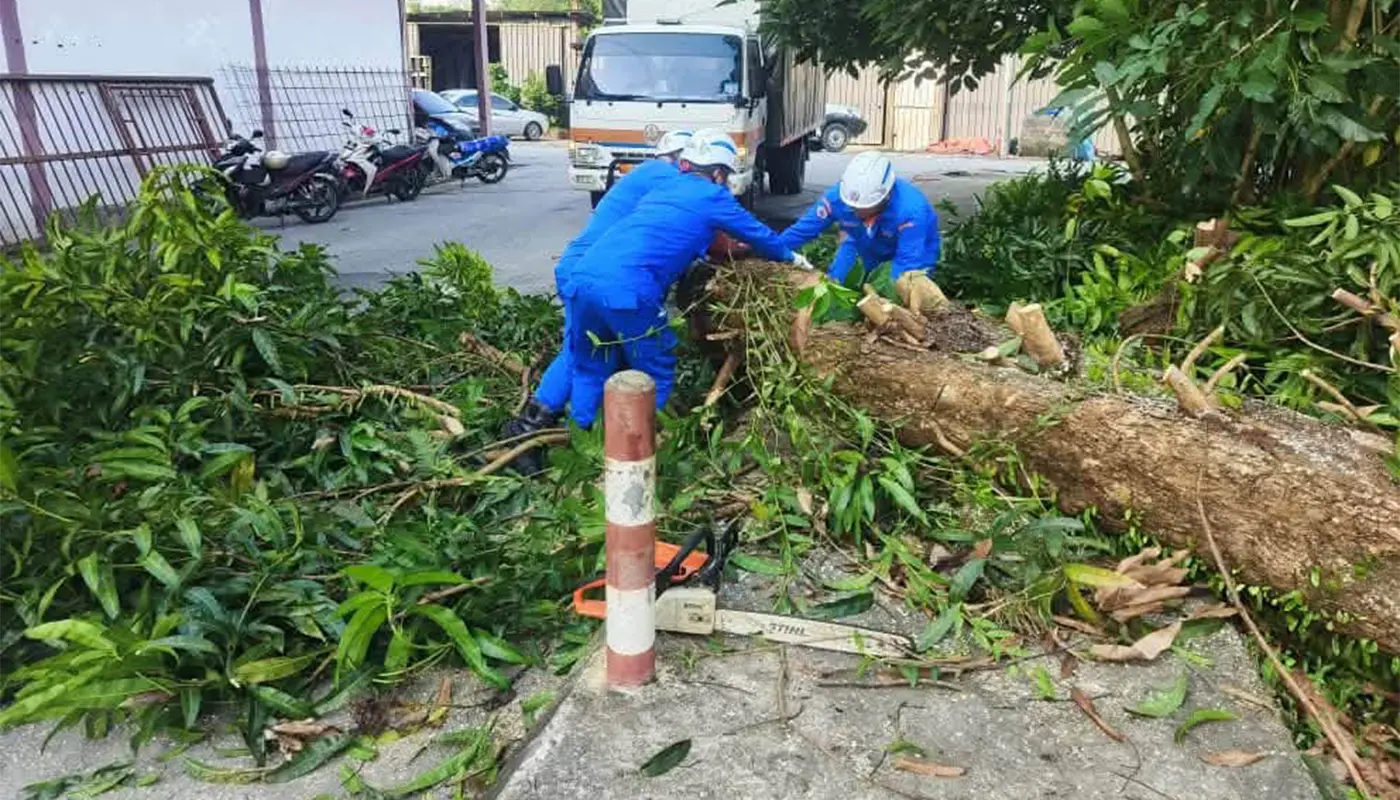
SELANGAU – Emergency responders successfully restored access along a public thoroughfare in Pekan Stapang after removing a fallen tree that had obstructed the route. The incident was reported on Friday, prompting immediate deployment from the district operations centre to address the hazard and ensure commuter safety.

Members of the public alerted authorities to the blockage, demonstrating effective community vigilance in identifying local hazards. Rapid notification enabled civil defence personnel to mobilise without delay, minimising the duration of road closure and associated inconvenience for residents and travellers. Such proactive reporting remains essential for maintaining responsive emergency services across rural districts.
Upon reaching the site, the duty squad conducted a preliminary risk assessment before commencing clearance operations. This initial inspection identified potential dangers, including unstable branches, overhead power lines, or hidden debris that could endanger workers during cutting activities. Thorough situational awareness prevents secondary accidents whilst executing remedial tasks.
Specialised cutting equipment was deployed to section the trunk and limbs into manageable pieces for removal. Crews worked methodically to dismantle the obstruction whilst maintaining safe distances from passing traffic and bystanders. Proper personal protective equipment and established work zone protocols safeguarded all personnel throughout the operation.
The pathway was fully cleared and declared safe for normal use following completion of cutting and debris removal activities. Restoration of unimpeded access eliminated detour requirements and reduced accident risks associated with drivers attempting to navigate around obstacles. Timely resolution reflects operational efficiency and commitment to public service standards.
Vegetation-related road obstructions occur frequently during periods of heavy rainfall or strong winds common in Sarawak’s tropical climate. Saturated soil weakens root systems, whilst gusty conditions exert lateral forces on mature trees, increasing the likelihood of structural failure. Seasonal preparedness planning anticipates such recurring challenges through pre-positioned resources and trained crews.
Preventative maintenance programmes can reduce the frequency of emergency callouts related to hazardous trees. Regular inspections of roadside vegetation identify dead, diseased, or structurally compromised specimens requiring proactive removal before they fall unexpectedly. Collaboration between civil defence, public works, and forestry departments enhances comprehensive corridor management.
Community awareness regarding tree hazard signs empowers residents to report concerns before incidents occur. Visible leaning, cracked trunks, fungal growth, or exposed roots often indicate impending failure warranting professional evaluation. Early intervention protects both infrastructure integrity and public safety more cost-effectively than reactive emergency responses.
Equipment readiness directly influences response capability for vegetation clearance missions. Chainsaws, winches, lifting gear, and transport vehicles require regular servicing to ensure reliable performance when deployed under pressure. Maintenance schedules and spare parts inventories prevent operational delays caused by mechanical failures during critical assignments.
Training curricula for civil defence volunteers include practical instruction on safe tree felling and sectional dismantling techniques. Classroom theory combines with supervised field exercises to build competence and confidence amongst new recruits. Refresher courses maintain skill levels and incorporate updated safety standards reflecting industry best practices.
Inter-agency coordination strengthens overall disaster resilience beyond individual organisational capacities. Police may manage traffic control during extended clearance operations whilst utility companies address downed power lines if present. Integrated response frameworks ensure seamless handoffs and avoid duplication of effort during complex multi-hazard scenarios.
Public communication channels facilitate efficient information exchange between communities and emergency services. Dedicated hotlines operating twenty-four hours daily enable instant reporting regardless of time or day. Accessible contact numbers like 084-891285 for APM Selangau remove barriers to seeking assistance during urgent situations.
Data collection from individual incidents supports evidence-based resource allocation and strategic planning. Analysis of response times, equipment utilisation, and geographic distribution identifies coverage gaps or capacity constraints needing attention. Continuous improvement cycles transform operational experience into systemic enhancements benefiting entire populations.
Volunteer dedication forms the foundation of auxiliary emergency services throughout rural Sarawak. Individuals balance civilian responsibilities with unpaid service commitments driven by civic pride and community solidarity. Recognition programmes and appreciation events help sustain morale and encourage ongoing participation essential for organisational sustainability.
Environmental considerations increasingly inform vegetation management decisions alongside safety priorities. Selective pruning over complete removal preserves canopy cover and ecological functions where feasible. Balanced approaches protect both human infrastructure and natural heritage values within shared landscapes.
Long-term infrastructure resilience depends on adaptive management responding to changing climatic patterns and land use pressures. Urban expansion into forested areas increases interface zones where tree failures impact built environments most severely. Forward-looking planning integrates green infrastructure benefits with risk mitigation strategies for sustainable development outcomes.
