



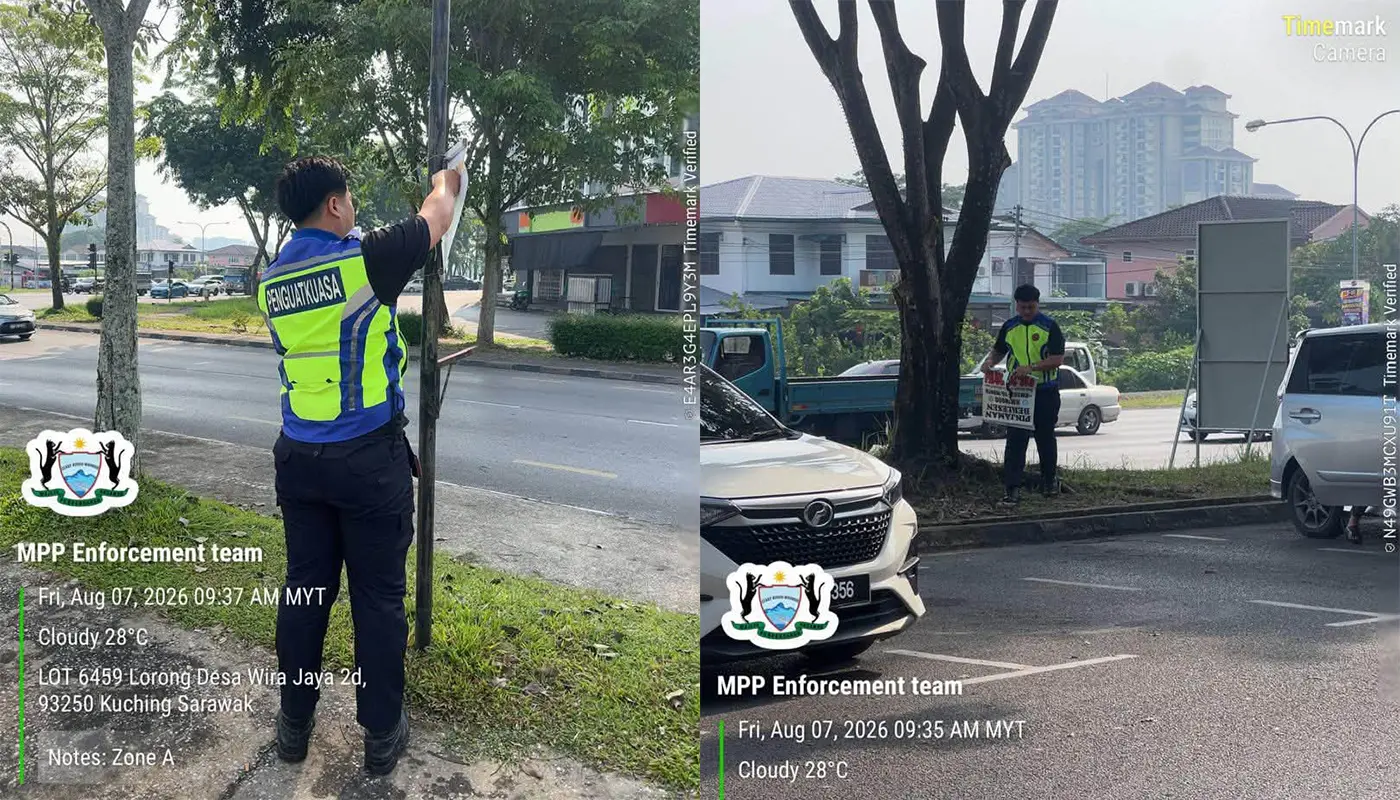
PADAWAN – Local authorities have intensified efforts to clear unauthorised promotional materials from public infrastructure across the district as part of an ongoing environmental management campaign. The Padawan Municipal Council confirmed that enforcement teams are actively removing illicit signage to maintain orderly and safe communal spaces for all residents and visitors.

Operational crews have been targeting a wide variety of non-compliant advertising mediums during their routine patrols. Items confiscated include unapproved posters, adhesive stickers, fabric banners, and decorative bunting that were affixed without prior permission. These materials are frequently found attached to street lighting columns, traffic signage, tree trunks, building facades, and other municipal assets throughout the administrative jurisdiction.
Officials emphasise that such unregulated displays pose risks beyond mere visual clutter or aesthetic degradation. Improperly installed signage can obscure critical road information, distract drivers, or create physical hazards for pedestrians navigating public thoroughfares. Ensuring clear sightlines and unobstructed infrastructure remains a primary safety objective driving these regular clearance operations across the municipality.
Enforcement actions have specifically targeted unlicensed money lending promotions which have become increasingly prevalent in urban and semi-urban areas. However, the scope of removal works extends well beyond financial services to encompass general business advertisements, service promotions, and event publicity lacking valid permits. Any commercial or non-commercial display erected without council approval falls within the ambit of current regulatory enforcement activities.
The systematic removal programme operates through a combination of scheduled inspections and responsive follow-up based on community feedback. Public complaints serve as valuable intelligence sources guiding deployment priorities and identifying emerging problem hotspots requiring immediate attention. This dual approach maximises resource efficiency whilst demonstrating responsiveness to citizen concerns about neighbourhood quality and compliance standards.
Regulatory frameworks governing outdoor advertising exist to balance commercial expression with public interest considerations including safety, aesthetics, and fair competition. Permit requirements ensure that displayed content meets established standards regarding size, placement, duration, and structural integrity. Voluntary compliance reduces enforcement burdens and fosters cooperative relationships between businesses and local government bodies responsible for shared environmental stewardship.
Business owners and promoters are reminded that obtaining proper authorisation before installing any promotional material is mandatory rather than optional. Application processes provide guidance on acceptable locations, design specifications, and fee structures applicable to different advertisement categories. Proactive engagement with council licensing departments prevents costly removals, potential penalties, and reputational damage associated with non-compliance.
Community participation enhances effectiveness of municipal cleanliness initiatives beyond what enforcement staff can achieve alone. Residents who observe illegal postings are encouraged to report them through official channels rather than attempting removal themselves, which may cause property damage or personal injury. Collaborative vigilance strengthens collective ownership of public space quality and deters future violations through visible social accountability.
Environmental sustainability considerations also inform waste management protocols following advertisement confiscation. Recovered materials are sorted for recycling where feasible to minimise landfill contributions and resource wastage. Responsible disposal practices align broader cleanliness objectives with ecological responsibility commitments embedded in contemporary municipal governance frameworks across Sarawak.
Periodic intensification of enforcement activities responds to seasonal patterns, complaint trends, and development pressures influencing violation frequencies. Adaptive scheduling ensures sustained deterrence rather than temporary suppression followed by rapid reoffending once visible presence diminishes. Consistent messaging reinforces normative expectations regarding lawful conduct in shared public environments over extended timeframes.
Infrastructure maintenance teams coordinate closely with enforcement units to repair damage caused by improper sign installation methods. Adhesive residues, nail holes, paint marks, and structural compromises require remediation to restore asset functionality and appearance after illicit materials are removed. Integrated service delivery prevents secondary deterioration that could undermine primary cleanliness achievements achieved through sign clearance operations.
Educational outreach complements punitive measures by informing stakeholders about legal obligations and available alternatives for legitimate promotion. Workshops, advisory notices, and digital communications help bridge knowledge gaps amongst small enterprises unfamiliar with regulatory requirements. Preventative education proves more cost-effective long-term than reactive enforcement cycles addressing repeat offenders or widespread ignorance of applicable rules.
Data collection from removal operations supports evidence-based policy refinement and resource allocation decisions across the municipality. Analysis of violation types, geographic clustering, temporal patterns, and recidivism rates identifies systemic issues requiring strategic intervention beyond individual case processing. Continuous improvement cycles transform operational experience into enhanced regulatory frameworks benefiting entire communities through smarter governance approaches.
Inter-agency collaboration strengthens overall compliance ecosystem beyond municipal boundaries when cross-jurisdictional or sector-specific issues arise. Police, land transport authorities, telecommunications providers, and private property managers may partner on coordinated campaigns addressing overlapping responsibilities or shared infrastructure networks. Integrated governance models prevent regulatory gaps exploited by opportunistic violators seeking jurisdictional arbitrage opportunities.
Long-term urban quality depends on cultivating civic culture valuing shared environment stewardship alongside individual commercial interests. Sustainable outcomes emerge when compliance becomes internalised norm rather than externally imposed constraint requiring constant surveillance. Forward-looking municipal leadership invests in relationship-building, transparency, and participatory mechanisms fostering voluntary adherence essential for resilient self-regulating communities across Padawan’s diverse neighbourhoods.
