



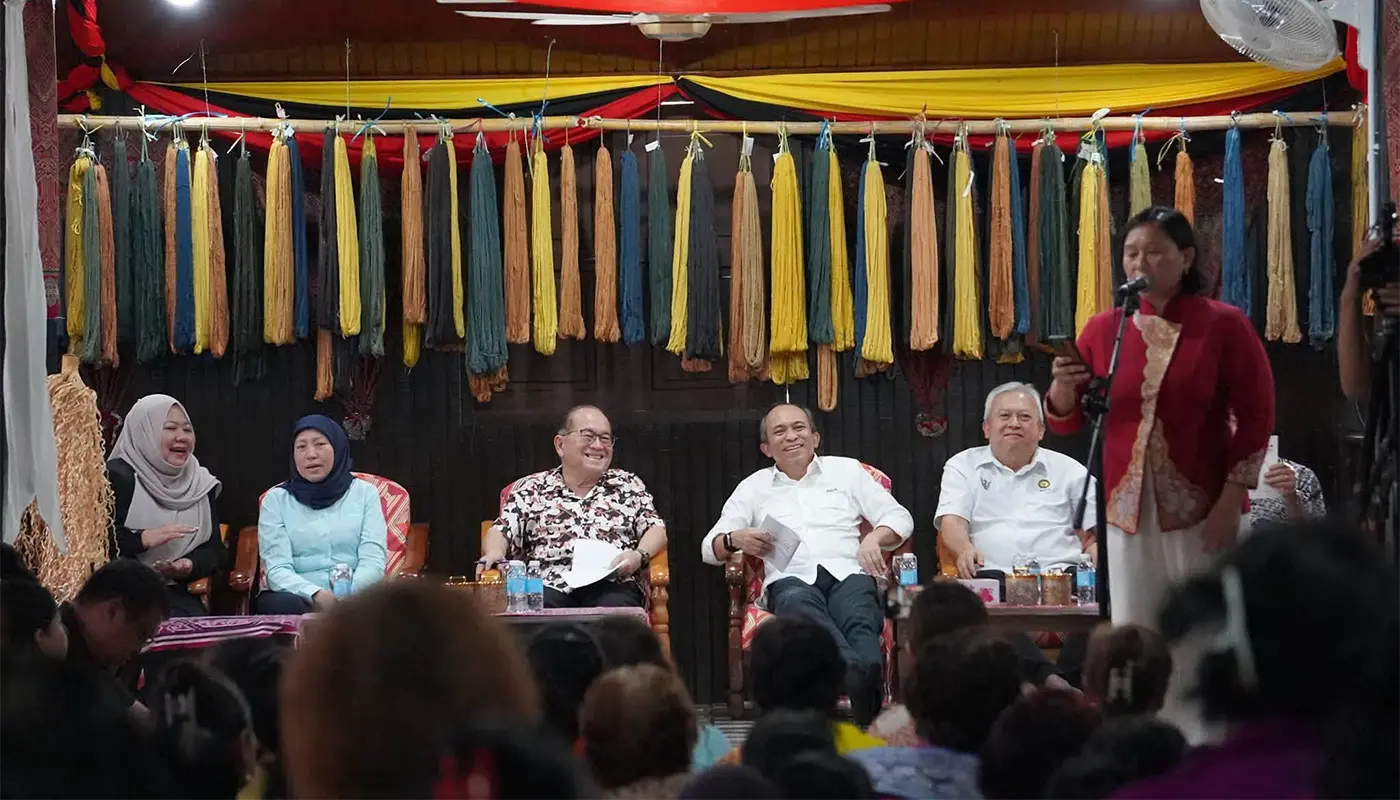
SPAOH – The five-day Borneo Interwoven: Jalinan Borneo 2026 programme has concluded with a renewed focus on positioning Sarawak’s traditional weaving industry within the global marketplace.
Held at the historic Rumah Panjang Mendit Unsu in Penom, Ulu Paku, the event served as a catalyst for international collaboration, bringing together experts from France, Ireland, Aotearoa New Zealand, Singapore, Indonesia, and various regions across Borneo.
The gathering aimed to exchange technical knowledge, foster partnerships, and ensure the preservation of the region’s rich textile legacy.
Sarawak Deputy Premier Datuk Amar Douglas Uggah Embas officiated the closing ceremony, emphasising that rural communities are capable of serving as vital hubs for international knowledge exchange.
He noted that such initiatives provide local artisans with the necessary platforms to preserve, develop, and promote their cultural heritage on a wider stage.
The programme highlighted the importance of connecting remote weavers with global trends and sustainable practices, thereby bridging the gap between traditional craftsmanship and modern market demands.
A central theme of the event was the exploration of natural dyes. Experts shared valuable insights on utilising plant species, soil, and other organic materials to produce high-quality, sustainable colours.
This focus aligns closely with the Sarawak Post COVID-19 Development Strategy 2030 (PCDS 2030), which prioritises economic prosperity, social inclusivity, and environmental sustainability.
The deputy premier stressed that this knowledge is invaluable and must be meticulously documented to prevent its loss over time, ensuring it benefits future generations and supports sustainable industry growth.
Looking ahead, there is significant hope that Bukit Saban will emerge as a dedicated centre for the production of plant-based natural dyes.
The area’s rich biodiversity offers abundant resources that can be harnessed responsibly. To achieve this, officials advocate for strengthened research, innovation, and strategic collaboration involving academic institutions, industry players, and international partners.
The goal is to develop commercially viable products that are both competitive in quality and respectful of ecological balance.
Despite the optimism, challenges within the traditional weaving sector remain acknowledged. Artisans continue to face issues such as limited raw material supplies, lengthy production cycles, and constraints related to economies of scale. These factors often restrict production capacity and limit market reach.
To address these hurdles, there is a push to introduce appropriate technologies and mechanisation that enhance productivity without compromising the authenticity of traditional craftsmanship. Such improvements aim to expand market access and increase the overall value of local woven goods.
The Sarawak Government is also placing strong emphasis on human capital development, particularly through the empowerment of women.
Initiatives focused on skills training, technology transfer, and entrepreneurship are designed to strengthen the traditional textile industry in areas like Bukit Saban.
These efforts aim to produce high-value woven products that are increasingly attracting interest from international buyers.
By supporting female artisans, the state seeks to create new income sources for rural households while preserving cultural identity.
Infrastructure development plays a crucial role in this economic vision. Improvements to roads, bridges, and the Bebuling Spaoh STOLport are expected to enhance connectivity and improve market access for local entrepreneurs.
Better transport links will allow heritage-based businesses to expand their operations and reach broader customer bases more efficiently.
International participants were encouraged to act as ambassadors for Sarawak’s products, promoting woven textiles, natural dyes, and handicrafts in their home countries.
This diplomatic approach aims to expand global market access and build lasting commercial relationships.
The deputy premier concluded by noting the historical significance of the venue, Rumah Panjang Mendit Unsu, which was built in 1926 and will soon celebrate its centenary.
The Borneo Interwoven event stands as a milestone in reinforcing collaboration among researchers, artisans, and institutions to ensure this cultural legacy thrives for years to come.
