



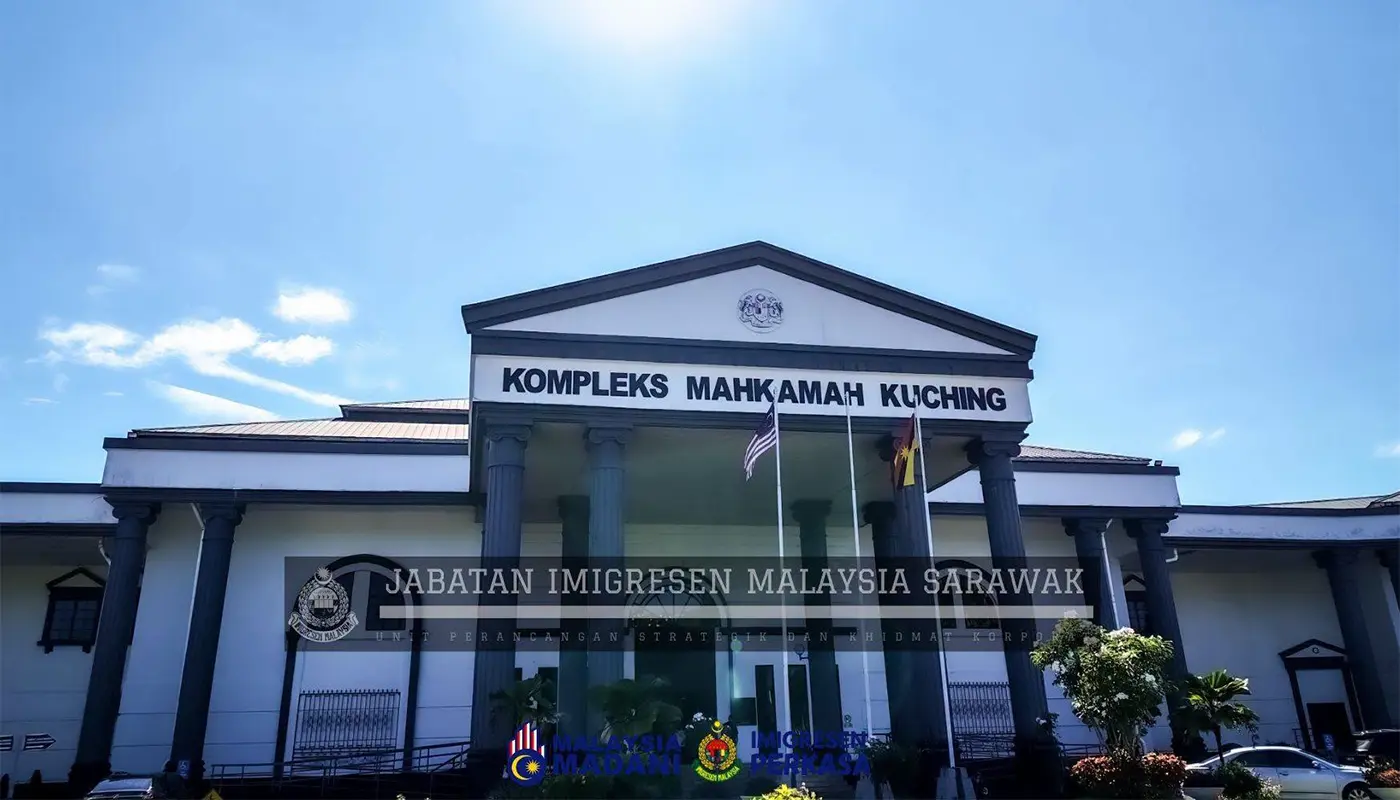
KUCHING – An Indonesian national has been sentenced to two years in prison after admitting to smuggling migrants in Sarawak.

The High Court in Kuching delivered the ruling against Rayudi Jamal, who pleaded guilty to a charge under Section 26J of the Anti-Trafficking in Persons and Anti-Smuggling of Migrants Act 2007 (ATIPSOM).
The case was heard before Judge Puan Amelati anak Parnell, with Deputy Public Prosecutor Puan Kong Siew Chuo leading the prosecution.
Court documents revealed that Jamal was apprehended in the vicinity of Holy Name School, Jalan Biawak, near Simpang Lorong Rukam 4 in Lundu.
He was found to have smuggled two Indonesian citizens into Malaysia. The arrest took place earlier this year, and the sentence will run from the date of his detention.
The accused, who did not have legal representation, admitted guilt after the charge was read in court. The judge subsequently handed down a custodial sentence of two years, reflecting the seriousness of offences under ATIPSOM.
The Anti-Trafficking in Persons and Anti-Smuggling of Migrants Act was introduced in 2007 to strengthen Malaysia’s legal framework against human trafficking and migrant smuggling.
Section 26J specifically addresses offences involving the smuggling of migrants, with penalties including imprisonment and fines.
Authorities have emphasised that the law is designed to protect vulnerable individuals from exploitation while deterring organised smuggling networks.
Cases of migrant smuggling have been a recurring concern in Sarawak, particularly in border districts such as Lundu, which share close proximity with Indonesia.
Enforcement agencies have stepped up patrols and monitoring in these areas to curb illegal entry and safeguard national security.
Legal experts note that migrant smuggling differs from human trafficking, as smuggling typically involves consent from the migrants, whereas trafficking entails coercion or exploitation.
Nonetheless, both are treated as serious crimes under Malaysian law due to the risks posed to individuals and communities.
The conviction of Jamal underscores the government’s ongoing efforts to combat cross-border crimes. Authorities continue to remind the public that migrant smuggling not only violates national laws but also endangers lives, as those involved are often transported under unsafe and clandestine conditions.
This latest case highlights the judiciary’s firm stance on offences under ATIPSOM, reinforcing Malaysia’s commitment to upholding the rule of law and protecting its borders.
