



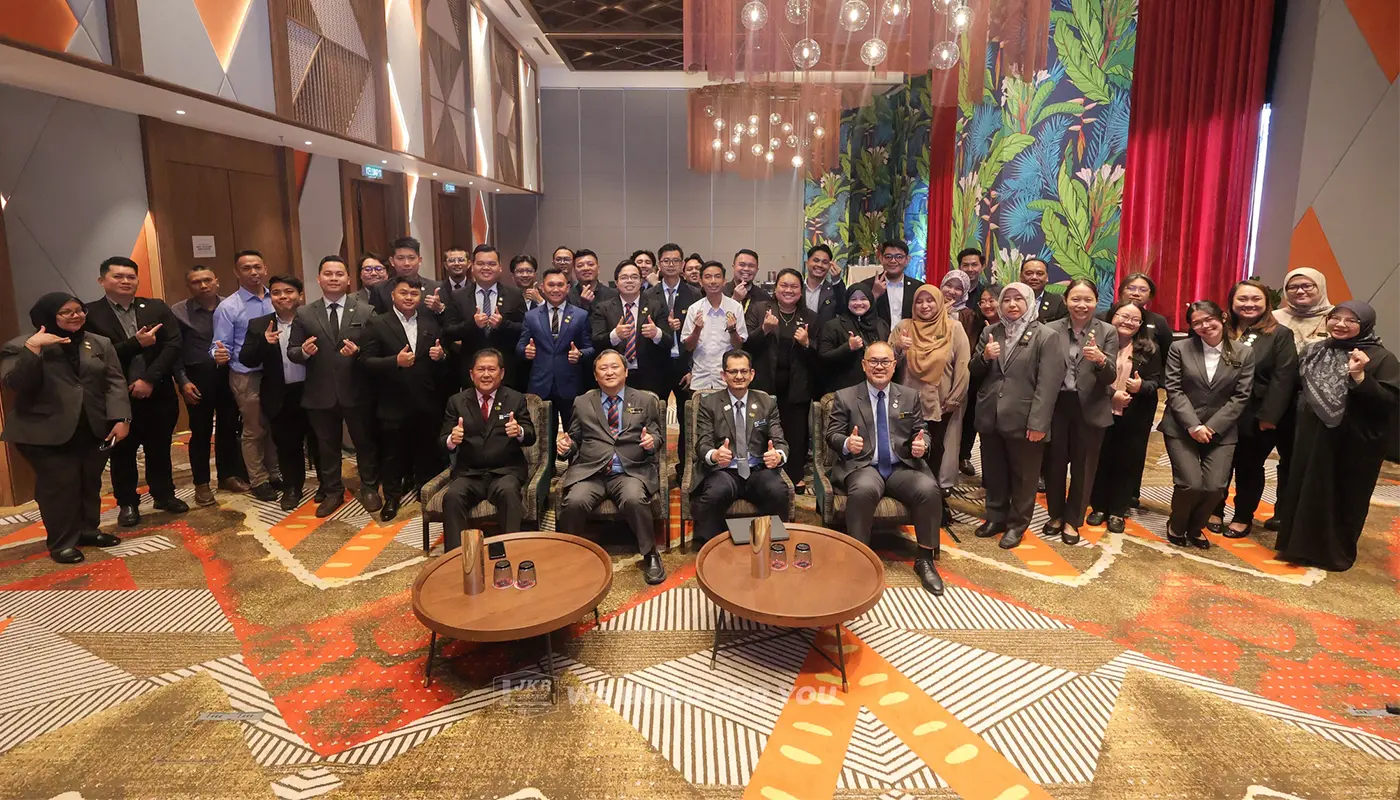
MIRI – The Public Works Department (JKR) Sarawak, through its Audit Branch at headquarters, convened the first engagement session with divisional offices on 21 April 2026.

The programme was hosted at Mercure Hotel, Miri, and brought together officers from across the state to strengthen understanding of audit processes and compliance in project delivery.
The initiative was designed to highlight the responsibilities and scope of the Audit Branch while also providing a platform for dialogue on challenges faced at the divisional level.
By encouraging feedback, the session aimed to enhance cooperation between auditors and auditees, ensuring that governance standards are upheld across Sarawak’s infrastructure projects.
Dr Lai Phui Hua, principal senior assistant director (audit), delivered the opening remarks on behalf of the JKR Sarawak director.
He stressed the importance of adhering to audit procedures, describing them as a vital internal control mechanism to safeguard transparency, accountability, and efficiency in project implementation.
Throughout the day, participants were introduced to a series of presentations covering key areas of audit work.
Topics included the management and maintenance of government quarters, audits of emergency works, oversight of small projects, facility management, and the strategic direction of the audit branch for 2026.
These sessions provided practical insights into how audit practices can be applied to improve service delivery.
Approximately 60 officers from various divisions of JKR Sarawak took part in the programme. Their involvement reflected the department’s commitment to building capacity among staff and ensuring that audit principles are consistently applied across different regions.
The Audit Branch emphasised that such engagement sessions are not only about compliance but also about fostering a culture of integrity and accountability.
By strengthening collaboration between headquarters and divisional offices, JKR Sarawak aims to deliver infrastructure projects more effectively and with greater public trust.
This initiative forms part of the department’s broader agenda to reinforce governance standards and improve efficiency in serving the people of Sarawak.
With infrastructure development continuing to be a priority for the state, the role of audit in ensuring quality and transparency remains central.
The session in Miri marked the beginning of a series of engagements planned for 2026, signalling JKR Sarawak’s determination to maintain high standards of oversight and to support the state’s vision of sustainable and accountable development.
