



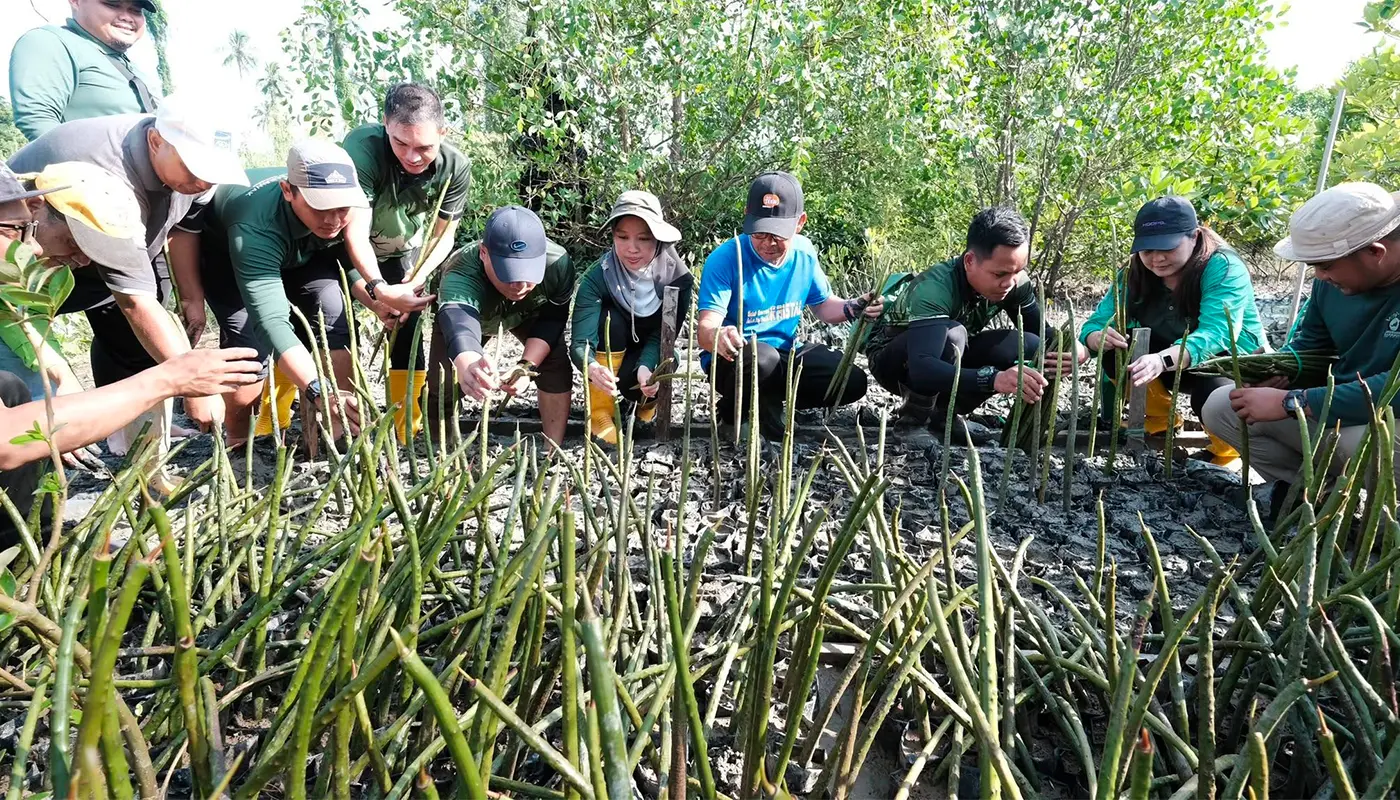
KUCHING – The Sarawak Forest Department has partnered with the Kampung Buntal community to launch a Mangrove Seed Nursery Programme, underscoring efforts to restore and protect the state’s coastal ecosystems.

The initiative, held on 11 July 2026, brought together local residents in a hands-on conservation activity aimed at strengthening community involvement in environmental stewardship.
A total of 1,500 mangrove seeds were successfully sown during the programme, including Rhizophora mucronata and api-api (Avicennia spp). Twenty-five participants took part in the planting, reflecting strong community support for the project.
The event was also attended by Kampung Buntal Penghulu, Encik Joni Bin Pawi, who praised the initiative for encouraging residents to take an active role in safeguarding their environment.
Mangroves play a vital role in protecting coastlines from erosion, acting as natural buffers against storms, and serving as breeding grounds for marine life.
In Sarawak, where coastal communities depend heavily on fisheries and aquaculture, the preservation of mangrove forests is directly linked to livelihoods and food security.
The Forest Department highlighted that community-based programmes are essential in ensuring the long-term success of conservation efforts.
By involving residents directly in seed planting and nursery management, the initiative fosters a sense of ownership and responsibility towards local ecosystems.
Environmental experts have long emphasised the importance of mangrove restoration in combating climate change.
Mangroves are among the most effective carbon sinks, storing large amounts of carbon in their soil and biomass.
Programmes such as the one in Kampung Buntal contribute to Sarawak’s broader sustainability agenda, aligning with state policies that prioritise ecological balance alongside economic growth.
Participants expressed pride in contributing to the restoration effort, noting that the programme provided both practical knowledge and a deeper appreciation for the role of mangroves in daily life.
For younger residents, the activity served as an educational experience, introducing them to the importance of biodiversity and conservation.
The Forest Department has indicated that similar initiatives will continue across Sarawak, with plans to expand community nurseries and strengthen partnerships with local leaders.
These efforts are expected to enhance resilience against environmental challenges while promoting sustainable resource management.
The Kampung Buntal programme also reflects a growing trend of integrating conservation with community development.
By combining ecological restoration with local participation, the initiative demonstrates how environmental projects can simultaneously support social cohesion and economic well-being.
As Sarawak moves forward with its sustainable development agenda, the success of grassroots programmes like the Mangrove Seed Nursery highlights the critical role of communities in achieving long-term environmental goals.
The collaboration between the Forest Department and Kampung Buntal residents stands as a model for future conservation efforts across the state.
