



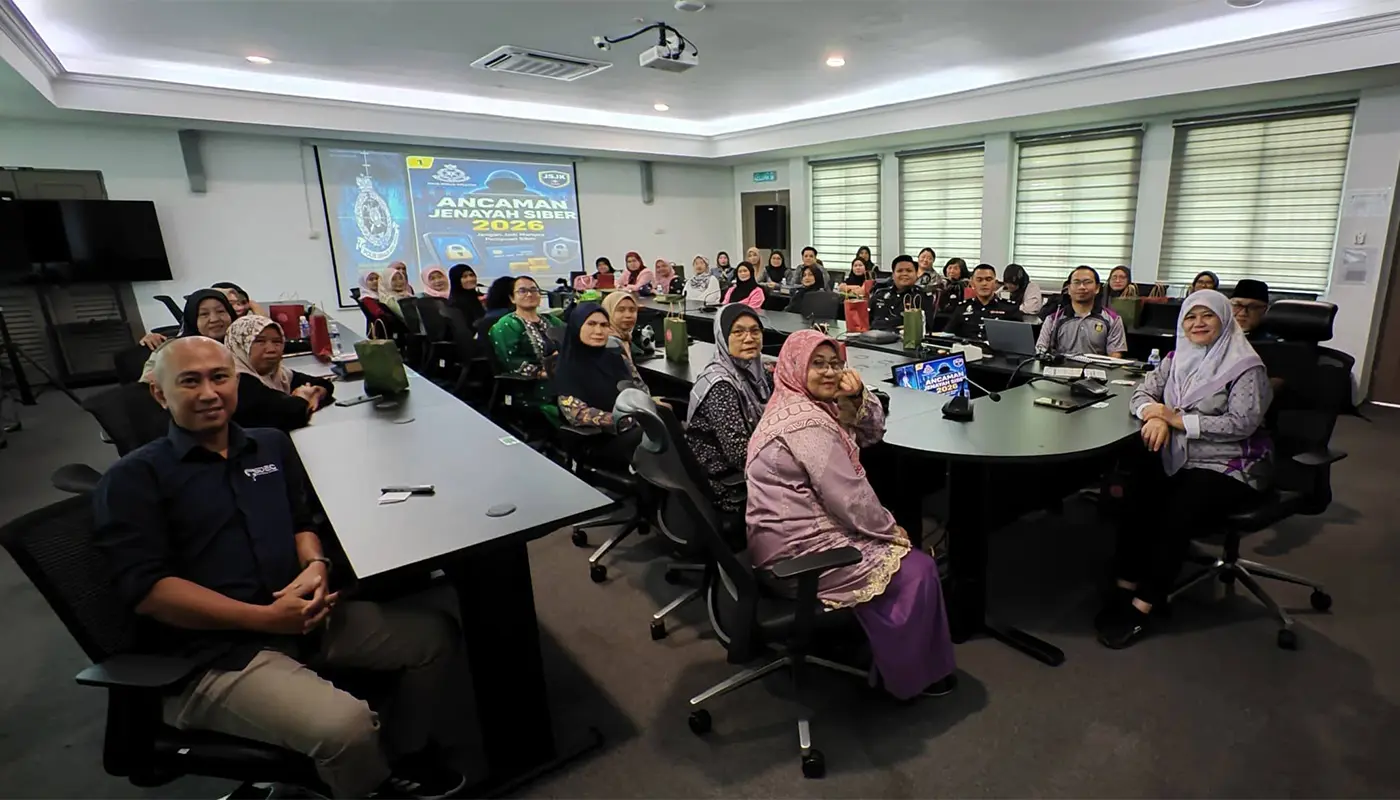
MATU – Local law enforcement has intensified efforts to educate residents about digital fraud through a dedicated community engagement session held earlier this week. The initiative coincided with broader celebrations marking Sarawak Women’s Day within the district.

The Commercial Crime Investigation Division of Matu Daro District Police organised the cybercrime prevention talk on Sunday, 2 August 2026. Venue for the educational programme was the meeting room at the Matu District Office, providing a central and accessible location for attendees.
Two police officers, comprising one senior and one junior rank, facilitated the session for an audience of sixty local participants. This ratio allowed for interactive dialogue and personalised responses to specific concerns raised by community members.
Primary objectives centred on elevating public consciousness regarding escalating commercial crime threats. Presenters highlighted how digital platforms have become primary vectors for sophisticated fraudulent schemes targeting unsuspecting individuals across all demographics.
Attendees received comprehensive briefings on current scam methodologies employed by criminal syndicates. Detailed explanations covered evolving tactics designed to exploit trust, urgency, and technological unfamiliarity among potential victims.
Significant emphasis was placed on the dangers of becoming an account mule or donkey. Officers explained how criminals recruit or coerce individuals into lending bank accounts for laundering illicit funds, often implicating innocent parties in serious offences.
Preventive strategies formed the practical core of the presentation. Participants learned concrete steps to verify suspicious communications, secure personal data, and recognise red flags before financial or emotional damage occurs.
Several official resources were introduced to empower citizens with self-help tools. The National Scam Response Centre hotline 997 was promoted as the first point of contact for reporting active scams or seeking immediate guidance.
Digital verification platforms received particular attention during the demonstration. The Semak Mule Portal, also known as CCID Check, enables users to validate bank account numbers and phone numbers against known fraud databases before transacting.
Mobile applications like Whoscall were recommended for identifying and blocking spam calls automatically. Such tools provide real-time protection against vishing attempts that frequently precede financial fraud.
Educational materials including the Commercial Crime E-Book were distributed via QR codes for easy access. This digital resource consolidates prevention tips, case studies, and reporting procedures in a portable format suitable for sharing.
Official social media channels @CyberAlertRMP and @JSJKPDRM were highlighted as ongoing information sources. These platforms publish timely alerts about emerging scam variants and enforcement successes relevant to the public.
Feedback from participants indicated strong appreciation for the practical knowledge shared. Many expressed commitment to disseminating learned information within their personal networks to amplify protective effects beyond the event itself.
Community members specifically mentioned intentions to share the e-book with family and friends. This organic distribution model extends educational reach far beyond formal programme attendance figures.
Law enforcement views such grassroots engagement as fundamental to building societal resilience against digital crime. Technical solutions alone cannot prevent fraud without corresponding human vigilance and critical thinking skills.
The motto “Stop. Think. Check. Don’t Be Easily Fooled” encapsulates the behavioural framework promoted throughout the session. This simple mnemonic serves as a mental checkpoint before engaging with unsolicited offers or requests.
Future programmes will continue adapting content to address newly identified threat patterns. Responsive curriculum development ensures that education remains relevant amidst rapidly evolving criminal innovation.
Digital literacy is increasingly recognised as essential life skill rather than optional technical knowledge. Integrating safety awareness into community fabric helps normalise cautious online behaviours across generations.
Collaboration between police and civil society organisations enhances programme credibility and reach. Partnerships leverage existing trust networks to overcome scepticism that sometimes hinders official messaging.
Ultimately, sustainable crime prevention requires cultural shift towards collective responsibility. When communities actively protect each other through shared knowledge, criminals find fewer vulnerable targets to exploit.
