



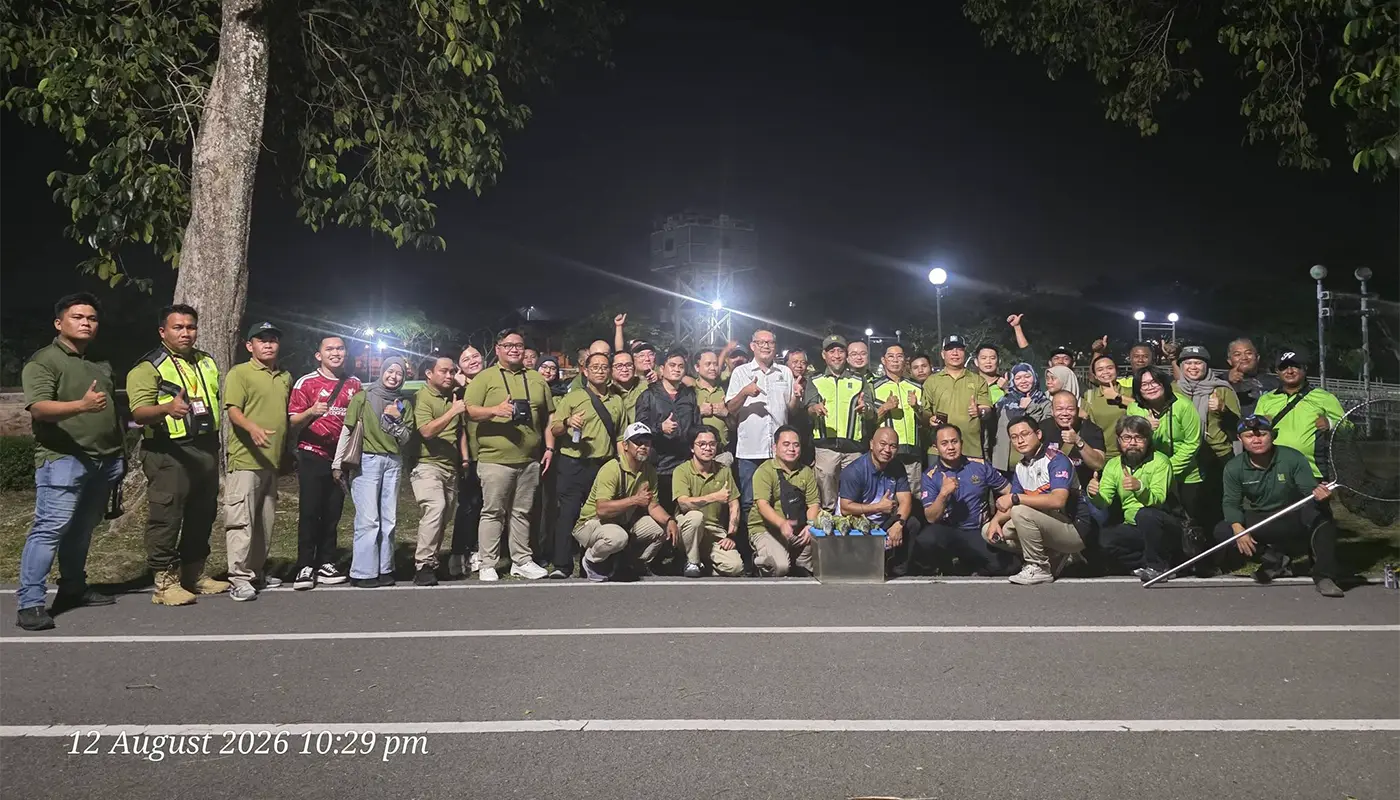
MIRI – Eight iguanas were captured during an operation to control the invasive species at Taman Bulatan here on 12 August, as authorities continued efforts to monitor and manage its population in the area.
The operation was led by the Sarawak Forestry Corporation (SFC), under the direction of the Sarawak Wildlife Controller, in collaboration with the Miri City Council (MCC).
Councillor Yee Chung Meng, representing the Mayor of Miri, was also present during the operation. His attendance reflected the local authority’s support for joint efforts to address the presence of invasive wildlife in public spaces.
The operation began at about 8.00 pm and concentrated on identifying, locating and capturing iguanas in areas where the animals had been observed.
Authorities said the iguana is a non-native species and its continued presence could place pressure on the local ecosystem if the population is allowed to grow without control.
The latest operation forms part of an ongoing effort to manage the iguana population at Taman Bulatan. Previous operations conducted in April, from 10 to 12 June, and on 21 July 2026 had resulted in a total of 49 iguanas being captured.
With eight more animals taken during the latest operation, the authorities have continued to build on those earlier efforts while assessing whether the population remains present in surrounding areas.
Monitoring carried out in the vicinity has also identified smaller iguanas, indicating that the species remains present in nearby locations.
The discovery has prompted authorities to maintain surveillance and control activities to reduce the possibility of the population increasing and spreading beyond the affected areas.
The continued presence of smaller animals also highlights the need for sustained monitoring rather than relying solely on individual capture operations.
Authorities have called on members of the public to avoid attempting to capture or handle iguanas themselves.
Residents and visitors are also advised not to feed the animals, as feeding can encourage them to remain in populated areas and may contribute to their continued presence.
Members of the public have further been advised against moving iguanas from one location to another or releasing captured animals elsewhere.
Instead, sightings should be reported to the relevant authorities so that the animals can be assessed and managed through the appropriate channels.
The advice is intended to support wildlife management efforts while reducing the risk of members of the public coming into direct contact with the invasive species.
Public cooperation is considered an important part of the ongoing response, particularly as monitoring and capture activities continue in urban areas.
The authorities’ latest operation therefore forms part of a broader effort to prevent the iguana population from becoming established in additional locations around Miri.
As monitoring continues, further control measures may be required depending on findings from affected and surrounding areas.
