



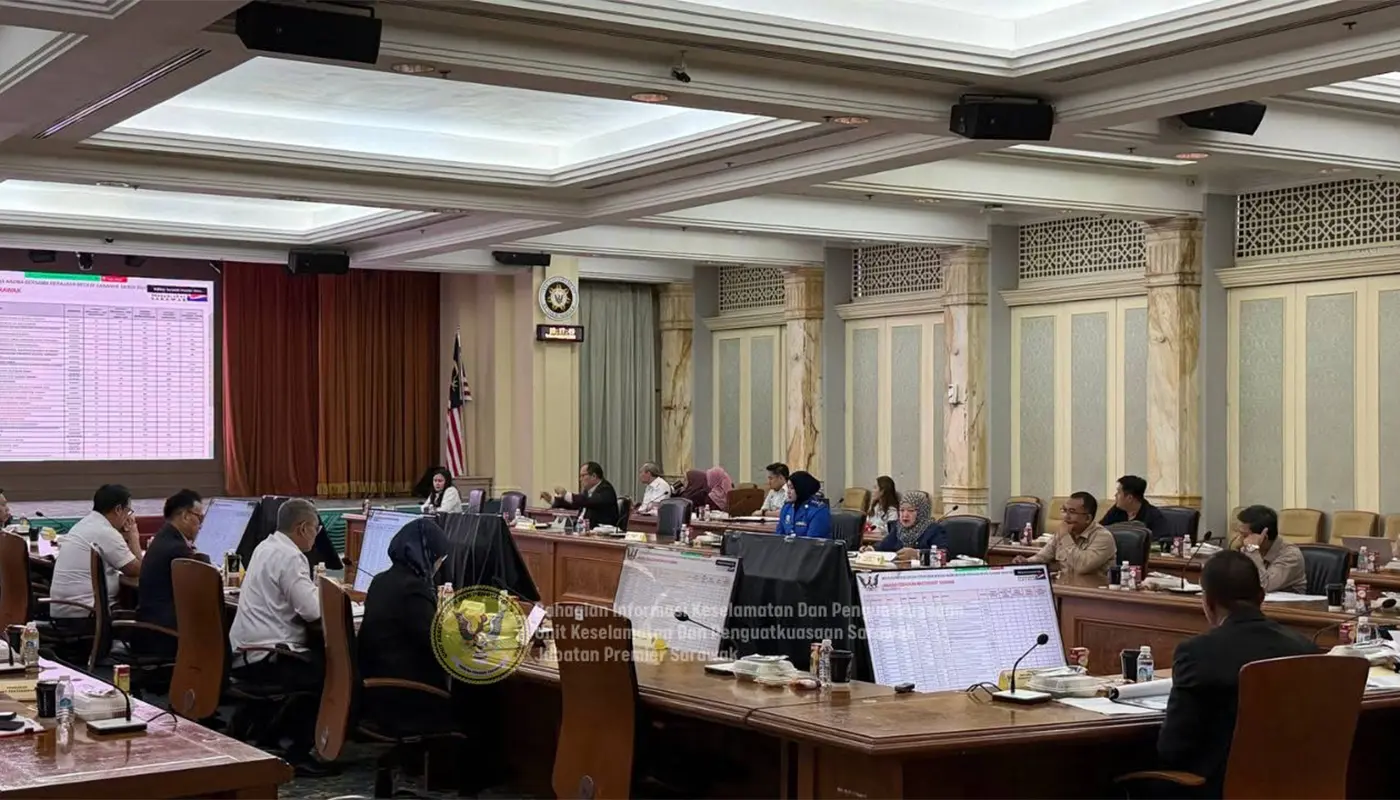
KUCHING – The National Disaster Management Agency (NADMA) convened a Disaster Allocation Coordination Meeting with the Sarawak State Government on Wednesday, 15 July 2026, at Wisma Bapa Malaysia.

The session was chaired by YBhg. Datuk Haji Hussain bin Moh, Deputy Director General of NADMA’s Post-Disaster Management Division. Also present was YBrs. Tuan Haji Abdul Wahab bin Haji Rahim, Director of the Sarawak Security and Enforcement Unit (UKPS) and Secretary General of the Sarawak State Disaster Management Committee (JPBN).
The meeting focused on reviewing the expenditure status of disaster allocations and strengthening post-disaster preparedness across Sarawak. Officials emphasised that the welfare of affected communities must remain central to disaster response planning.
A key agenda item was the evaluation of victim registration records through the MyInfoBencanaJKM (MYIBJKM) system. This digital platform is designed to ensure that all disaster victims are properly documented and no group is excluded from receiving assistance. The system has been instrumental in streamlining aid distribution during past disaster events.
The meeting also assessed the implementation of Kindness Money Assistance (BWI) during the 2025/2026 Northeast Monsoon season. The BWI programme provides financial support to disaster victims, helping them recover from immediate losses. Officials discussed ways to improve the efficiency of aid distribution and ensure that assistance reaches those most in need without delay.
In addition to reviewing past measures, participants explored holistic proposals for enhancing disaster response strategies. These included strengthening coordination between federal and state agencies, improving communication channels during emergencies, and expanding community-level preparedness initiatives.
Sarawak has faced recurring challenges during monsoon seasons, including floods and landslides. The state government, in collaboration with NADMA, continues to prioritise proactive planning to mitigate risks and safeguard communities. By refining allocation mechanisms and preparedness strategies, authorities aim to reduce the impact of disasters and accelerate recovery efforts.
The meeting underscored the importance of collaboration between national and state agencies. Effective disaster management requires not only financial resources but also strong coordination, clear communication, and community involvement.
Officials reiterated that disaster preparedness is a shared responsibility. Communities are encouraged to remain vigilant, utilise available reporting systems, and cooperate with authorities during emergencies. Public awareness campaigns and training programmes are expected to play a greater role in equipping residents with knowledge on safety measures and response protocols.
The coordination meeting reflects NADMA’s broader mission of ensuring that disaster management in Malaysia is both comprehensive and inclusive. By working closely with Sarawak’s state government, NADMA aims to strengthen resilience and ensure that assistance is delivered equitably across affected populations.
