



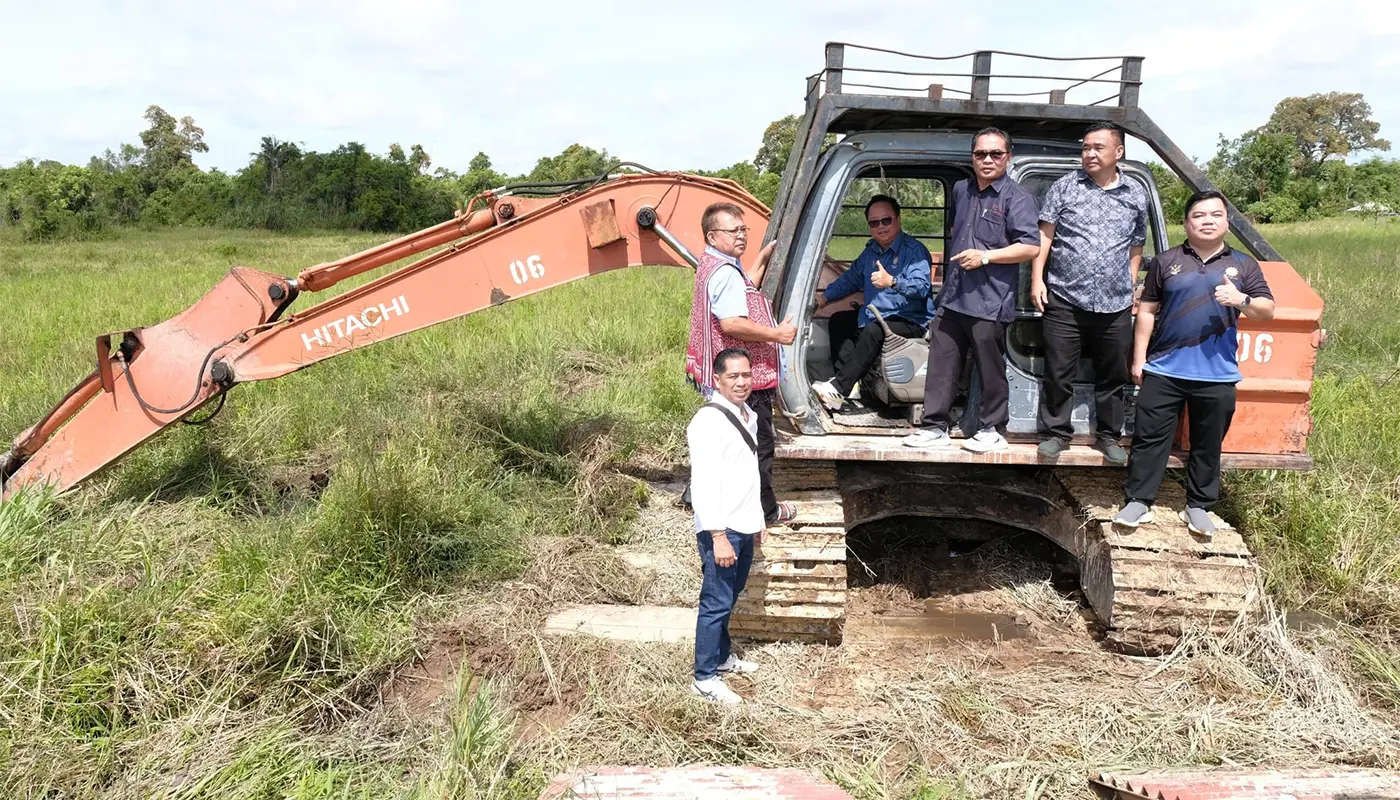
SIBU – A groundbreaking ceremony has been held in Rh. Unjah, Sungai Melangan, marking the start of a rice field demonstration project aimed at strengthening Sarawak’s food security and modernising local cultivation practices.

The initiative is led by Borneo Agritech Sdn. Bhd. in collaboration with the Sarawak Agriculture Department, University of Malaya, and the residents of Rh. Unjah longhouse will cover an eight-acre plot of land.
The project is designed as a three-year study to evaluate several rice varieties under modern farming conditions.
The Director of Agriculture Sarawak, Mr Dominic anak Chunggat, officiated the ceremony, highlighting the importance of the project in assessing the viability of large-scale rice production in the state.
He noted that the adoption of advanced technology and infrastructure would be central to the study, with findings expected to guide future commercial expansion.
The demonstration plot is intended to serve as a testing ground for innovative farming methods, including mechanisation and improved irrigation systems.
These approaches are expected to help farmers transition from traditional practices to more efficient techniques, ultimately increasing yields and reducing reliance on imported rice.
The managing director of Borneo Agritech Sdn Bhd, Mr Bayang anak Ringkat, emphasised that the collaboration between government agencies, academic institutions, and the private sector would provide significant benefits to rural communities.
He explained that the project would not only enhance rice production but also create opportunities for knowledge transfer and capacity building among local farmers.
Also present at the ceremony were Mr Jafaruddin, Principal Assistant Director of the Paddy and Grain Division, Mr Andrew Iling, Sibu Divisional Agriculture Officer, and Mr Jonathan Sambang, Sibu District Controlling Officer, alongside officers from divisional and district agriculture offices.
Their attendance underscored the multi-stakeholder commitment to ensuring the success of the initiative.
Rice remains a staple food in Sarawak, yet production levels have historically struggled to meet demand. According to agricultural reports, the state imports a significant portion of its rice supply, making food security a pressing concern.
The demonstration project is therefore seen as a strategic step towards reducing dependency on external sources and building resilience in local food systems.
The project is expected to generate valuable data on crop performance, soil suitability, and farming efficiency.
If successful, the findings could pave the way for larger-scale adoption across Sarawak, supporting the state’s long-term goal of achieving greater self-sufficiency in rice production.
Community leaders in Rh. Unjah has expressed optimism that the initiative will bring lasting benefits, not only in terms of food supply but also in strengthening local livelihoods.
The project is anticipated to serve as a model for similar efforts across other districts in Sarawak.
