



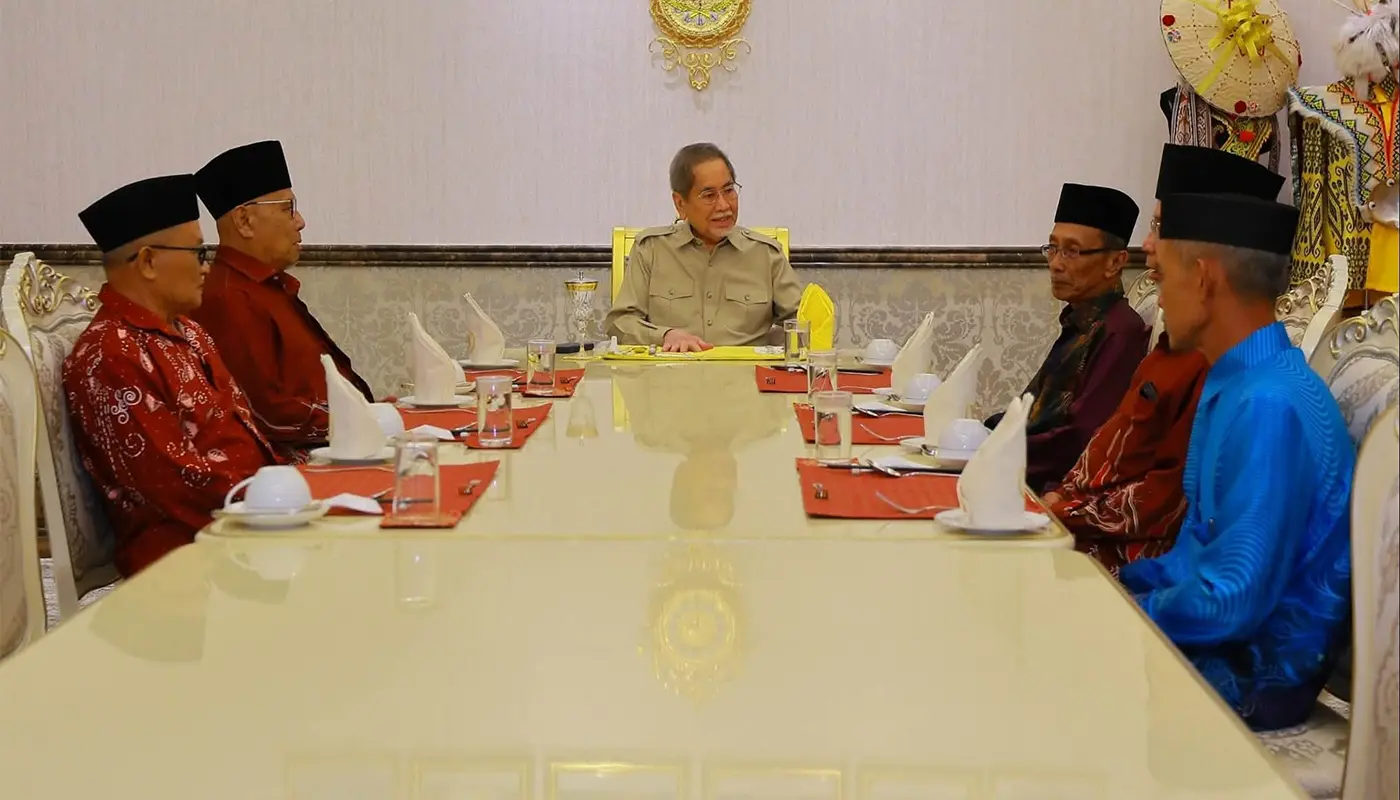
KUCHING – The Sarawak Governor, Tun Pehin Sri Dr Haji Wan Junaidi bin Tuanku Jaafar, hosted a group of community leaders from the Bintawa area for a morning dialogue session.

The event, held at Kasuma Resort in Petra Jaya on Saturday, provided an informal setting for the head of state to engage directly with grassroots representatives.
The gathering was designed to foster open communication between the state leadership and those who work closely with local residents. By choosing a breakfast format, the occasion maintained a relaxed and congenial tone, allowing for free-flowing conversation rather than rigid formalities.
This approach underscores the administration’s emphasis on accessibility and direct engagement with community stakeholders.
Several key figures from the Bintawa district were in attendance. Among them were Pemanca Haji Rosidi bin Junai and Penghulu Lahan bin Sabu, who hold significant traditional administrative roles in the region.
They were joined by former Village Head Haji Ashmat bin Haji Lamat, as well as current Village Heads Sedik bin Kassim and Tahir bin Kassim. The presence of both current and former leaders highlighted the continuity of community service and the value placed on experienced voices in local governance.
During the session, discussions centred on matters affecting the daily lives of Bintawa residents. Topics included socio-economic development, infrastructure progress, and the general well-being of the population.
The exchange of views allowed the governor to gain firsthand insights into the challenges and aspirations of the community. Such feedback is crucial for ensuring that state policies remain aligned with the needs of people at the grassroots level.
The dialogue also served to reinforce the strong relationship between the state government and community leaders. These individuals play a pivotal role in maintaining social harmony and addressing local concerns before they escalate.
Their ability to bridge the gap between official authorities and ordinary citizens is vital for effective governance and community stability.
Tun Wan Junaidi expressed his gratitude to the attendees for their dedication and service. He acknowledged the important contributions made by Pemanca, Penghulu, and village heads in preserving unity and welfare within their respective areas.
Their efforts in mediating disputes, organising community activities, and disseminating information were recognised as essential components of social cohesion.
The governor emphasised the importance of continued collaboration between community leaders and the government. He stated that strengthening these ties would benefit the overall prosperity of Sarawak.
By working together, both parties can ensure that development initiatives are implemented effectively and that the voices of the people are heard and acted upon.
This meeting reflects a broader strategy of inclusive governance, where leaders at all levels are encouraged to participate in decision-making processes.
It demonstrates a commitment to listening to those who are closest to the ground, thereby enhancing the responsiveness of public services. The informal nature of the breakfast meeting also helped to break down barriers, fostering a sense of partnership rather than hierarchy.
Bintawa, as a growing residential and commercial area in Kuching, faces unique developmental challenges. Issues such as traffic management, public amenities, and housing quality are often raised by local representatives.
Addressing these concerns requires sustained dialogue and cooperative effort between various stakeholders, including the state government, local councils, and community leaders.
The event concluded with a shared meal, further cementing the bonds of friendship and mutual respect. Such interactions are not merely ceremonial but serve practical purposes in building trust and facilitating problem-solving.
They provide a platform for leaders to align their goals and coordinate actions for the betterment of the community. As Sarawak continues to pursue economic and social progress, the role of grassroots leaders remains indispensable.
Their insights help shape policies that are relevant and impactful. The Governor’s willingness to engage with them regularly signals a proactive approach to governance that prioritises people-centric development.
The positive atmosphere of the meeting indicated a strong foundation for future cooperation. Both the state leadership and community representatives expressed optimism about the path ahead.
With continued dialogue and joint efforts, the well-being of Bintawa residents and the wider Sarawak population can be significantly enhanced.
