



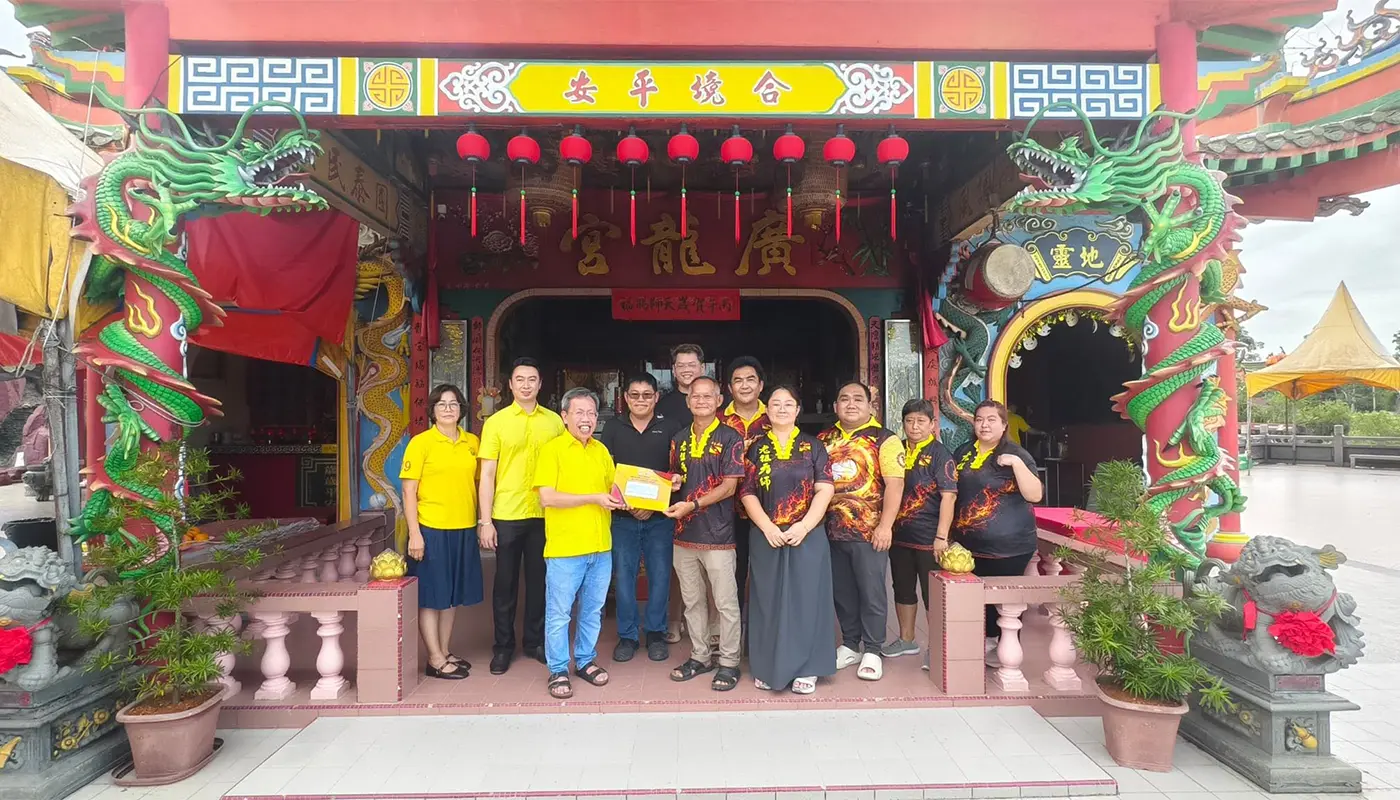
BATU KAWA – Annual financial grants have once again been extended to Chinese temples in Batu Kawa under the N14 constituency, continuing a programme that has been in place since 2016.

The initiative forms part of Sarawak’s wider commitment to supporting religious organisations across the state.
Since its introduction, the automatic allocation system has provided funding several times a year to Taoist and Buddhist temples, churches, and mosques within Batu Kawa.
These grants are intended to assist with community activities and upkeep of places of worship, ensuring that they remain active centres for cultural and social engagement.
Among the recipients this year are Persatuan Penganut Kuil Zhen Jun Di Sin San Tu Batu Kawa; PSTN Buddha Tze Yein Sungai Moyan Batu Kawa; Fook-Ted Temple Sejijak Batu Kawa; Jawatankuasa Pengurusan Kuil Voon Fah Kiong Segubang Batu Kawa; Batu Kawa Tian Sze Ja Temple Association; Che Qian Khor Moral Up-Lifting Society; Persatuan Penganut Agama Buddha Fatt Chu Sheng Khiun Kuching; Persatuan Penganut Dewa Wu Xuan Dai Di Luozhi Gang; P.P.K Tze Yun Yun Vun Kiung K.C.S Batu Kawa; and Persatuan Penyokong Kuil Fu Bao Gong Batu Kawa Kuching.
Deputy Premier of Sarawak, Dr Sim Kui Hian, who also serves as Minister of Public Health, Housing and Local Government, highlighted the importance of these grants in strengthening community bonds.
He noted that places of worship are not only religious centres but also cultural landmarks that bring people together, contributing to Sarawak’s broader nation-building efforts.
Between 2016 and 2025, a total of RM34.5 million was allocated to religious organisations in Batu Kawa. The funding has helped sustain temples, churches, and mosques, enabling them to continue their charitable work and community outreach.
These institutions often play a vital role in supporting local residents, offering assistance during festivals, emergencies, and social programmes. Dr Sim emphasised that the grants also provide opportunities for dialogue with community leaders.
Such discussions allow local issues and challenges to be addressed collectively, ensuring that development aligns with the needs of residents while reinforcing Sarawak’s vision of unity and inclusivity.
The continued financial support reflects the government’s recognition of the role religious organisations play in preserving cultural heritage and fostering social cohesion.
In Batu Kawa, temples and other places of worship are seen as more than spiritual sanctuaries; they are gathering points where traditions are upheld and communities are strengthened.
As Sarawak moves forward with its development agenda, initiatives like these grants underline the state’s commitment to balancing modernisation with cultural preservation, ensuring that diverse communities remain integral to the fabric of society.
