



DARO – The Sarawak government is accelerating the delivery of high-quality affordable homes to rural communities through an expanded Village Expansion Scheme, or Skim Pembesaran Kampung, in the coastal district of Daro.

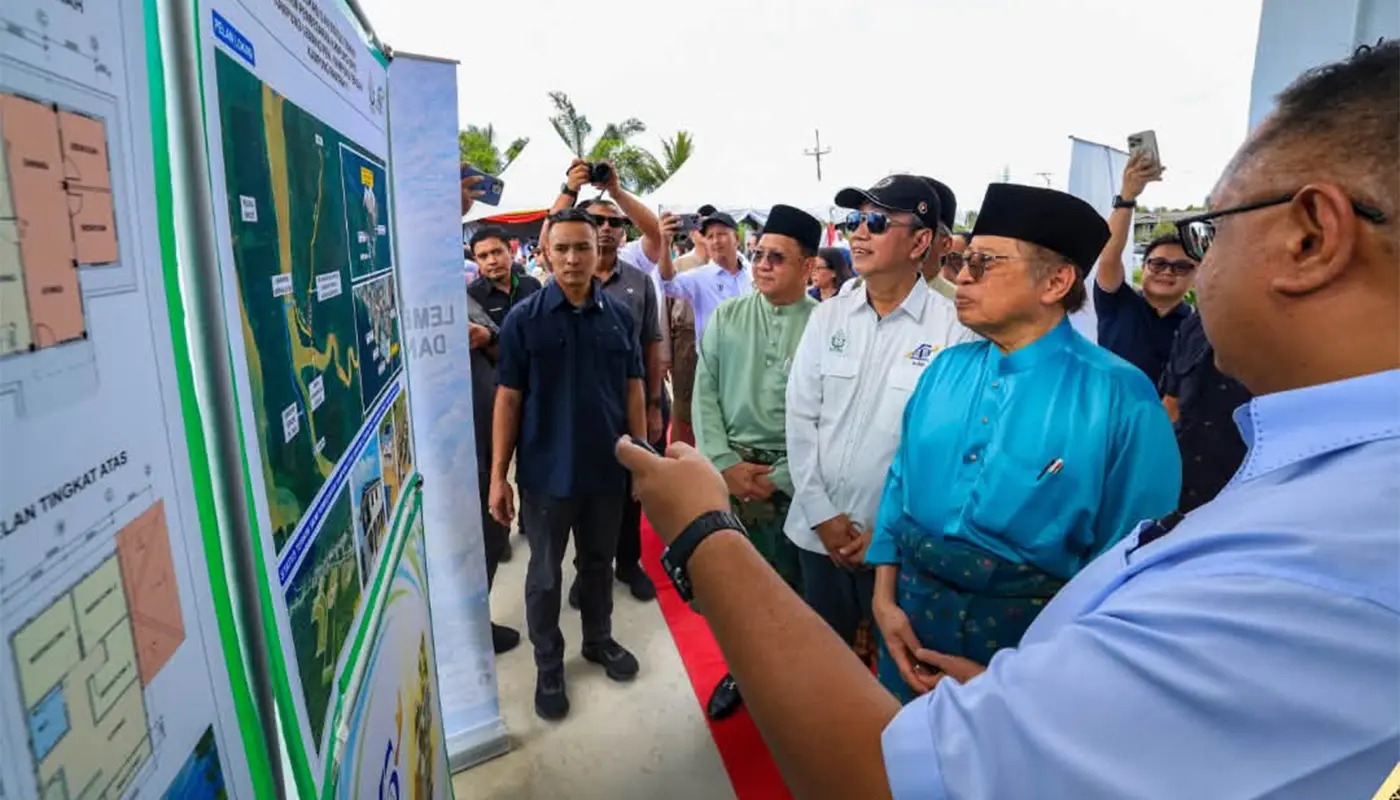
Premier Datuk Patinggi Tan Sri Abang Abdul Rahman Zohari Tun Datuk Abang Haji Openg visited the site on 17 July 2026 to review the newly completed Sapphire LCDA model house, which forms part of the first phase of a larger residential development.
The SPK Daro Phase 1 project covers Kampung Lemang Pek, Kampung Tengah and Kampung Pantray. A total of 131 residential lots have been laid out, with 59 affordable housing units being constructed during the initial rollout.
Speaking to reporters after inspecting the show unit, Abang Johari stressed that the scheme is designed to give rural residents access to comfortable modern housing without the heavy financial burden typically associated with home ownership.
“This house, if seen with the land, walls and utilities, its value can reach around RM300,000, but the people only pay around RM150,000 because the cost of the land and infrastructure is borne by the government,” he said.
Under the financing package, buyers receive a deposit assistance of RM10,000 from the state, while the remaining balance can be serviced through a loan carrying an interest rate of just one per cent. Abang Johari explained that this structure keeps monthly repayments at roughly RM200 to RM250, putting home ownership well within reach of lower-income families.
The Sapphire LCDA house design is intentionally flexible. Homeowners will have the ability to enlarge their dwellings in stages, matching their improving financial circumstances over time.
“This house can be expanded. The design has been prepared so that when they have the means, the owner only needs to make certain additions to make it bigger,” the Premier noted.
Energy costs are also being addressed. Residents are given the option to install a solar photovoltaic system with government subsidy support. Any surplus electricity generated can be exported to the Sarawak Energy grid, with the value credited to the consumer’s account, effectively lowering monthly utility bills.
“With solar, the excess energy generated can be sold back to Sarawak Energy and used as credit in the consumer’s account,” Abang Johari added.
Beyond providing shelter, the Premier framed the SPK programme as a vehicle for asset building among rural households. He said the properties are expected to appreciate in value over time, contributing to long-term wealth creation for families who might otherwise be excluded from the property market.
The concept will not be confined to Daro. Abang Johari confirmed that the government intends to replicate the model in other districts, including Mukah, Matu and other rural areas where demand for organised, serviced housing remains high.
The SPK approach represents a long-standing state strategy to reorganise scattered rural settlements into well-planned neighbourhoods with proper roads, drainage, electricity and water supply. By absorbing the cost of trunk infrastructure and land development, the Sarawak government effectively halves the price tag that homebuyers face.
Housing development under SPK has been implemented in numerous divisions across Sarawak over the past decade. The Land Custody and Development Authority, or LCDA, is one of the key implementing agencies tasked with delivering the affordable units. The Sapphire series is among several standardised designs deployed under the programme, each engineered to meet both cost efficiency and future-proofing requirements.
The Daro initiative comes as the state government intensifies its post-pandemic development agenda, with rural upliftment identified as a core pillar. In recent state budgets, sizeable allocations have been channelled towards affordable housing, rural electrification and water supply projects, aiming to close the urban-rural infrastructure gap.
Abang Johari’s administration has repeatedly emphasised that housing is a fundamental right and that state intervention is necessary to correct market failures that leave rural populations underserved. Through cross-subsidisation and direct grants, the government says it can deliver dwellings that would otherwise command far higher commercial prices.
During the site visit, the Premier walked through the furnished model unit accompanied by senior officials from LCDA and the Daro district office. He inspected the living spaces, kitchen and bedrooms, and examined the solar panel setup mounted on the roof.
The SPK Daro site is strategically situated near community facilities including schools, clinics and local markets, ensuring that residents do not have to sacrifice access to essential services when they move into their new homes. Landscaping and communal green areas are also part of the master plan.
Abang Johari used the occasion to reiterate that home ownership is not merely a social good but a critical component of economic security. By enabling families to own titled property with modern utilities, the government hopes to foster a greater sense of permanence and investment in local communities.
Local community leaders who attended the event welcomed the project, noting that many young families in the area have long aspired to own homes but were hindered by high construction costs and limited financing options. With the one per cent loan scheme and upfront deposit aid, they said the barrier to entry has been substantially lowered.
The state government anticipates that the first batch of homes will be ready for handover within the coming months, pending final utility connections and compliance checks. Subsequent phases will see the remaining lots developed in line with demand and the readiness of infrastructure.
As Sarawak pushes towards its vision of becoming a developed and high-income state, initiatives such as the SPK are being positioned as key instruments for inclusive growth. The Daro project, officials say, serves as a tangible example of how public funds can be deployed to create dignified, lasting housing solutions for those at the grassroots.
Abang Johari closed his briefing by underscoring the government’s commitment to leaving no community behind. “This is not just a house, it is an asset that can be passed on to the next generation,” he said, adding that the state will continue to seek innovative ways to make home ownership a reality for every Sarawakian.
