



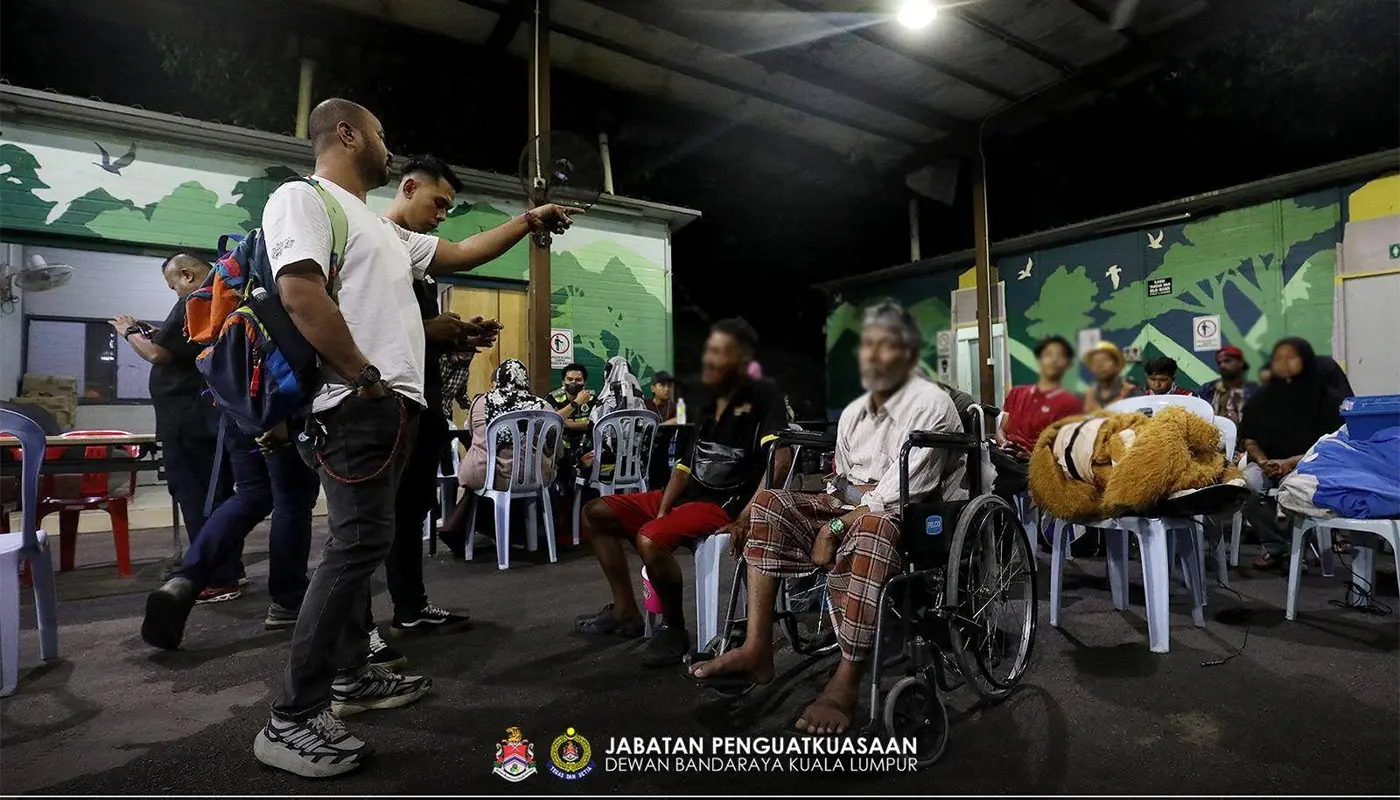
KUALA LUMPUR – An integrated enforcement operation targeting begging activities across the city centre was launched by Kuala Lumpur City Hall on the evening of 16 July 2026. The sweep, which began at 8.00 pm, covered several well-known thoroughfares frequently affected by aggressive and organised begging.

Multiple government agencies joined the effort, including the Royal Malaysian Police, the Immigration Department, the National Registration Department, the Social Welfare Department and the National Security Council. Their combined presence underscored the seriousness of the problem and the authorities’ determination to restore public order.
The operation stretched across Jalan Bukit Bintang, Jalan Sultan Ismail, Jalan Alor and Leboh Pudu. These areas are not only popular with tourists and shoppers but have also become regular gathering spots for individuals soliciting money, sometimes in a manner that intimidates pedestrians and disrupts local businesses.
City Hall officials have long observed that coordinated begging activities can damage the capital’s image, particularly in high-footfall zones that are vital to the hospitality and retail sectors. The decision to act in such a visible manner was intended to reassure residents and visitors that enforcement remains proactive.
When the operation concluded, a total of 25 individuals had been detained. Among those taken into custody, 13 were Malaysian citizens and 12 were foreign nationals. City Hall confirmed that each individual was screened on the spot by the relevant enforcement bodies to determine their status and the appropriate follow-up.
Of the 25 individuals, five were handed over to other agencies for further action. Two were transferred to the Immigration Department, indicating that their presence in the country required verification or had been deemed unlawful. The remaining three were referred to the Social Welfare Department, signalling that their cases involved local destitute persons who may require rehabilitation or support services rather than punitive measures.
The remaining 20 detainees were processed directly by City Hall officers, and they are expected to face compounding or other penalties under municipal by-laws that prohibit begging and nuisance activities in public spaces. The multi-agency nature of the operation allowed for rapid identification, with National Registration Department officers checking identity documents and police officers ensuring security throughout the night.
A statement issued after the operation reiterated that DBKL would continue to strengthen strategic cooperation with partner agencies. The authorities stressed that such joint efforts are essential to maintaining peace, security, and the overall well-being of city residents. Regular patrols and targeted operations are expected to persist in the coming weeks, especially during peak tourist seasons and late-night hours.
Begging in Kuala Lumpur has long been a complex social and enforcement challenge. Many of the individuals involved are believed to be part of syndicates that exploit vulnerable groups, including foreign nationals brought into the country illegally.
Others may be homeless or marginalised citizens who lack access to stable income and shelter. The government has repeatedly signalled that it differentiates between victims of circumstance and those engaged in organised begging operations, and that the welfare arm of the operation is meant to channel genuine cases towards assistance programmes.
Under the Destitute Persons Act 1977, Malaysian citizens found begging may be placed in welfare homes for assessment and rehabilitation. Meanwhile, foreign nationals without valid travel documents are subject to immigration laws and can face detention and deportation. The Minor Offences Act 1955 also provides a legal basis for penalising begging and loitering, and City Hall’s own by-laws empower it to compound offenders.
The involvement of the National Security Council in this operation highlights a growing concern that some begging networks may be linked to cross-border criminal activity, including human trafficking. Although the authorities have not disclosed intelligence specifics, the presence of council representatives signals an effort to coordinate security and social responses at a higher level.
The areas targeted on the night of 16 July are emblematic of Kuala Lumpur’s contrasts. Jalan Bukit Bintang is a shopping and entertainment hub packed with malls, hotels, and street-side eateries. Just a stone’s throw away, Jalan Alor is famous for its open-air food stalls that draw tourists from around the world.
Jalan Sultan Ismail cuts through the golden triangle of the city, while Leboh Pudu sits at the edge of the old commercial district. Despite their economic vitality, these streets have seen an increasing number of beggars in recent years, many of whom position themselves near pedestrian crossings, outside convenience stores, and along popular walking routes.
Local traders have often complained that persistent begging discourages customers and can lead to occasional disputes. Tourists, too, have expressed unease when approached repeatedly. The latest operation is therefore being seen as part of a broader campaign to safeguard the pedestrian experience and uphold the capital’s standing as a safe and welcoming destination.
Beyond enforcement, City Hall has attempted to address underlying causes by working with non-governmental organisations that offer shelter and job placement services. However, the transient nature of some begging populations means that enforcement remains a necessary complement to social programmes.
The July operation mirrors similar joint exercises carried out in previous years. In early 2025, for instance, a series of integrated raids around Chow Kit and Masjid India led to the detention of dozens of individuals. Those operations also involved the same core set of agencies and resulted in a mixture of immigration referrals and welfare placements. Authorities have learned from those experiences to create a smoother referral process, reducing the time it takes to transfer individuals to the appropriate department.
City Hall has not announced any immediate changes to the law, but officials have hinted that they are studying more stringent penalties for repeat offenders who are found to be part of organised begging rings. At the same time, they are cautious about measures that might inadvertently criminalise the genuinely destitute without offering them a pathway out of poverty.
The Immigration Department’s role in the operation is especially significant given that Sabah and the federal capital are two focal points for migrant-related enforcement. While this particular operation took place in Kuala Lumpur, the cross-agency framework is closely watched by state governments elsewhere, including in Sarawak, where local councils and immigration authorities often face similar challenges in urban centres.
For now, the 25 individuals detained on 16 July will face the consequences determined by the respective agencies, whether it be fines, repatriation, or rehabilitation. The number of detainees, though modest, sends a strong signal that City Hall is prepared to deploy a multi-agency force to reclaim public spaces from unauthorised activity.
Moving forward, DBKL has assured the public that integrated operations will remain a fixture of its urban management strategy. Regular feedback from business associations and community leaders will be taken into account when planning future deployments, ensuring that enforcement efforts align with the concerns of those who live and work in the city centre.
The success of such operations is measured not only by the number of arrests but also by the gradual return of normalcy to streets that have for too long felt compromised. For the people who walk through Bukit Bintang or dine along Jalan Alor, a visible enforcement presence offers a measure of comfort that the authorities are attentive to the quality of life in the nation’s capital.
