
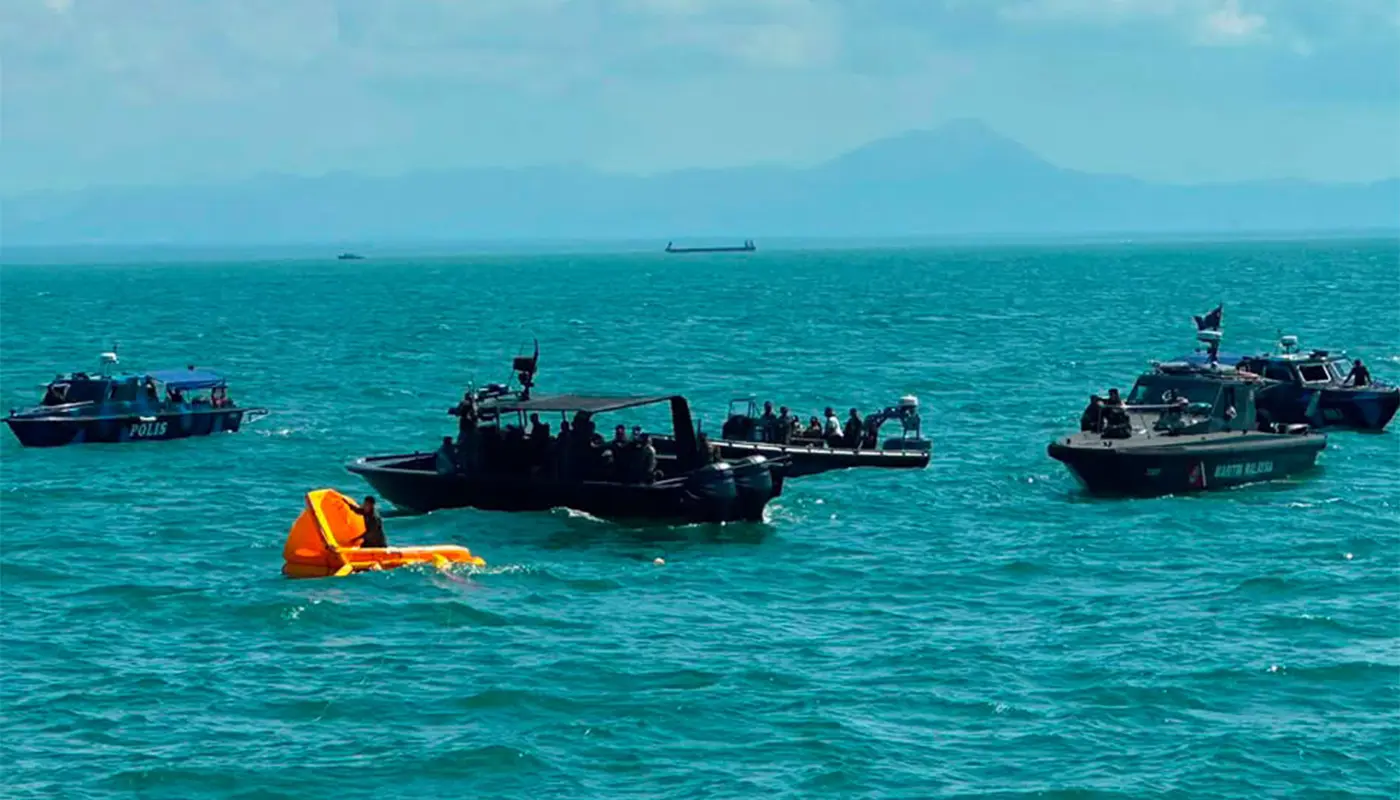


TAWAU – A large-scale search and rescue exercise in Tawau has reinforced Malaysia’s inter-agency preparedness for maritime and aviation emergencies.
The Search and Rescue Exercise (SAREX) Air Region 2-26, organised by the Royal Malaysian Air Force (RMAF) through its Air Region 2 headquarters (MAWILUD 2), brought together multiple agencies to test coordination and operational readiness under the CARILAMAT framework.
Held on 16 July, the exercise was designed to simulate a complex emergency scenario involving a Royal Malaysian Air Force C-130H aircraft, “Eagle 164”, carrying 20 people.
The aircraft was reported to have experienced difficulties before crashing into waters near Tawau, triggering a full-scale CARILAMAT operation.
The exercise tested the rapid mobilisation of assets and the ability of agencies to respond effectively to large-scale incidents.
The Malaysian Maritime Enforcement Agency (Maritime Malaysia) joined forces with the RMAF, Royal Malaysian Police (PDRM), Malaysian Armed Forces (ATM), Fire and Rescue Department (JBPM), Ministry of Health (MOH), Civil Defence Force (APM), Civil Aviation Authority of Malaysia (CAAM), and other support agencies.
Together, they established a Carilamat Forward Base (PHC) to coordinate operations, ensuring systematic communication and integrated responses.
A total of 21 assets were deployed during the exercise, including ships, rescue boats, aircraft, helicopters, ambulances, fire engines, and medical teams.
The mobilisation demonstrated the breadth of resources available and the importance of synchronising sea, air, and land operations.
Liaison officers from each agency played a crucial role in ensuring information sharing, asset coordination, and victim management were carried out seamlessly.
The exercise also tested the effectiveness of operational standing procedures under CARILAMAT and the International Aeronautical and Maritime Search and Rescue (IAMSAR) framework.
These procedures are vital for ensuring that Malaysia’s search and rescue operations meet international standards and can respond to emergencies involving both domestic and international stakeholders.
Beyond operational drills, the exercise served as a platform to strengthen communication and strategic cooperation among agencies.
It provided an opportunity to assess asset capabilities, evaluate the management of forward bases, and test victim information systems.
Personnel competence in handling emergencies was also scrutinised, ensuring that responders are well-prepared for real-life incidents.
Officials highlighted that the exercise was not only about testing readiness but also about reinforcing trust and synergy among agencies.
By working together under realistic scenarios, agencies can identify gaps, improve coordination, and enhance overall efficiency in managing emergencies.
The inclusion of health and rescue agencies such as MOH and JBPM underscored the holistic nature of the exercise.
Medical teams were tasked with managing casualties, while fire and rescue units ensured safety at operational sites.
This integrated approach reflects Malaysia’s Whole of Government strategy, where agencies collaborate to address increasingly complex challenges.
Exercises like SAREX Air Region 2-26 are crucial for Malaysia’s preparedness in safeguarding lives and maintaining public confidence in national security systems.
Tawau, located on Sabah’s east coast, is a strategic area for maritime and aviation activities, making such drills essential for regional safety and resilience.
The successful conduct of the exercise demonstrated Malaysia’s commitment to continuous improvement in search and rescue operations.
With agencies pledging to maintain regular training and coordination, the nation is better positioned to respond swiftly and effectively to emergencies, ensuring safety in its waters and skies.


