



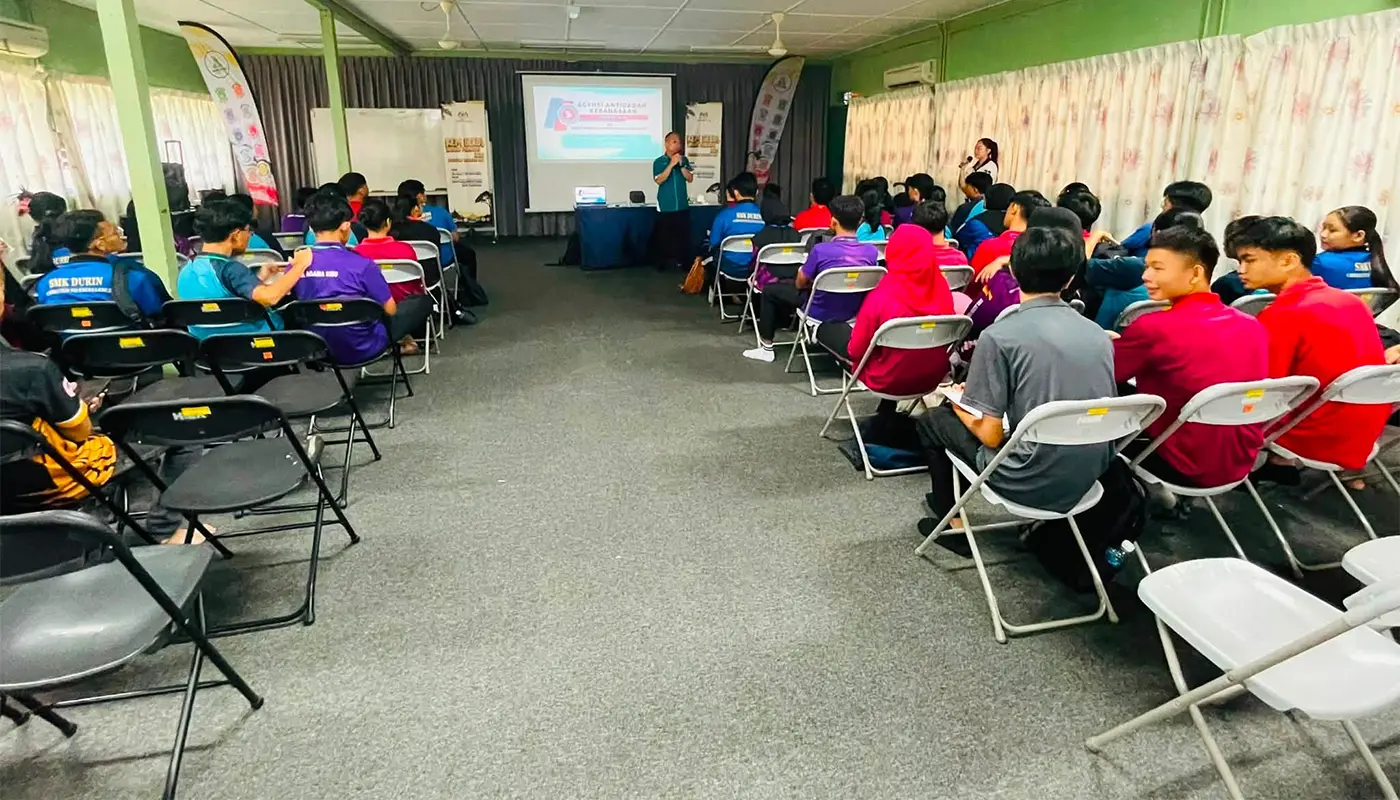
SIBU – The National Anti-Drug Agency (AADK) for the Sibu District has intensified its efforts to combat substance abuse among adolescents by delivering a targeted awareness programme at a recent youth camp.

The initiative, titled “DON’T DRUG!”, was conducted in conjunction with the Sibu Division-Level Youth Camp held at the Kemuyang Youth Camp on Saturday morning.
The camp was organised by the Sarawak State Youth and Sports Department, specifically through the Sibu Division Youth and Sports Office (JBS). It served as a gathering point for more than 50 participants, all aged between 15 and 16 years old, drawn from various parts of the Sibu Division.
This age group is considered critical for intervention, as teenagers are often most susceptible to external influences and peer pressure during their formative years.
The primary objective of the talk was to provide early exposure to the realities of drug abuse. By addressing the issue proactively, authorities aim to equip young people with the knowledge necessary to make informed decisions.
The session focused on highlighting the severe threats and dangers associated with illicit substances, moving beyond general warnings to specific, impactful information.
Participants were exposed to detailed insights regarding the adverse health implications of drug consumption. Experts from AADK explained how substance abuse affects physical and mental well-being, often leading to long-term health complications and social disintegration.
Understanding these consequences is vital for dismantling the glamour or curiosity that sometimes surrounds drug use among teenagers.
Beyond health education, the programme placed significant emphasis on developing coping mechanisms. One of the key skills taught was how to deal with peer pressure rationally. Adolescents often face challenges in saying no to friends or acquaintances who may encourage risky behaviour.
The talk provided practical strategies and communication techniques to help youths resist such pressures without feeling isolated or judged.
This strategic collaboration between AADK and JBS reflects a broader government commitment to safeguarding the future generation. By combining recreational activities with educational components, the agencies ensure that the message reaches youths in an engaging and relevant manner.
The partnership underscores the importance of multi-agency cooperation in addressing complex social issues like drug addiction.
The ultimate goal is to produce a generation of youths who are not only knowledgeable and competitive but also free from the scourge of drugs. A drug-free youth population is essential for the overall well-being and stability of society.
When young people are healthy and focused, they can contribute more effectively to their communities and the national economy.
The choice of the Kemuyang Youth Camp as the venue provided a conducive environment for learning and interaction. Away from the distractions of daily life, participants could focus entirely on the messages being delivered.
The camp setting also fostered a sense of camaraderie among attendees, allowing them to support each other in maintaining a drug-free lifestyle.
Feedback from the organisers indicated that the session was well-received by the participants. Many youths expressed appreciation for the candid discussions and the practical advice offered. Such positive responses suggest that direct engagement is an effective method for changing attitudes and behaviours regarding substance abuse.
AADK Sibu continues to prioritise preventive measures as a cornerstone of its strategy. While enforcement actions against traffickers remain important, prevention is seen as the most sustainable solution.
By investing time and resources in education, the agency hopes to reduce the demand for drugs at the grassroots level.
The involvement of the Youth and Sports Department highlights the role of recreational programmes in character building. Sports and camping activities promote discipline, teamwork, and resilience, which are protective factors against drug abuse.
Integrating anti-drug messaging into these programmes ensures that the lessons are reinforced through positive experiences.
As the camp concluded, participants left with a renewed sense of purpose and awareness. The “DON’T DRUG!” campaign serves as a reminder that staying clean is a conscious choice supported by knowledge and community.
The efforts made in Sibu are part of a nationwide drive to create a safer and healthier environment for all Malaysians.
Future initiatives are expected to build on this foundation, reaching even wider audiences across the state. Continuous engagement with schools, community centres, and youth organisations will be crucial in sustaining momentum.
The collaboration between AADK and JBS sets a strong example for other districts to follow in their own preventive efforts.
