



KUCHING – A new landmark dedicated to interfaith engagement was officially opened in the state capital on Saturday as the Sarawak Government unveiled the Unit for Other Religions, or UNIFOR, Complex along Jalan Ong Tiang Swee.
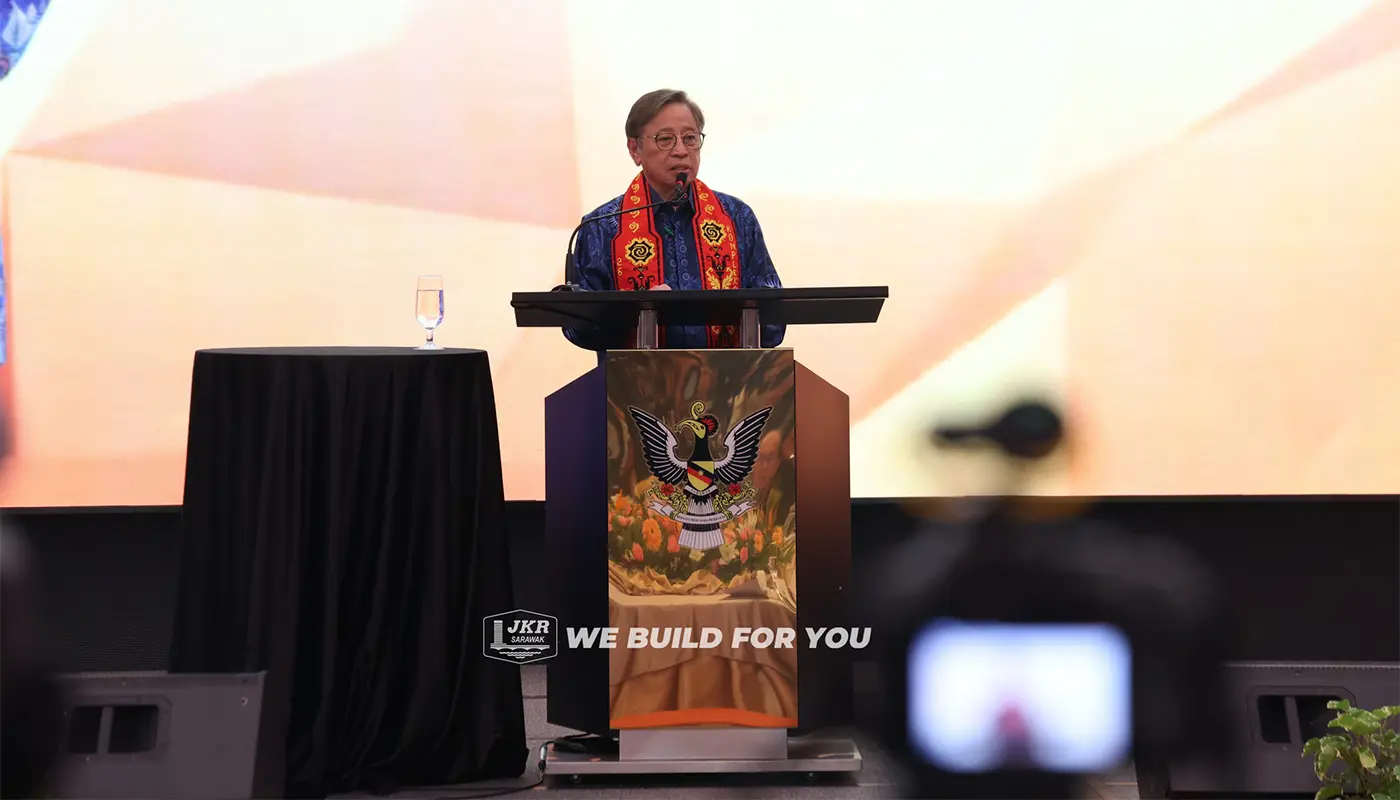
The ceremony was officiated by Sarawak Premier Datuk Patinggi Tan Sri (Dr) Abang Abdul Rahman Zohari bin Tun Datuk Abang Openg, who described the complex as a practical platform designed to strengthen cooperation, dialogue and understanding among Sarawak’s diverse religious communities.
Located about five kilometres from the city centre, the purpose-built complex occupies slightly more than three acres and was developed at a cost of over RM75 million funded by the state.
The Premier conceptualised the project as part of broader efforts to institutionalise interfaith engagement in Sarawak, where people of different races and faiths have long coexisted in relative harmony.
In his address, he thanked those involved in bringing the project to completion, particularly Deputy Premier Douglas Uggah Embas and religious leaders across the state.
“Without the value of interfaith respect, it is difficult for us to carry out welfare and development efforts, whose stability is the key to progress,” he said.
He added that the UNIFOR Complex should be seen as more than an administrative building but as a symbol of the state’s consistent commitment to unity and mutual respect among communities.
Earlier, Uggah highlighted the complex’s strategic setting near institutions such as the Islamic Information Centre, Dayak Cultural Foundation, Dayak Bidayuh Association, Dewan Usahawan Bumiputera Sarawak, the Sarawak Society for the Blind and Wisma Melanau. He noted that this proximity could encourage greater interaction and cooperation between different community groups.
He also explained that UNIFOR is a distinctive Sarawak initiative tasked with coordinating affairs related to non-Muslim religions, including providing financial assistance for the construction and maintenance of houses of worship throughout the state.
“Education is the main path out of poverty through the mastery of knowledge and skills,” he said, while revealing that RM30 million has been approved to assist 155 mission schools, particularly in rural areas, to improve access to quality education.
The event also saw the premier sign a commemorative plaque to mark the official opening. During the ceremony, it was announced that PETROS would contribute RM1 million to the Welfare Trust Board of the Other Religious Affairs Unit to support its programmes and activities.
The 10-storey complex is equipped with extensive facilities designed for both administrative and community use.
These include a large banquet hall capable of accommodating up to 1,000 people, conference rooms, office spaces, retail units, an executive lounge and a rooftop garden intended for shared activities by various religious groups.
The building has also achieved Green Building Index certification, incorporating energy-efficient systems, natural lighting and improved ventilation as part of Sarawak’s push towards sustainable development under its Post Covid-19 Development Strategy 2030.
Performances featuring modern technological elements, including robotics, were showcased during the ceremony, reflecting the state’s aspirations towards innovation and digitalisation.
Among those present were Deputy Premier Dr Sim Kui Hian; Minister of Tourism, Creative Industries and Performing Arts, and Minister of Youth, Sports and Entrepreneur Development, Abdul Karim Rahman Hamzah; JKR Sarawak Director YBhg. Datu Adj. Prof. Ir. Ts. Gs. Br. PMr Dr Cassidy anak Morris.
Also attended were former Deputy Chief Minister of Sarawak Datuk Patinggi Tan Sri Alfred Jabu Numpang, UNIFOR Director Dato Georgina Apphia Ngau, Welfare Trust Board chief executive John Kennedy Janang, senior civil servants, board members, and community leaders.
The presence of religious representatives and community figures at the launch underscored the central aim of the complex: to provide a shared institutional space where diversity is managed through engagement, dialogue and collaboration.
