



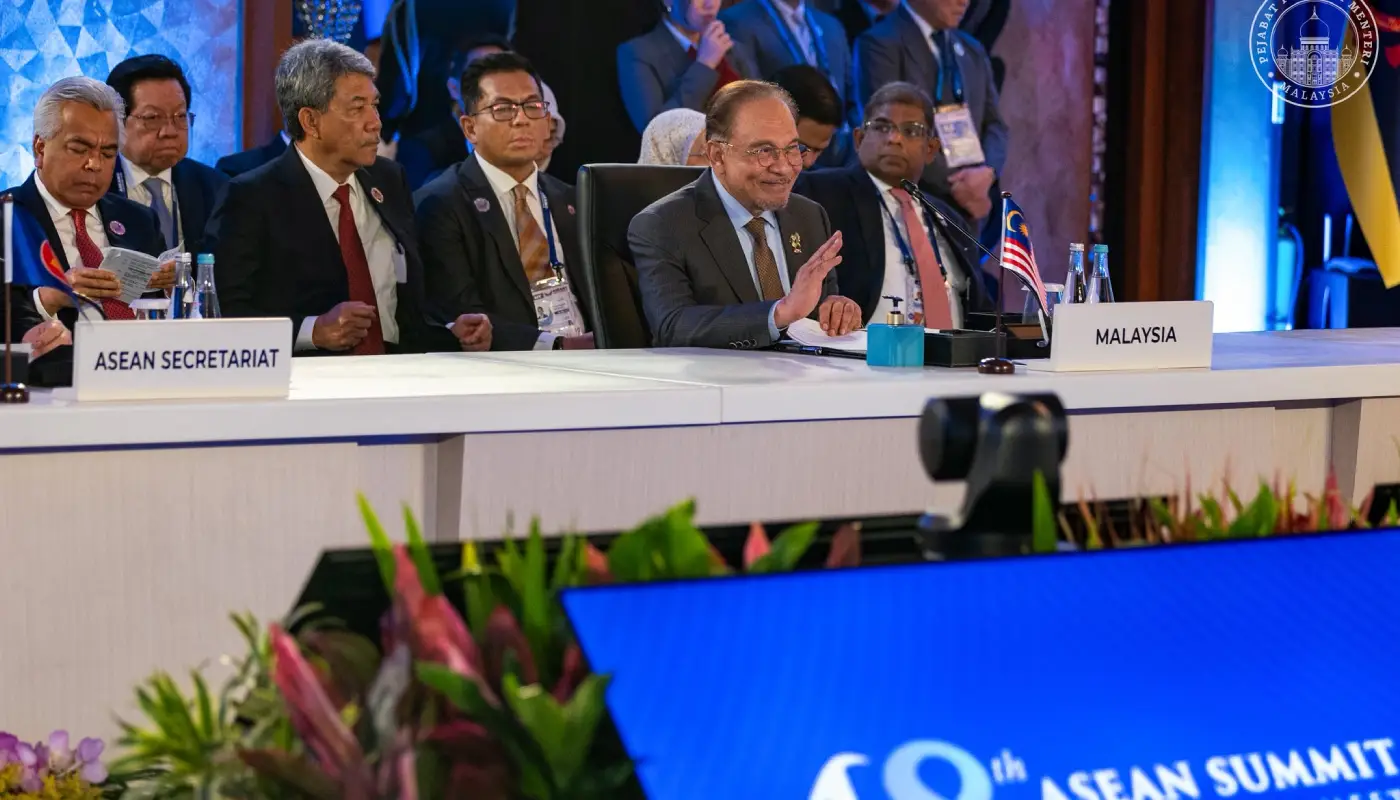
CEBU CITY – Malaysia has reaffirmed its commitment to advancing regional cooperation through the Brunei Darussalam-Indonesia-Malaysia-Philippines East ASEAN Growth Area (BIMP-EAGA), describing it as a vital platform for bridging development gaps and expanding opportunities across Southeast Asia.

Speaking at the BIMP-EAGA Special Summit in Cebu today, Prime Minister Datuk Seri Anwar Ibrahim emphasised that the initiative must serve as a strategic vehicle to strengthen trade, investment, digital connectivity, and food security networks.
He noted that these efforts are essential to ensure that communities across the region, particularly those in remote and underdeveloped areas, are not left behind in the development process.
The Prime Minister highlighted the importance of the BIMP-EAGA Vision 2035, stressing that it should be driven by a spirit of unity, sustainable governance, and inclusivity.
He explained that the vision is not merely a policy framework but a reflection of collective determination to build a more resilient and competitive region.
As global challenges intensify, including energy supply disruptions, climate change, and economic uncertainties, Anwar called for a bold and integrated approach.
Malaysia, he said, supports the strengthening of cross-border energy connectivity and investment in renewable energy solutions such as solar power and mini-grids.
These measures, he added, would help ensure that the benefits of development are shared fairly across all communities.
The BIMP-EAGA initiative, established in 1994, aims to accelerate economic growth in less developed and geographically distant areas of ASEAN.
It has since become a platform for member countries to collaborate on infrastructure, energy, tourism, and environmental sustainability.
Vision 2035 builds on this foundation, setting long-term goals to enhance competitiveness and improve the quality of life for people in the region.
Malaysia’s stance at the summit underscores its role as a proactive partner in ASEAN’s broader agenda. Anwar reiterated that the country remains committed to supporting initiatives that empower local communities, strengthen regional resilience, and promote sustainable development.
Observers note that Malaysia’s focus on renewable energy and inclusive growth aligns with ASEAN’s wider priorities, particularly in addressing climate change and ensuring energy security.
The emphasis on mini-grids and solar projects reflects a practical approach to delivering energy solutions to rural and isolated areas, where traditional infrastructure may be difficult to implement.
The Prime Minister concluded by reaffirming Malaysia’s dedication to a development agenda that honours people and fuels a more prosperous future for generations to come.
With ASEAN’s spirit of cooperation still strong, he said, BIMP-EAGA will continue to play a crucial role in shaping a region that is both humane and competitive.
