



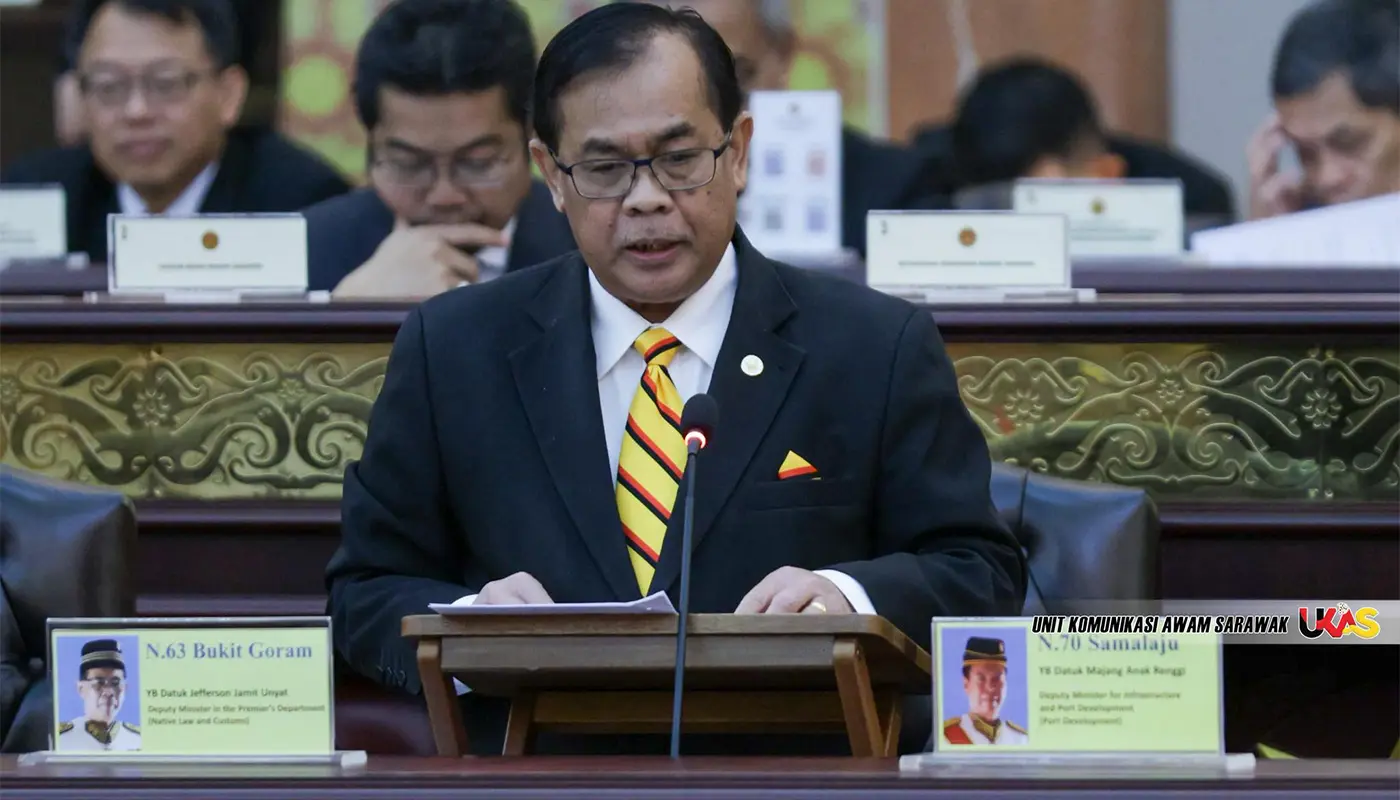
KUCHING – The Sarawak government is drafting a new Bumiputera Court Bill to enable a comprehensive restructuring of the state’s Bumiputera Court system.

Deputy Minister in the Sarawak Premier’s Department (Bumiputera Law and Custom), Datuk Jefferson Jamit Unyat, explained during the 19th Sarawak State Legislative Assembly (DUN) sitting that the restructuring study, which began in 2020, was completed in February 2023 and presented to the State Executive Council (MMKN) in July 2023.
He said the MMKN had approved the findings of the study, titled Masterplan for the Transformation of the Native Courts of Sarawak. The plan includes repealing the existing Native Courts Ordinance 1992 and replacing it with a new Bumiputera Courts Ordinance or Native Courts Ordinance.
“To enable this restructuring, the existing Native Courts Ordinance, 1992 needs to be repealed and replaced with a new Bumiputera Courts Ordinance or new Native Courts Ordinance. Therefore, a Bumiputera Court Bill is being drafted and will be presented in the State Legislative Assembly,” Jefferson said in response to a question from Pelagus assemblyman Wilson Nyabong Ijang.
The restructuring will involve changes to the administrative structure and jurisdiction of the courts. Jefferson highlighted that as of 1 May, a total of 4,755 cases involving Bumiputera customary land disputes had been registered. These are being heard at three levels: the District Bumiputera Court, the Resident Bumiputera Court, and the Sarawak Bumiputera Court of Appeal.
Pending cases include 1,316 at the District level, 187 at the Resident level, and 92 at the Court of Appeal. To address the backlog, the Bumiputera Court has introduced several strategic measures to expedite case resolution.
Among these initiatives is the Capacity Building Programme (CBP), which trains administrative officers, clerks, and court staff. The programme has already been implemented in Sri Aman and Sibu, involving participants from the Kapit division, with 40 participants recorded as of 30 April.
Additionally, Management Engagement Sessions and Dialogue Sessions have been held at the district level to provide direct guidance to court clerks, peons, and community leaders. These sessions, conducted in Selangau, Sibu, and Limbang, involved 70 participants as of 30 April.
Jefferson emphasised that these reforms aim to strengthen the efficiency and credibility of the Bumiputera Court system, ensuring that disputes are resolved fairly and promptly. The drafting of the new bill marks a significant step towards modernising the native judicial framework in Sarawak while safeguarding the rights of Bumiputera communities.
