



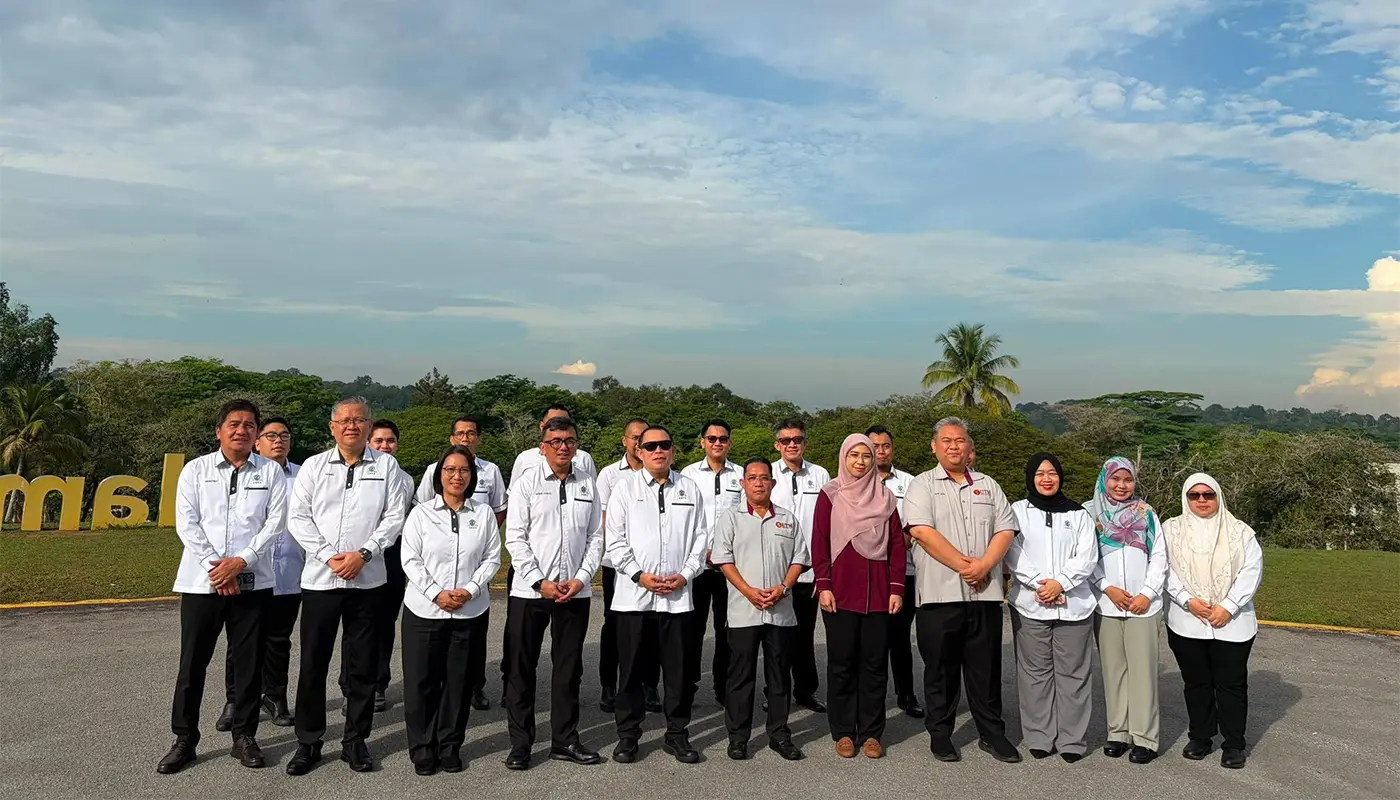
JOHOR BAHRU – North Kuching City Hall (DBKU) officers have completed the Introduction to Geospatial Data and Asset Inventory Training Program Using GIS Applications (Level 2), held from 23 to 25 June 2026 at Universiti Teknologi Malaysia (UTM), Skudai.

The programme was conducted by experts from UTM, including Assoc. Prof. Sr Dr Abdullah Hisam Bin Omar, Executive Director of the Sultan Iskandar Institute, alongside senior lecturers Dr Wan Anom Binti Wan Aris, Sr Dr Muhammad Hafiz Bin Mohd Yatim, Dr Ivin Amri Bin Musliman and Dr Fazzami Othman.
Experienced UTM officers also contributed to the sessions, ensuring participants gained practical knowledge in Geographic Information Systems (GIS) and geospatial data management.
The training focused on equipping participants with advanced skills in QGIS software, covering spatial analysis, GIS data management and digital map preparation.
By strengthening these competencies, DBKU aims to enhance efficiency in urban planning, asset management and systematic data production.
This Level 2 programme builds on earlier GIS training sessions held in July and September 2025. A total of 13 officers from Group 1 attended, reflecting DBKU’s ongoing commitment to developing technical expertise in line with digital transformation and smart city initiatives.
Participants were introduced to techniques for collecting, managing and analysing geospatial data, enabling more accurate and data-driven decision-making.
Such skills are expected to improve service delivery and asset management, ensuring resources are used effectively and sustainably.
Senior DBKU officials were present during the programme, including Director Yang Berusaha Encik Ramzi Bin Abdillah, Deputy Director of Infrastructure Department Ts Mohamad Faisal Bin Adenan, Deputy Director of Development and Landscape Services Department Puan Maggie Tomeng, and Acting Deputy Director of Corporate Services Department Mr Dennis Achil.
Their attendance underscored the importance of the training in DBKU’s broader strategy for capacity building.
The initiative reflects DBKU’s dedication to human capital development and its vision of expanding geospatial technology use to support sustainable and resilient city management.
By investing in advanced GIS training, DBKU is positioning itself to meet the demands of modern urban governance, ensuring that Kuching continues to evolve as a data-driven smart city.
