



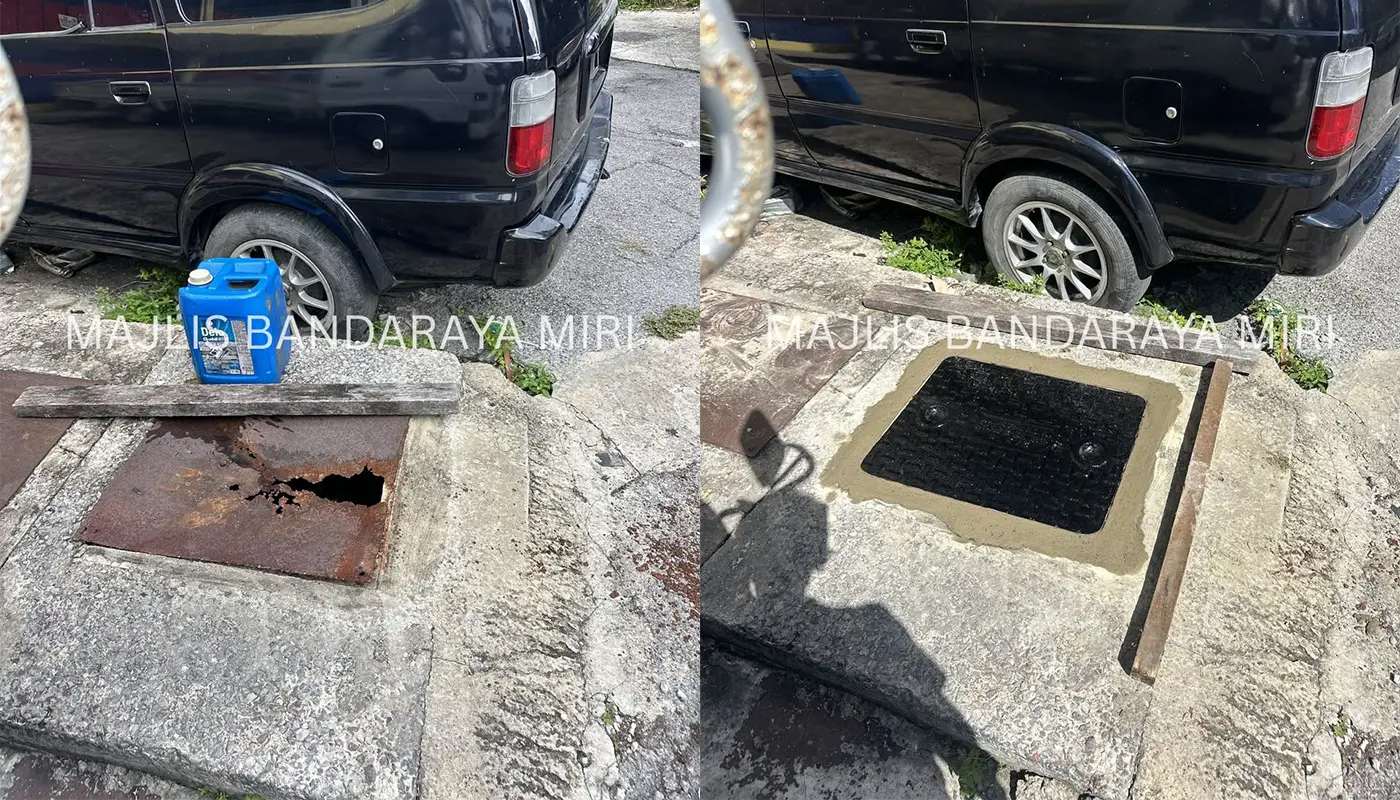
MIRI – Drainage infrastructure in several parts of the city has recently undergone improvement works, with the replacement of drain covers along Jalan Boulevard 3B, Jalan Haji Lampam and Jalan Royal.

The initiative forms part of the Miri City Council’s ongoing programme to maintain public facilities and ensure the safety of residents.
The replacement works are designed to reduce risks for pedestrians and motorists, while also improving the overall appearance of the area.
By addressing damaged or outdated covers, the Council aims to prevent accidents and provide a more orderly environment for those who live and work nearby.
Local authorities have emphasised that such maintenance projects are not only about safety but also about enhancing comfort for traders and road users.
The upgraded covers are expected to support smoother traffic flow and contribute to a cleaner urban landscape.
Infrastructure upkeep has become a priority for many councils across Sarawak, with similar projects being carried out in other districts to strengthen public safety and community welfare.
In Miri, the Council has consistently highlighted the importance of proactive measures to ensure that facilities remain functional and reliable.
Residents have welcomed the improvements, noting that well-maintained public amenities reflect the city’s commitment to creating a more liveable environment.
Traders in the affected areas have also expressed optimism that the upgrades will encourage greater foot traffic and improve business conditions.
The Council’s broader maintenance agenda includes regular inspections, repairs and replacements across various parts of the city.
These efforts are aligned with its vision of building a safer, cleaner and more prosperous urban environment.
Officials have reiterated that community cooperation is essential, urging residents to play their part in safeguarding public assets.
Urban planners have pointed out that small-scale interventions such as drain cover replacements can have significant long-term benefits.
By reducing hazards and improving accessibility, these measures contribute to the overall resilience of the city’s infrastructure.
The Council has assured that similar works will continue in other areas as part of its rolling programme of upgrades.
With Miri’s growing population and expanding commercial activity, maintaining public facilities remains a central responsibility in ensuring sustainable urban development.
