



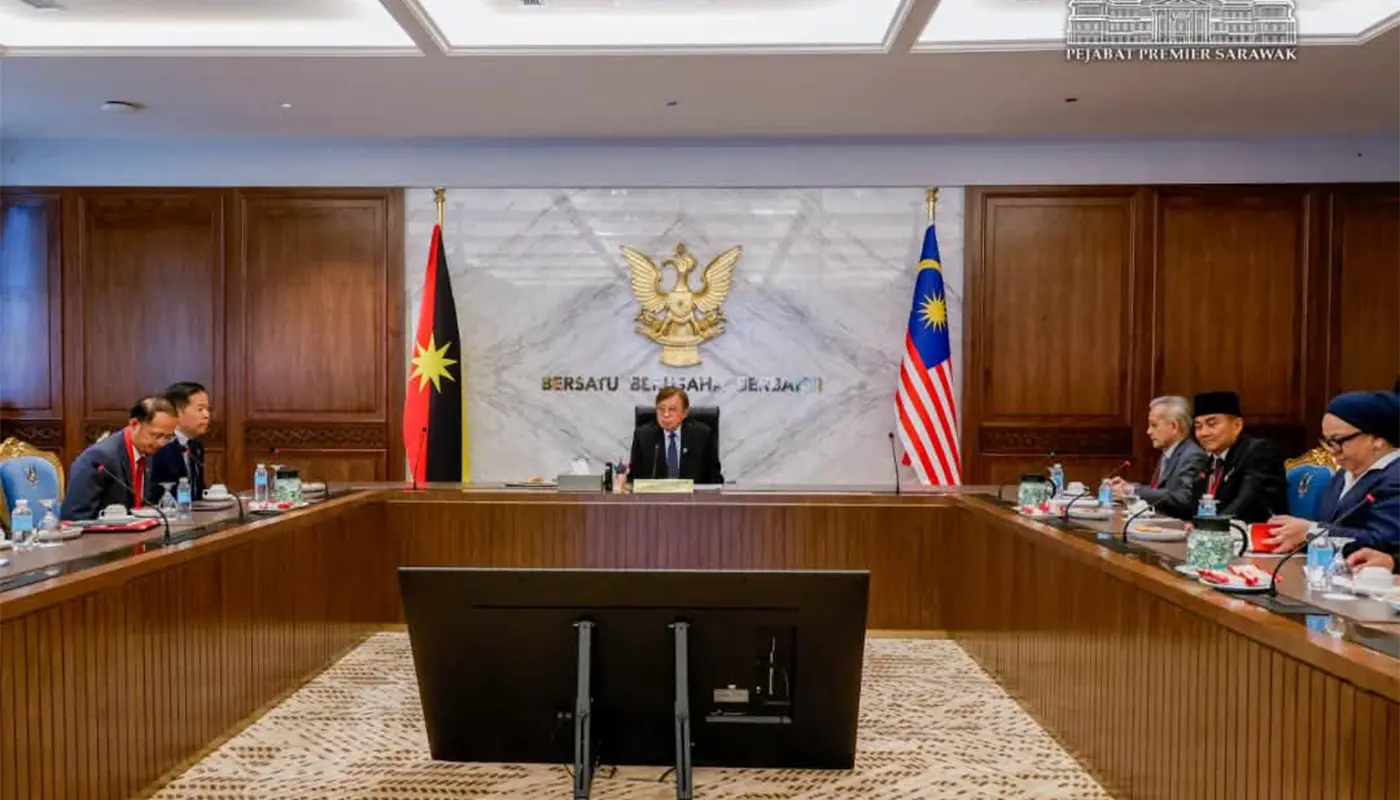
KUCHING – The Human Rights Commission of Malaysia (SUHAKAM) has proposed closer collaboration with the Sarawak government to strengthen human rights empowerment across the state.

On 2 July, SUHAKAM representatives paid a courtesy visit to the Premier of Sarawak, Datuk Patinggi Tan Sri (Dr) Abang Haji Abdul Rahman Zohari bin Tun Datuk Abang Haji Openg, presenting a series of initiatives aimed at enhancing protection and awareness of rights among vulnerable groups.
Following the meeting, SUHAKAM expressed appreciation to the premier for his openness to dialogue and willingness to provide space for a briefing session.
The discussion centred on developing a more comprehensive framework for human rights protection at the state level.
Children’s rights were highlighted as a key priority, with emphasis on safeguarding against social challenges such as substance abuse, domestic violence and welfare issues that affect development.
SUHAKAM stressed the need for integrated approaches to ensure the safety and well-being of children. Attention was also directed towards the elderly, with Sarawak projected to become an ageing state by 2028.
SUHAKAM proposed literacy programmes to raise awareness of elderly rights, guided by international standards such as those outlined by the World Health Organization.
Capacity-building initiatives were suggested for agencies including the police, immigration, health services, prisons and welfare departments.
These programmes aim to improve skills and understanding in handling cases involving vulnerable groups, particularly children.
Education was another focus, with SUHAKAM recommending the introduction of human rights awareness programmes in schools.
Such initiatives would encourage students to understand their rights and responsibilities while fostering values of respect, justice and social well-being from an early age.
The commission also underlined the importance of engaging youth, legislators and civil servants to strengthen knowledge of international conventions.
These include the Convention on the Rights of the Child (CRC), the Convention on the Elimination of All Forms of Discrimination against Women (CEDAW), and agreements protecting individuals with special needs.
The visit concluded with a joint commitment to explore comprehensive cooperation through integrated programmes involving the state government, implementing agencies and stakeholders.
Both parties agreed that such collaboration is vital to ensuring inclusivity and the well-being of Sarawak’s people.
