



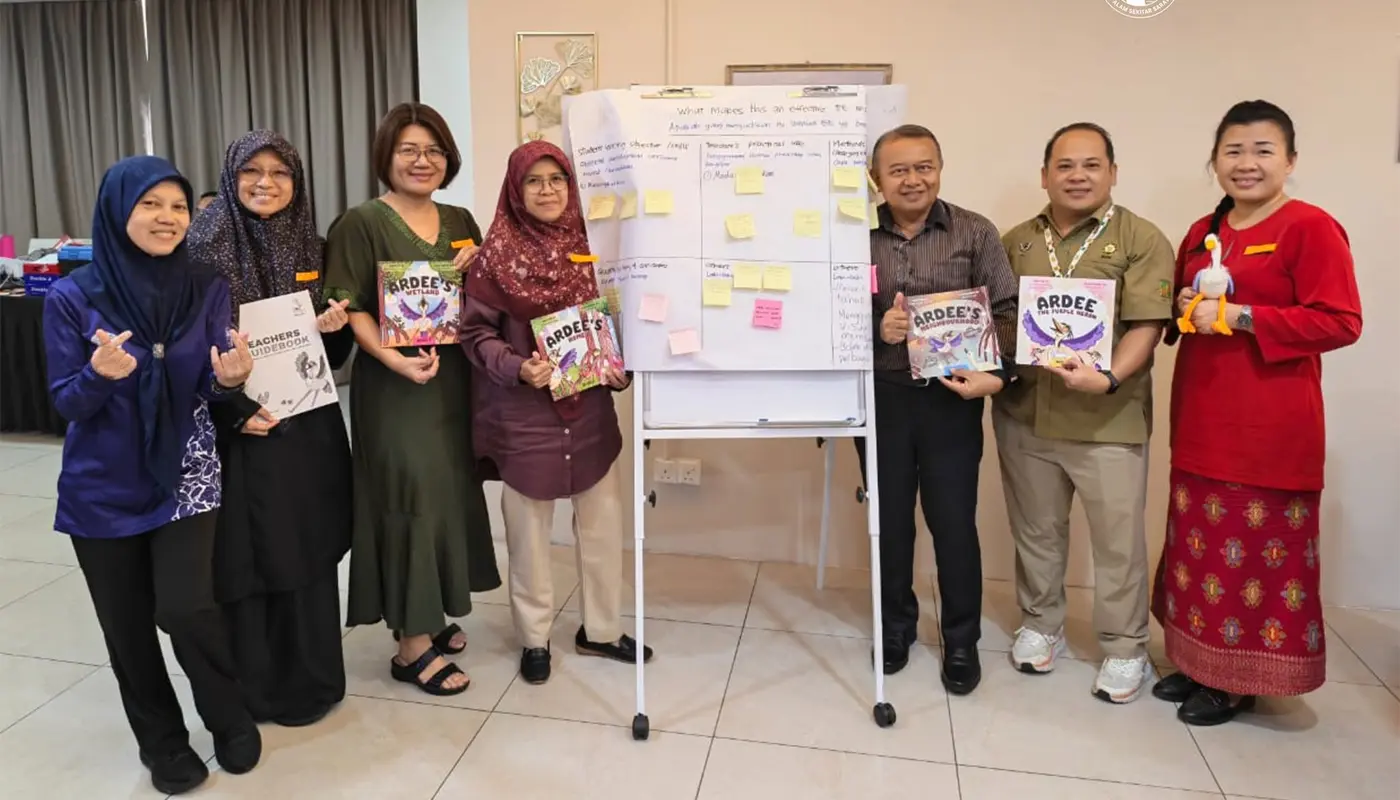
KUCHING – The Natural Resources and Environment Board (NREB) Sarawak, in collaboration with UNICEF, organised a stakeholder engagement workshop on the Environmental Education Module at the Serapi Hotel, Kuching, from 23 to 25 June 2026.

The three-day programme was designed as an interactive platform to bring together representatives from ministries, agencies, institutions, non-governmental organisations, and schools.
Participants exchanged views and shared recommendations to support the development of a structured and inclusive environmental education module tailored for Sarawak.
The initiative is aligned with the RMK-13 plan, which emphasises the creation of a comprehensive environmental education and outreach module.
This framework aims to standardise the delivery of environmental education across various institutions, ensuring consistency and accessibility for communities throughout the state.
Deputy Controller (Management) Kenny Poon officiated the opening ceremony, welcoming stakeholders and highlighting NREB’s vision to establish a unified module that can be adopted by multiple organisations.
He also chaired discussions between NREB and UNICEF, which provided clarity on the roadmap for the next five years. The workshop underscored the importance of collaboration in addressing environmental challenges.
By involving diverse stakeholders, the programme sought to ensure that the module reflects the needs and perspectives of different sectors, including education, governance, and civil society.
UNICEF’s participation added an international dimension to the discussions, drawing on global best practices in environmental education and child-focused learning.
The organisation emphasised the importance of instilling environmental awareness among younger generations, positioning education as a key driver for sustainable development.
Stakeholders explored practical approaches to integrating environmental topics into school curricula, community outreach, and institutional programmes.
The dialogue also touched on challenges such as resource limitations, awareness gaps, and the need for stronger partnerships to achieve long-term impact.
The workshop concluded with a shared commitment to advancing the environmental education agenda in Sarawak.
Participants agreed that the module should serve as a foundation for future initiatives, promoting ecological responsibility and community resilience across the state.
