



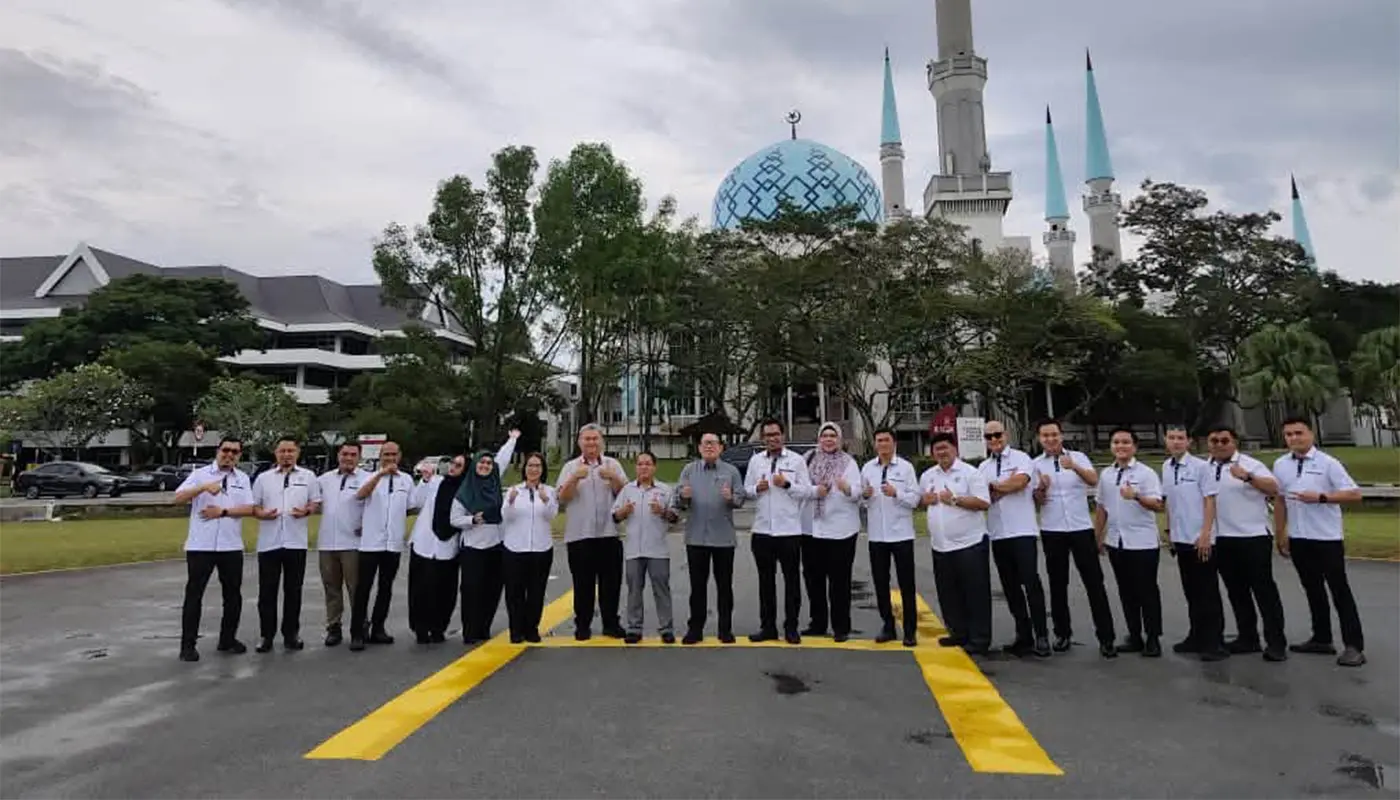
KUCHING – North Kuching City Hall (DBKU) has strengthened its technical expertise through participation in an advanced geospatial training programme held at Universiti Teknologi Malaysia (UTM), Skudai, Johor, from 2 to 4 July 2026.

The course, titled Introduction to Geospatial Data and Asset Inventory Training Using GIS Applications (Level 2), was designed to enhance participants’ knowledge of QGIS software. It covered areas such as spatial analysis, digital mapping, and data management, all of which are increasingly vital for modern urban planning and smart city development.
A total of 14 DBKU officers from Group 2 attended the programme. Their involvement reflects the council’s ongoing commitment to building technical capacity among its workforce, ensuring that staff are equipped to manage assets more efficiently and deliver services that are both sustainable and data-driven.
The training emphasised practical applications of geospatial technology, including the preparation of digital maps to support systematic asset inventory management. By integrating these tools, DBKU aims to improve the accuracy and integrity of its data, which in turn supports better decision-making in city governance.
Senior DBKU officials were present during the programme, including Director Encik Ramzi bin Abdillah, Deputy Director of the Finance Department Encik Abang Iskandar Bolhassan, Deputy Director of the Development and Landscape Services Department Puan Maggie Tomeng, and Head of the Human Resources Division Ms Rosemiyati binti Mohamad Nawawi. Their attendance underscored the importance placed on human capital development within the organisation.
Geospatial technology has become a cornerstone of urban management worldwide, enabling cities to monitor infrastructure, plan future developments, and respond to community needs with greater precision. For Kuching, the adoption of such systems aligns with Sarawak’s broader digital transformation agenda, which seeks to integrate smart solutions into public service delivery.
The training also highlighted the role of geospatial data in supporting sustainable growth. By applying GIS applications, DBKU can better manage land use, monitor environmental impacts, and ensure that development projects are carried out responsibly. This approach contributes to the state’s vision of creating resilient urban centres that balance economic progress with ecological preservation.
Participation in the UTM programme demonstrates DBKU’s proactive stance in embracing innovation. As cities across Malaysia move towards smart city frameworks, the ability to harness geospatial data will be critical in ensuring that urban services remain efficient, transparent, and responsive to public needs.
With the skills gained from this training, DBKU officers are expected to play a stronger role in advancing Kuching’s transformation into a smart and sustainable city, setting a benchmark for other local authorities in Sarawak.
