



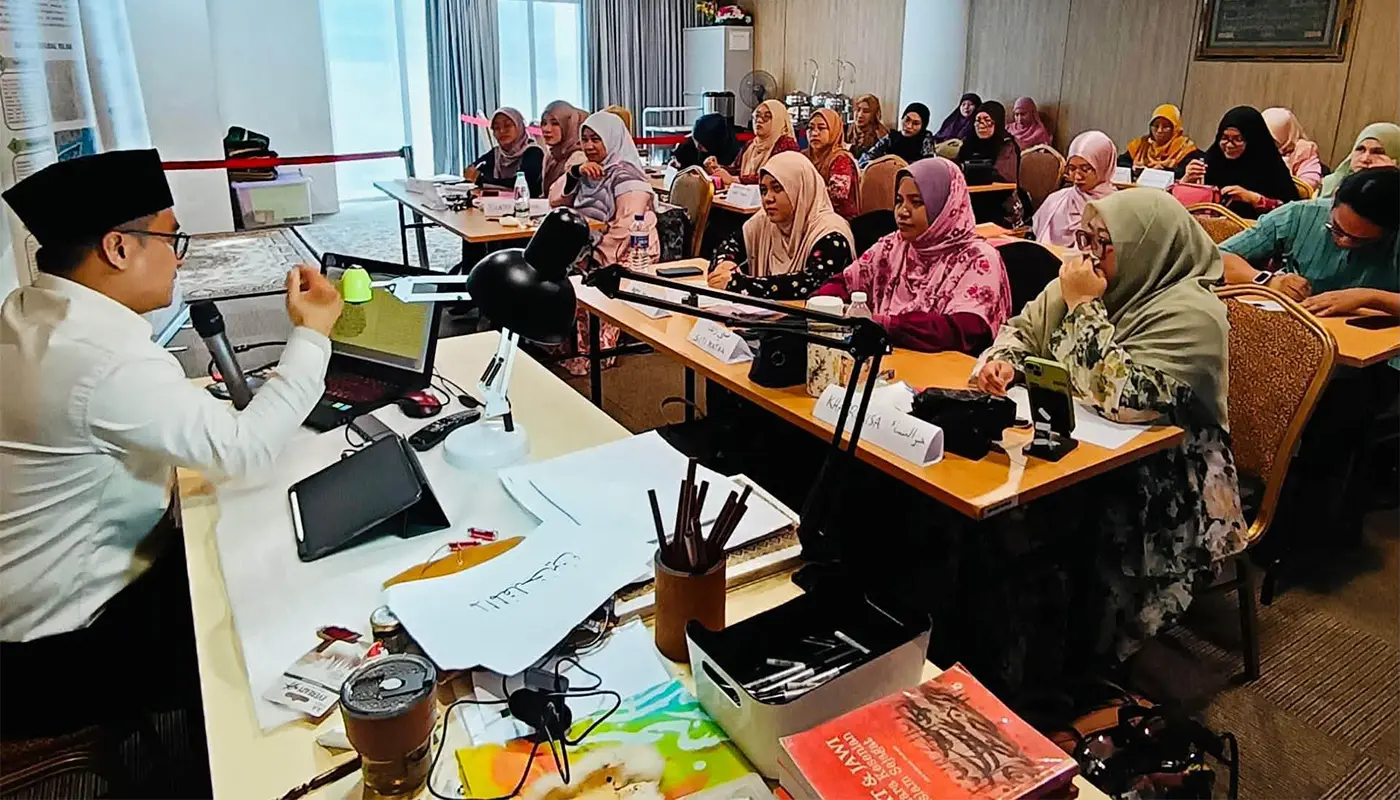
KUCHING – A Basic Calligraphy Workshop was held at the Zawiyah Lounge of the Kuching Division Islamic Religious Office from 15 July 2026, in conjunction with the Maal Hijrah 1448H/2026M celebrations. The programme was organised to enhance the skills of KAFA teachers while preserving Islamic artistic traditions.

The workshop was conducted by two experienced instructors, Ustaz Haji Abdus-salam bin Haji Morshidi and Ustaz Muhammad Azinuddin bin Annuar. Their guidance focused on introducing participants to the fundamentals of traditional calligraphy, particularly techniques rooted in the Ottoman Turkish tradition. This approach allowed teachers to explore writing methods that carry both aesthetic and historical significance.
A total of 20 KAFA teachers from across the Kuching Division attended the session. Their participation reflected a strong commitment to integrating creative innovation into classrooms, ensuring that students are exposed to Islamic heritage through practical and artistic learning.
The programme combined theoretical explanations with hands-on practice, enabling participants to master the basics of correct writing techniques. Organisers emphasised that the skills acquired during the workshop are intended to be passed on to younger generations, thereby sustaining the cultural and spiritual value of calligraphy in Islamic education.
Officials noted that the workshop was designed not only to improve teaching competence but also to strengthen appreciation for Islamic art. By equipping teachers with these skills, the initiative aims to enrich KAFA lessons and foster a deeper connection between students and the traditions of the faith.
The event also highlighted the importance of preserving calligraphy as part of Malaysia’s Islamic heritage. Calligraphy has long been regarded as a highly respected art form within Islamic culture, symbolising both devotion and creativity. By introducing KAFA teachers to structured training, the Kuching Division Islamic Religious Office hopes to ensure that this art continues to thrive in educational settings.
Participants expressed enthusiasm about the opportunity to learn from experienced calligraphers. Many noted that the workshop provided valuable insights into techniques they had not previously encountered, and they were eager to apply these methods in their teaching.
The workshop forms part of broader efforts to enhance the quality of Islamic education in Sarawak. By investing in teacher development, authorities aim to ensure that KAFA programmes remain relevant, engaging, and capable of nurturing students’ spiritual and cultural growth.
As the Maal Hijrah celebrations continue, the calligraphy workshop stands out as a meaningful initiative that bridges tradition with modern teaching needs. It underscores the role of educators in preserving heritage while adapting to contemporary educational demands.
