



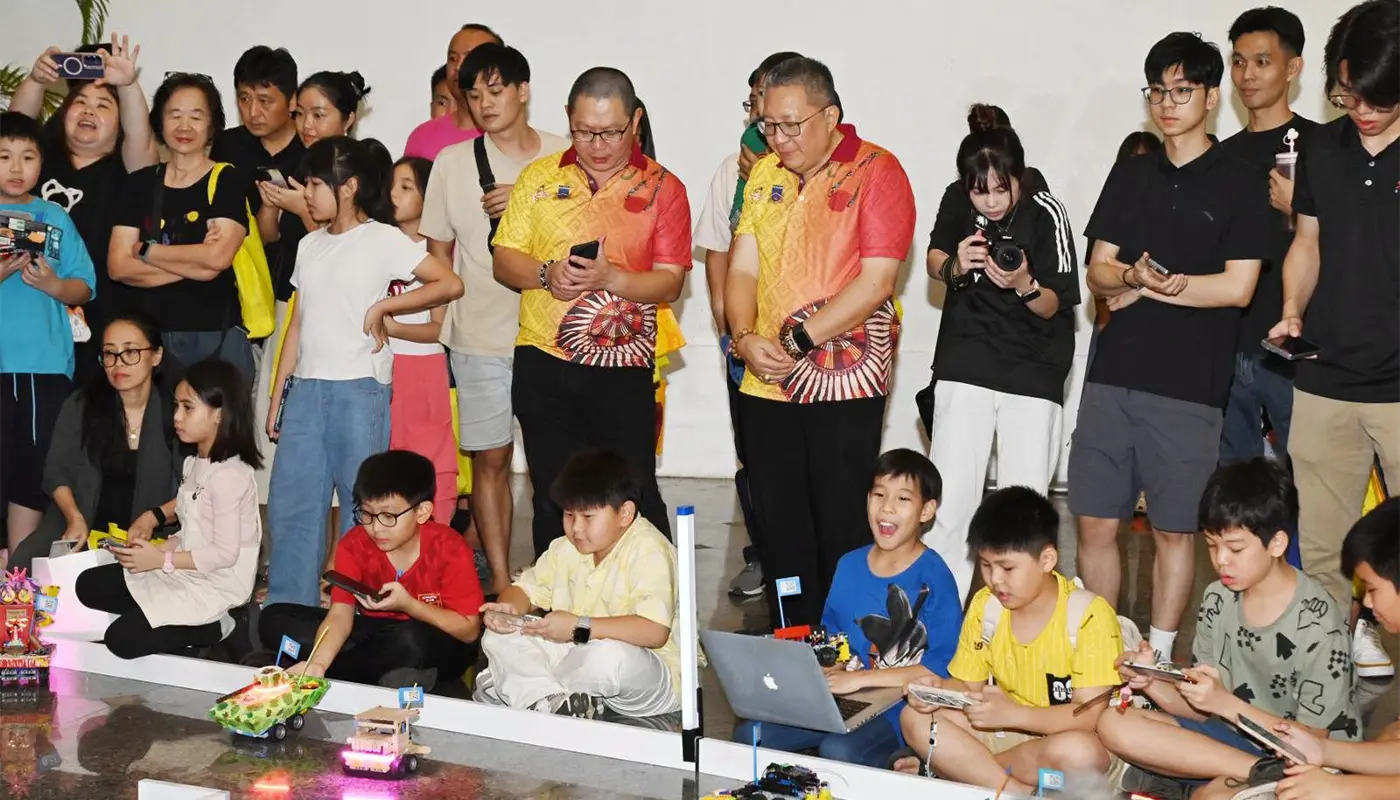
KUCHING – The future of urban development took centre stage at the Smart Kid, Smart City Challenge – RoboWalk 2026, where Dato Wee Hong Seng, Mayor of the Kuching South City Council (MBKS), urged young participants to embrace the principles of Science, Technology, Engineering and Mathematics (STEM). The event served as a platform to inspire creativity, innovation and imagination among the next generation of technologists.

Addressing the attendees, Dato Wee emphasised that the concept of a Smart City extends beyond mere infrastructure and digital connectivity. He argued that technological advancements alone are insufficient without the human element to guide them. According to the mayor, the true foundation of a smart urban environment lies in its inhabitants.
“The most important part of a Smart City is smart people. Our children are the future innovators and leaders who will shape Kuching,” he stated. This perspective shifts the focus from hardware and software to the cultivation of human capital, highlighting the critical role of education in sustainable city planning.
The mayor encouraged the young competitors to adopt a mindset of curiosity and fearlessness. He advised them to dream ambitiously, question established norms and remain open to experimenting with new ideas. By reminding the audience that every significant invention originates from a spark of imagination, he sought to demystify the process of innovation and make it accessible to children of all backgrounds.
Beyond technical skills, Dato Wee highlighted the broader educational benefits of participating in such challenges. He noted that STEM education is instrumental in developing essential life skills, including critical thinking, complex problem-solving and effective teamwork. These competencies are increasingly vital in a rapidly evolving global economy, preparing students not just for careers in technology, but for leadership roles across various sectors.
The RoboWalk 2026 event featured competitions that required participants to apply engineering principles and coding logic to solve practical tasks. Such hands-on experiences allow children to see the immediate application of theoretical knowledge, reinforcing their learning through active engagement. The atmosphere was one of excitement and intellectual curiosity, with students demonstrating impressive ingenuity in their robotic designs.
Dato Wee extended his appreciation to the wider support network that makes such initiatives possible. He thanked parents for their encouragement, teachers for their guidance, sponsors for their financial backing and the organising committee for their logistical efforts. He acknowledged that nurturing the next generation of innovators is a collective responsibility requiring collaboration between families, educational institutions and the private sector.
“I thanked parents, teachers, sponsors and the organizing committee for nurturing the next generation of innovators and wished all participants every success in the competition,” he said. This recognition underscores the community effort required to sustain high-quality educational programmes that benefit local youth.
The integration of STEM into early education is seen by many experts as a key driver for future economic resilience. By fostering an interest in technology at a young age, cities like Kuching can build a workforce capable of adapting to technological disruptions and contributing to local innovation ecosystems. Events like the Smart Kid Challenge play a pivotal role in this long-term strategy.
As the competition progressed, participants showcased not only their technical abilities but also their capacity for collaborative problem-solving. Teams worked together to troubleshoot issues and refine their robots, demonstrating the interpersonal skills that Dato Wee had earlier emphasised as crucial for future leaders.
The MBKS continues to position itself as a proponent of modern education and urban innovation. By supporting events that bridge the gap between academic learning and real-world application, the council aims to empower young Sarawakians to take an active role in shaping their communities. The success of the RoboWalk 2026 reflects a growing enthusiasm for STEM subjects among local students, promising a bright future for Kuching’s development as a truly smart city.
